Accessibility Tools

Skip to main content

Author: Marina Muhlfriedel

Teaching the Eight Ways with Students Experiencing Interstitial Lung Disease

By Jesse Leinfelder with Joan Campbell

Let’s try to imagine facing a serious illness while still motivated to carry on as best you can with your life. Joan Campbell and I met such people while teaching the Eight Ways through the Interstitial Lung Disease Collaborative (ILDC).

Professor Cheng Man-Ch’ing, the founder of TCF’s lineage, distilled the tai chi form into eight movements, known as the Eight Ways, that are easy to learn and fun to practice. The movements are linked with images of daily activities to deepen the embodiment of the exercises. The Eight Ways teaches tai chi principles while enhancing calmness, focus, stability, and strength for people of all ages and physical capabilities.

Working with the ILDC founder, Aliaa Barakat, and engaging with the students, Joan and I learned a great deal about the struggles and needs of people with serious lung diseases. The interstitial disease is so formidable that four of our participants died during or soon after the study classes at relatively young ages.

All knew they were supposed to engage in physical activity—but were at a loss to find activities that they could manage; the Eight Ways of Tai Chi turned out to be very well-suited. In addition, we designed the class sessions to alternate active and resting times.

We presented the Eight Ways positions and movement and used the seated/resting times for:

1) Q&A and sharing to build community

2) Quiet, tan-tien-focused meditative intervals for finding one’s center and building awareness of the chi energy that can be gathered, circulated, and sent to parts of the body most in need of healing.

We frequently reminded participants to listen to their bodies. To sit and rest when needed, hold on to the back of their chair when feeling unstable, and recognize when it was time to stand up and move with the group again.

To avoid adding stress, we never requested that anyone use a breathing pattern but rather asked students occasionally to check if they were still breathing or reminded them to breathe gently. As opposed to using the sometimes-fraught term “relax,” we spoke of softening things that one might be holding tight, both physically and emotionally.

Documenting our findings, we were honored to achieve publication of this qualitative study in the journal Global Advances in Integrative Medicine and Health, a Sage publication. Click here to read the study. It includes details of how the course was adapted for the students and quotes reflecting their lived experiences.

Insights from a few of our participants:

*“I find that the sessions of Tai Chi are gentle 
 They don’t exhaust me. I can get up, I can use my muscles, and I’m not a wet rag at the end of the session. And the way that the sessions are conducted with meditation and resting interspersed with doing the physical motions works out perfectly for me.”

*“Balance is about that center point [the tan tien]
. I never thought of the center of your body as being so low in your body. I don’t know why I didn’t know where my center was. I think the focus on that point brought things all together.“

*“In pulmonary rehabilitation, we focused on the diaphragmatic breathing. Now, I think more about the tan t’ien. I try to breathe into that point, and I get a much, much deeper breath. When I get short of breath, I try to just relax, and I think of that center point, and it gets me breathing easier much quicker.”

The TCF is a not-for-profit educational organization that promotes, funds, and teaches programs that enable people to learn tai chi and qigong and embody its principles. We offer the complete series of The Eight Ways of Tai Chi Chuanℱ as part of our online course offerings. The series is available on demand so that you can learn on your own schedule.

The Tai Chi Foundation’s mission is to improve health, well-being, and awareness through the study, practice, and teaching of tai chi and qigong by an increasing number of people worldwide. Check out our online course offerings. Sign up for our newsletter for updates on upcoming classes and events.

There are over 200 TCF-affiliated instructors teaching tai chi classes in 30 cities around the world. Find a class in your area, become a member, and support TCF in making the world a healthier and more mindful place today.

Jesse Leinfelder, EdD, has been with the School of Tai Chi Chuan/Tai Chi Foundation since 1978. She began studying and teaching tai chi with the Gainesville Tai Chi Center, and continues learning, practicing and teaching through summer and winter trainings and online classes. She has also taught with the Portland School, and now lives in Santa Fe, New Mexico. In her other professional work, Jesse enhances early childhood education and care. Currently Jesse serves on the Board of the Tai Chi Foundation.

Joan Campbell, EdS, is a retired Professor of Education and has been practicing tai chi since studying at Professor Cheng Man-ch’ing’s Hall of Happiness in New York in 1973. Joan began teaching tai chi with permission from Patrick Watson in 1986. In addition to her own classes, Joan teaches ongoing tai chi classes with her husband, Paul Campbell, in Gainesville, Florida.

 Tai Chi Foundation 2023

Photo by Fabian MĂžller on Unsplash

The 8 Ways of Tai Chi: A Journey to Mindfulness and Balance


Tai chi, an ancient Chinese martial art, has evolved into a practice that offers a range of health benefits, from improving balance to reducing stress. One of the most helpful ways of understanding tai chi is the method known as the “Eight Ways,” a simplified form of tai chi designed for health and relaxation. This makes it especially useful for tai chi beginners and newer students. Here’s what you should know about the Eight Ways.

The Origin and Purpose

The Eight Ways of Tai Chi Chuanℱ were passed down from Professor Cheng Man-Ch’ing, who brought tai chi to the West in the 1960s. He taught them to his senior student, Patrick Watson, who later founded the Tai Chi Foundation and taught them to the organization’s teachers. The Eight Ways are a set of tai chi moves from the tai chi form combined with imagery and visualization. They are suitable for anyone new to tai chi and also offer another road inward for existing students towards the embodiment of tai chi principles.

The Principles

The Eight Ways focus on five key principles:

  • Centering. This involves bringing your awareness to your center, which is located in your lower abdomen and is known as the dantian. It serves as the center of movement and awareness.
  • Generating and circulating vital energy. Tai chi recognizes that vital energy is all around us. Through practice, we become aware of the generation and circulation of this energy.
  • Softening. Through tai chi, our muscles, thoughts, and emotions soften, allowing us to release tension.
  • Stability. By connecting with the earth through our feet, we become stable, balanced, and grounded.
  • Uprightness. While grounded, we are also attracted towards the heavens, maintaining an upright body posture.

Benefits

The Eight Ways practice strengthens the legs, increases balance, and informs activities in our daily life. The Ways can be performed at various levels, making them accessible to a wide range of individuals, from those recovering from illness to advanced tai chi practitioners.

The Eight Ways of Tai Chi offer a holistic approach to well-being, focusing on both physical and mental health. Whether you are a beginner or an advanced practitioner, the Eight Ways can deepen your understanding of tai chi and its application to daily life.

Learn the Eight Ways With the Tai Chi Foundation

The Tai Chi Foundation (TCF) is a not-for-profit educational organization that promotes, funds, and teaches programs that enable people to learn the Eight Ways of tai chi chuan and embody its principles. We now offer the complete series of The Eight Ways of Tai Chi Chuanℱ as part of our online course offerings. The series is available on demand, so you can learn on your own schedule.

The Tai Chi Foundation’s mission is to improve health, well-being, and awareness through the study, practice, and teaching of tai chi and qigong by an increasing number of people worldwide. Check out our online course offerings. Sign up for our newsletter for updates on upcoming classes and events.

There are over 200 TCF affiliated instructors teaching tai chi classes in 30 cities around the world. Find a class in your area, become a member, and support TCF in making the world a healthier and more mindful place today. 

By Oliver Herzfeld

Tai Chi Foundation 2023

Making the Most of Your Tai Chi Practice at Home


Tai chi, an ancient Chinese martial art, has evolved into a form of exercise and meditation that people of all ages can enjoy. Part of its accessibility stems from the fact that you can reap all the benefits of tai chi without special equipment. Nonetheless, to really benefit from it, you’ll need to practice at home as well as in class. Here are some tips and strategies to help you get the most out of practicing tai chi at home.

How to Practice Tai Chi at Home

Use these pointers to help make your home practice as productive as possible:

  • Create a dedicated space. Environment plays a significant role in setting the mood and focus required for tai chi. Choose a quiet and secluded space for your regular tai chi practice to help you concentrate better and make your practice more effective.
  • Start small. If you’re new to tai chi, start with small steps. A few minutes each day is more valuable than an hour once a week. Practice what you have learned so far, which will increase each week with your continuing lessons. Don’t worry about perfection, just do what you remember. Tai chi will meet you where you are, and you will benefit from the practice whether or not you’re remembering every move accurately. Your class time will enable you to modify anything that needs changing.
  • Consistency is key. Consistency is best for effective tai chi practice. Set a regular time to practice, preferably in the morning. It’s easier to establish a regular practice if you incorporate it into your daily routine, such as immediately after waking up or before taking a shower.
  • Focus on the basics. As a beginner, it’s helpful to focus on the foundational principles of tai chi, including alignment, relaxation, allowing your breathing to slow and deepen, and shifting your weight completely from one leg to the other. 
  • Be adaptable. While it’s good to have a regular practice time, be ready to improvise. Tai chi is about dynamic harmony, so be open to practicing at different times and places as the opportunity arises (or your schedule demands).
  • Learn and apply principles. Tai chi is not just about physical postures; it’s also about applying its principles and elements in daily life. Think about how the principles of relaxation, straightness, moving from the center might manifest in your daily life. Find moments during your busy days to check in with yourself and notice: Am I relaxed? Is my posture aligned? Am I breathing deeply?
  • Don’t aim for perfection. Tai chi is not about achieving perfect balance, but learning to deal with life’s inevitable wobbles. Every wobble, whether mental, physical, or emotional, is an opportunity to practice and apply the principles.
  • Use online resources. There are plenty of videos that can guide you as you work to maintain and build your skills. However, for the best results, consider joining a class or workshop led by a qualified tai chi instructor who can guide you through the proper techniques and movements.

By incorporating these tips into your routine, you can make your tai chi practice at home more effective and fulfilling. Remember, the journey of tai chi is within you, but you must take the steps to embark on it.


The Tai Chi Foundation (TCF) is a not-for-profit educational organization that promotes, funds, and teaches programs that enable people to learn tai chi chuan and embody its principles. 

The Tai Chi Foundation’s mission is to improve health, well-being, and awareness through the study, practice, and teaching of tai chi and qigong by an increasing number of people worldwide. Check out our regular course offerings. Sign up for our newsletter for updates on live online classes,on demand Teachable courses, and upcoming events.

There are over 200 TCF-affiliated instructors teaching tai chi classes in 30 cities around the world. Find a class in your area, become a member, and support TCF in making the world a healthier and more mindful place today. 

New to tai chi? Our free online monthly Open Houses are an great way to learn about tai chi, qigong, and the Tai Chi Foundation.

Oliver Herzfeld

© Tai Chi Foundation 2023

Photo by Beazy on Unsplash

How Practicing Tai Chi Helps With Memory Loss


Tai chi and qigong are ancient Chinese practices that involve gentle movements, breathing techniques, and meditation. They have been used for centuries to improve overall health and well-being. Recently, there has been growing interest in the potential benefits of tai chi and qigong for addressing and preventing memory loss.

Here are some of the key benefits of practicing tai chi and qigong to improve memory retention in older adults:

  • Improves overall cognitive function. Research has shown that practicing tai chi and qigong can improve cognitive function as a whole, including memory and attention. Multiple studies have found that older adults who practiced Tai Chi had improved cognitive ability, recollection, and focus compared to a control group who only participated in walking or other forms of exercise.
  • Enhances (brain-boosting) cardiovascular health. Tai chi and qigong can also improve cardiovascular health, which is important for maintaining cognitive function as we age. Regular exercise promotes heart health, lowers blood pressure, and improves circulation in the brain. This in turn allows more nourishing oxygen to be delivered to the brain cells.
  • Increases brain volume. Tai chi and qigong have also been found to increase brain volume, particularly in the hippocampus, which is the region of the brain responsible for memory and learning. (Yes, a bigger brain really is a better one).
  • Reduces memory-sapping stress and anxiety. Tai chi and qigong can also reduce stress and anxiety, which can negatively impact memory and cognitive function. When we’re under stress, our bodies produce the hormone cortisol. The release of cortisol is associated with memory impairment and smaller brain mass, even in young and middle-aged adults. 
  • Easy to learn and remember. Tai chi and qigong are relatively easy to learn and can be practiced by people of all ages and fitness levels. It’s also a low-impact form of exercise and can be done indoors or outdoors.

Combat Memory Loss With the Tai Chi Foundation

The Tai Chi Foundation (TCF) is a not-for-profit educational organization that promotes, funds, and teaches programs that enable people to learn tai chi chuan and embody its principles. 

The Tai Chi Foundation’s mission is to improve health, well-being, and awareness through the study, practice, and teaching of tai chi and qigong by an increasing number of people worldwide. Check out our course offerings for self-healing and balance. Sign up for our newsletter for updates on upcoming classes and events.

There are over 200 TCF affiliated instructors teaching tai chi classes in 30 cities around the world. Find a class in your area, become a member, and support TCF in making the world a healthier and more mindful place today. Your donations help us to bring health and wellness to others through tai chi chuan. Give today! 

Oliver Herzfeld

© Tai Chi Foundation 2023

Photo by Aaron Burden on Unsplash

The Benefits of Tai Chi During Pregnancy

Pregnant woman

If you’re preparing to welcome a new family member into your home, you may have done quite a bit of research (and received quite a bit of advice) about ways to optimize your health. A key component of this is doing safe exercises during pregnancy. Along with your obstetrician’s recommendations, tai chi and pregnancy can be a great combination for staying fit and comfortable throughout each trimester. 

Tai chi and qigong are ancient Chinese martial arts practices designed to improve circulation, balance, alignment, and mind-body awareness. They involve meditative movements that are excellent safe exercises for pregnancy.

It can be incredibly beneficial to practice tai chi as your baby develops because it:

  • Is gentle on your joints. The extra weight you’re carrying can put stress on your joints, and this risk progresses as you move through your trimesters and your baby grows heavier. The slow, low-impact nature of tai chi and qigong allows you to strengthen your muscles and burn calories without putting undue strain on your knees, ankles, elbows, or spine.
  • Improves quality of sleep. Common sleep disorders that occur during pregnancy include obstructive sleep apnea (caused in part by weight gain), restless legs syndrome (particularly in the 3rd trimester), and gastroesophageal reflux disorder, or acid reflux. Tai chi helps to improve sleep quality in pregnant people because it can minimize weight gain, promote relaxation, and lower your blood pressure and heart rate. 
  • Reduces prenatal anxiety and depression. It’s imperative to avoid stress during pregnancy because it can endanger you and your child. Yet 20%-40% of pregnant people experience prenatal anxiety and depression, so it’s important to have good prevention and coping strategies. tai chi—particularly in combination with yoga—have proven effective at reducing stress in pregnant people. 
  • Improves balance and flexibility. It’s not hard to understand how the ever-increasing weight situated on the front of your body during pregnancy can throw you off balance. Practicing tai chi regularly can help to strengthen your stabilizing muscles. This not only helps to better support uneven weight distribution, but also helps you maintain good balance so you can avoid falls. Tai chi also improves flexibility, making it easier to move, reach, and bend during daily activities.

Enjoy a Healthier Pregnancy With the Tai Chi Foundation

The Tai Chi Foundation (TCF) is a not-for-profit educational organization that promotes, funds, and teaches programs that enable people to learn tai chi chuan and embody its principles—including and especially during pregnancy. 

The Tai Chi Foundation’s mission is to improve health, well-being, and awareness through the study, practice, and teaching of tai chi and qigong by an increasing number of people worldwide. Check out our course offerings for self-healing and balance. Sign up for our newsletter for updates on upcoming classes and events.

There are over 200 TCF- affiliated instructors teaching tai chi classes in 30 cities around the world. Find a class in your area, become a member, and support TCF in making the world a healthier and more mindful place today. Your donations help us to bring health and wellness to others through tai chi chuan. Give today! 

Oliver Herzfeld

© Tai Chi Foundation 2023

Photo by freestocks on Unsplash

Whidbey Island Summer Retreat, 2023

Whidbey Island Summer Retreat, 2023

by

Annette Peizer

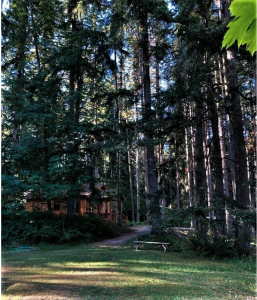
The summer, 2023 Whidbey Island Retreat was held July 17—July 23 at the beautiful Whidbey Institute, located on Whidbey Island, once home to Salish speaking residents, including members of the Lower Skagit, Swinomish, Suquamish, and Snohomish tribes. Whidbey Island is about 30 miles north of Seattle, Washington, a short 20-minute ferry ride from Western Washington into Puget Sound which is part of the recently renamed Salish Sea.

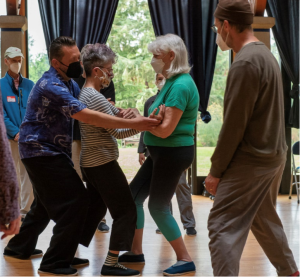
Forty-seven people participated in the retreat, two less than capacity since two people unfortunately had to cancel at the last minute due to testing positive for Covid.

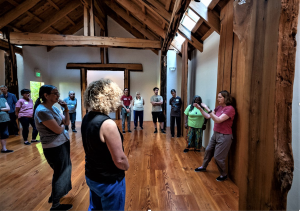
As I strolled through the slanted cubes of sunlight pouring in from the windows and open doorways of Thomas Berry Hall, it seemed like wherever I looked, I saw a senior teacher. “Yes, we’re spreading everywhere, like fungus!” Jonathan Stow joked with me. Sure enough, a friend and I later counted a full ten senior teachers present—what a plethora of learning was in store for us!


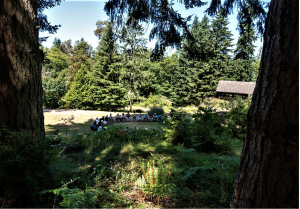
I couldn’t help feeling gratified to welcome so many people from so many cities experiencing a heatwave to our beautiful Pacific Northwest’s fresh air with our relatively comfortable (for now) summer climate in the mid 70’s—low 80’s. The towering and soothing Madrone, Locust, Douglass Fir, White Pine, Spruce, and multiple fruit trees felt as if they were quietly welcoming everyone, too.

The schedule was full and richly challenging as is customary at every tai chi retreat I have been to, yet we also had several hours of free time later in the day to do whatever we pleased which I and others appreciated.

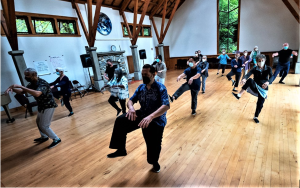
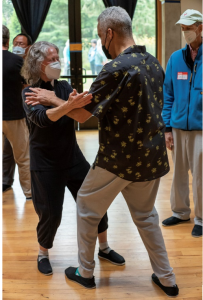
To attend this retreat, students needed to know at least the entire three thirds of the form, and of course all apprentices were invited as usual. So rather than many small classes of B1, B2, B3, Push Hands 1, 2, and so on, the daily schedule provided a smaller number of larger classes to foster a sense of community and unity.

As for the classes that were offered throughout the week: Jonathan Stow and Greg Woodson taught Sword practice. Jonathan Stow and Greg Woodson, with Sherry Kent and Bob Etherington assisting on the floor, taught Push Hands for Apprentices. Sherry Kent and Angie Holland taught Intermediate Form. Jonathan Stow, Greg Woodson, and Bob Etherington taught another form class for advanced students. Vanessa Costigan and Pam Elend taught Fundamentals. Edna Brandt, Paul Campbell, Jonathan Stow, and Sherry Kent taught Time in the Art classes. Paul Campbell led daily meditation sessions, and Anna Teeples, Laurie McCauley, and David Goodell were yin assistants in form classes.

Although I have happily returned to taking and teaching in-person tai chi classes in Seattle, this was my first in-person tai chi retreat since the pandemic began. Because of this, I wanted to absorb as much as I could while also being aware of pacing, and being kind and compassionate with myself as so many of us who are growing older and hopefully wiser seem to be experiencing.

It was a pleasure to communicate in-person versus on Zoom with teachers and friends from so many different cities, states and even countries—Ireland (Vanessa) and The Netherlands (Sherry)—as well getting to know many more interesting and friendly tai chi students whom I met for the first time.

Aside from all our excellent classes, many moments felt significant throughout the week. While sitting in a rocking chair on the Farmhouse porch one crisp, sunny morning, I watched a deer raise herself up onto her hind legs in perfect balance to reach a pear, pull it from the tree, then slowly chew and swallow it. A child deer suddenly appeared from the foliage near her to eat fruit from the ground. As they calmly walked past me, the adult deer turned her head to look squarely into my eyes for many seconds followed by the child deer behind her who glanced briefly straight into my eyes. Watching them, I felt as if I were on an oasis, momentarily removed from the worries of our world.

Later at breakfast, several friends spoke excitedly about hearing the loud screeching of a Great Horned Owl at night and spotting a cougar.

The labyrinth drew me in to circumambulate within its well-trodden, yet delicate paths. On several evenings before retiring to bed, I found myself walking toward the darkened sanctuary where I did a round inside with another peer who had entered before me apparently with the same idea. On another evening while doing a round alone, surrounded by the naturally cut trunk-ringed slabs lining the walls of the sanctuary’s inner chamber, the air felt so still and soft, it felt holy.

For a moment when Christyn Johnson, chef extraordinaire, wasn’t busy cooking or refilling food for all of us, she and I agreed that since we are all now survivors of the pandemic, it is even more important than ever to cherish one another and appreciate life!

And oh my, this sentiment sure came through in the amazing food  that Chris lovingly prepared for us along with chefs: Kyra Smith, Gina Horrocks, and Christina Robinson.

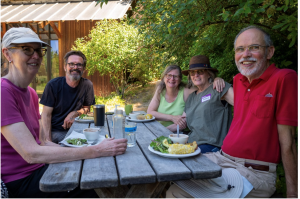
For three meals every day, we were blessed with such wholesome, fresh, varied, and tasty food, that no matter whom I happened to be sitting with, we were compelled to first praise the varied aspects of the food and savor the fresh flavors before talking about anything else. Every meal was truly a work of ephemeral, edible art prepared with love.


The evening programs included collaborative large ball and badminton games, a documentary movie about the importance of silence, and a documentary about Cheng Man-ch’ing with a Q&A discussion following. For the final night we enjoyed a talent show including slides of original visual art, thought-provoking and humorous stories and poetry; and singers who performed both acapella and accompanied by guitars.


Toward the end of the retreat, a participant unfortunately became ill and tested positive for Covid, so that person immediately isolated and left the retreat in the evening. Covid tests were distributed for all of us to test again for as many times as we wanted—after being tested upon entrance the first day—and no one else tested positive at the retreat.

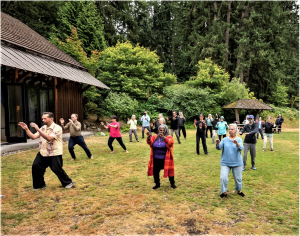
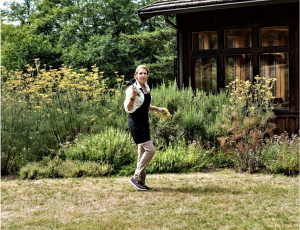
After that, most classes were held outdoors rather than inside the studios which felt to myself and some others I spoke with like a silver lining.  Outside we had the added benefit of the chi emanating from all the trees encircling us from their deeply rooted, straight trunks and buoyant branches and leaves, silently supporting us like majestic mentors. Occasionally a Barn Swallow—or was it a Black-capped Chickadee?—would flit from a high branch of one tree to another as we stepped, shifted, and rotated through our form.

With each passing day, I learned more about how I can improve my tai chi form, push hands, and sword practice, along with discovering new ways to meditate. It felt humbling and eye-opening for me to realize how many little things I had gotten in the habit of not doing quite right in the Intermediate Tai Chi Form that I had been completely unaware of. Now, I feel grateful to know what I need to work on to hopefully embody these newly realized adjustments.

The teachers combined their usual high-quality teaching tempered with plenty of good humor to go around. I especially appreciated how they paired their keen awareness and sensitivity with our individual needs and abilities.


I want to share some excerpts from Cheng Man-ch’ing’s famous The Hall of Happiness poem since they relate to much of what I personally experienced or observed going on with others in real time at the retreat, and he concludes with his soaring wishes for us all:

“
the joy I mean is
the joy of continuous growth, of helping to develop in ourselves and others the talents and abilities with which we were born
It is to revive the exhausted and to rejuvenate that which is in decline so that we are enabled to dispel sickness and suffering
 Let us here correct our past mistakes and lose preoccupation with self
 let us enter the land of health and ever after walk within its bounds. Let us fortify ourselves against weakness and learn to be self-reliant
 Then our resolution will become the very air we breathe, the world we live in; then we will be as happy as a fish in crystal waters. This is the joy which lasts, that we can carry with us to the end of our days…” *

If Cheng Man-chi’ing were still alive and participating at the Whidbey Island Retreat, I can easily imagine him smiling at us with his eyes twinkling to witness the abundance of sincere teaching, learning, and other good-natured interactions taking place amongst us. While I’m at it, I bet senior student of Cheng Man-chi’ing and our Tai Chi Foundation founder, Patrick Watson, would be pleased with us as well.

We are so lucky to be part of such a high-quality and caring tai chi community. Now that I have finally participated in an in-person retreat again, I look forward to attending the next one.


Contributors to this blog: David Goodell and Rose Woods.

Photographs by: David Current and Sherry Kent


*Cheng Man-ch’ing and T’ai Chi: Echos in the Hall of Happiness, An Anthology of Articles from the Journal of Asian Martial Arts, Edited by Michael A. DeMarco and T.G. LaFredo, p.186.

Why Tai Chi and Qigong May Be the Best Forms of Meditation for You

candle flame for blog post

If you’re one of the millions of Americans feeling overwhelmed by stress and exhaustion, you’ve probably been told to try meditation. But there are many forms of meditation, which may leave you wondering which is the best for you. The good news? Tai Chi and Qigong stand out as unique and versatile forms that offer a myriad of benefits. Here’s why these practices may well be the best forms of meditation you’ll ever adopt.

They’re Ideal for People Who Have Trouble Sitting Still

Traditional seated meditation requires individuals to remain still for extended periods, which can be challenging for many people. Tai Chi, as a martial art that embodies “moving meditation,” provides a dynamic alternative. Its flowing sequences engage the body and mind, allowing practitioners to experience a meditative state while in motion. The gentle and controlled movements of Tai Chi facilitate a deep mind-body connection, making it an excellent option if you’re one of those people who always needs to be doing something.

They Offer Two Forms of Stress Relief, Not Just One

Tai Chi and Qigong offer a unique combination of meditation and exercise, creating a powerful synergy for stress relief. Other forms of meditation are well-known for their ability to calm the mind and cultivate inner peace, but the low-impact exercise of Tai Chi and Qigong help you actively burn off tension and anxiety at the same time. This dual approach to reducing stress and promoting overall health may be one of the best Tai Chi meditation benefits.

They’re Great for People With Packed Schedules

In our fast-paced modern lives, finding time to consistently do any single wellness activity can be challenging enough, let alone multiple practices. One of the advantages of Tai Chi and Qigong is that they seamlessly combine meditation, exercise, and learning new things into a single activity you can do almost anywhere. If you only have room for one new healthy thing in your schedule, this three-in-one form of meditation can be a lifesaver—and it can occasionally serve as a guilt-free pass to skip the gym, too.

Learn To Meditate With the Tai Chi Foundation

The Tai Chi Foundation provides many great opportunities to cultivate a meditative practice. Free weekly qigong classes teach simple movements to restore energy and develop a calm, grounded state as a natural way of being. Classes are available for beginners and advanced students alike.

Register now!


The Tai Chi Foundation (TCF) is a not-for-profit educational organization that promotes, funds and teaches programs that enable people to learn Tai Chi Chuan and embody its principles. 

The Tai Chi Foundation’s mission is to improve health, well-being, and awareness through the study, practice, and teaching of Tai Chi and Qigong by an increasing number of people worldwide. Check out our course offerings. Sign up for our newsletter for updates on upcoming classes and events.

There are over 200 TCF affiliated instructors teaching Tai Chi classes in 30 cities around the world. Find a class in your area, become a member, and support TCF in making the world a healthier and more mindful place today. 

Tai Chi Foundation 2023

In Memory of Ken Van Sickle

 In Memory of Ken Van Sickle

Gifted Tai Chi Sword Practitioner, Instructor, and Photographer

by

Tai Chi Practitioners and Teachers from the Tai Chi Foundation
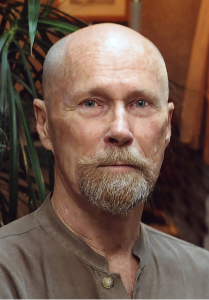
 

I remember Ken saying once in a sword workshop that no fancy steps are necessary for fencing
 just be easy, like walking in the park.

-Sherry Kent

***

Ken was a kind and generous teacher. He was very patient and encouraging. He was also very practical in his approach to practicing the movements in the forms. He emphasized that form follows function, so movements change based on application, real or imagined. This important point really opened my mind. I am grateful to him for that, which helped free me from constant worry of right or wrong in my practice. It was always fun to fence with Ken. He helped me find the blind spots, and he would be very patient and come back again and again to help me discover places that I was just not noticing. So it was fun to be a part of that and have it work for me. He was a great teacher.

-Greg Woodson

***

Four years ago, Karen Kohlhaas accompanied Ken to Seattle to teach an extended weekend of Push Hands, Sword and Fencing.  Ken stayed at my house. He was a most enjoyable guest—engaging, self-sufficient, and not at all imposing or demanding.  Our very shy cat, an excellent judge of character and level of awareness, took an immediate liking to him.

During the weekend, I had a chance to fence with Ken. The sword play was fast, unpredictable, and frankly exhilarating.  While he easily stayed with me and could have instantly taken advantage of my inexperience, he met me at my level, as though we were equals. Rather than come away from the encounter feeling discouraged by how little I knew, I came away feeling like this is really exciting, and I have the potential to become good at it.

It was a great lesson in how to teach – encouraging our students to feel excited about their progress, inspired for what is yet to come, and having fun in the process.

Many thanks to you, Ken, for your sharing your wisdom, encouragement and immeasurable kindness.

-David Goodell

***

I loved Ken and valued my few chances to work and play with him, and always to learn from him.  I loved his irony and his artist’s eye, his gentle and respectful way of engaging, in fencing or sensing hands or in any simple interaction.

We were all so lucky that Greg and Jonathan connected with him, and that Ken chose to share his wisdom with us.

-Tina Curran

***

The first time I met Ken Van Sickle was at a winter training party in New York. I didn’t really know who he was, but I had a wonderful swing-style dance with him. He was a very good dance partner leader, fluid and relaxed. I had just done days of tai chi so I was very responsive. It was magical.
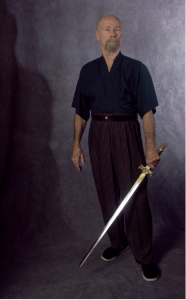
The next time I saw Ken was at summer training at Bennington College when Ken was invited to teach sword, and for the first time, I really enjoyed sword. Fencing with him was fun and I gained a deeper understanding and appreciation of the sword.

I had more opportunities to work with him in New York, Florida, and Seattle. He was always upbeat, willing to help and point out how one could improve. Greg and Jon and some others had much more time with him in New York and brought Ken’s wisdom and experience into their classes. Ken’s approach to the sword form and fencing transformed sword in our tai chi school.

Ken was funny, self-effacing, kind, and talented. I bought a few of the photographs he took, and they adorn my tai chi space. I’m sorry I didn’t get more time with him, but I will always be grateful to him for what he did for the sword, for the professor, for his appreciation of our school and for his willingness to share what he knew.

-Margaret Olmsted (MO)

***

Not only was Ken a good teacher and friend, he taught me how to hold my sword in a firm but relaxed manner.

-Cathy Cody

***

It is a treasure to me, that I attended a sword class with Ken Van Sickle at the New York Winter Training in 2019.  His transmission of the sword form and fencing, all his insights and experiences that he brought to our school, mainly through Greg and Jonathan, enriches me and means a lot to me.

Ken’s vivid memories of his time with Cheng Man-ch`ing which he shared with us showed us his beautiful and soft personality. All the photographs and films of Cheng Man-ch`ing and his students that Ken created, as well his generosity in sharing them with all of us, is an important way we can now feel more connection with Cheng Man-ch`ing.

Ken Van Sickle‘s open and warmhearted presence in the Cheng Man-ch`ing Global Forum warmed my heart.

-Maria Gandler

***

I met Ken in February 2019 before the world shut down when Ken came to Seattle to work with us here and I was struck by his humor, strength, skill, and unwavering enthusiasm.

He was in his late eighties, and he demonstrated both form and sword form moves the entire two days of his visit; he answered any and all questions asked of him, and he never sat down. And at the end of the first day when we were all exhausted and ready for home, dinner and rest, he wanted to know where we were going to get a glass of wine.

I remembered sitting on a chair and marveling at his vitality and hoping that I would be as strong in my late eighties as Ken was in his, avowing to get to work on that now because he had at the time more vitality than I had in my late fifties!

Ken was a lovely man and I feel lucky to have spent the short amount of time with him that I did. Rest in peace and power Ken and thank you.

-Pam Kelley Elend

***

Ken came on a tour of Europe/UK and he was hosted by the team in St Albans.  He was about 82 at the time, worked on form, applications but mostly, sword.

Someone asked him, “What should the footwork be like in sword?”  Ken’s answer was, “like taking a walk in the park.”

I loved that reply and I’ve sought to apply it in the open hand short form also. Can we get our steps as relaxed and free, as if we were taking a walk in the park?

Thanks Ken.

-Danyal Sattar

***

Ken was my friend, teacher, and patient, and I miss him dearly. On my devices he is still very present as Google rotates photos of Ken and Greg or Jonathon or others practicing in the park or at the Soho coop pre-pandemic. There, Ken and I would sit on the bench and not talk about tai chi, but movies and day to day stuff.

One of my favorite tai chi gems from Ken is what he referred to as “FGO’s.” I will let you substitute the F with whatever you want, but the G and O stand for growth and opportunities. F***ing Growth Opportunities. Let us not forget this essential aspect of practice and take inspiration from Ken that even after all his years of practice he embraced FGOs!

As a teacher, Ken was humble, encouraging, and always positive with his feedback. I feel incredibly fortunate to have had him in my life.

-Kate Mansfield

***

First among the things that I remember about Ken Van Sickle was his infectious smile. He smiled with his mouth and his eyes, his whole being, it seemed to me.
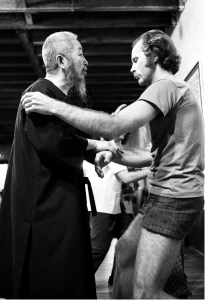
He spoke reverently of the Professor, yet not from afar but as someone who was befriended. His heart was touched by the Professor, and he shared that heart with those of us who worked with him.

He encouraged me even when I made the same mistakes again and again. While fencing he suggested that rather than be serious about it, I might treat it like a walk in the park. My spirit was lifted immediately, and I try to take that with me still.

Ken gave freely that which he learned and was close to his heart, and that touched me and will anchor my memories of him.

-Bob Etherington

***

We were having a sword class with Ken and he had us in a circle, inviting each of us one at a time to step in to the center and engage with him. Some of us did fencing moves, but mostly we were trying to stay connected to Ken through our swords. Some of us knew enough to attempt to adjust our relative body position or the relationship of our sword to him. All of us had been encouraged to cultivate a soft listening awareness instead of waiting for a moment to pounce or attack his wrist, cutting across the wrist while withdrawing being considered the ideal way to disarm your “o” as Ken called it, ( or “opponent”).

I was invited to go first, so I dutifully stepped forward away from the perimeter of the circle and toward the center. He had us touch swords and start walking, circling around with light sword contact. I felt cautiously protective in case he came in toward me suddenly with one of those disabling moves. Ken just smiled and said something like “stop being so hunkered down and defensive” … just go for a stroll in the park with me [in the center of the circle] and stay listening.”

I felt my shoulders loosen a bit and my attitude became more responsive. While I was in motion with Ken, I understood how much more easily I could learn to respond to the situation than if I had an ever vigilant and tense attitude towards him.

And I also learned to visually take in all of Ken rather than being fixated on our swords out of fear where his sword might go. Oh yes, dantian awareness… So easy to forget but so essential to the entire endeavor of communicating with others, whether actually going for a walk in the park or fencing with wooden swords.

Thanks, Ken. Your teaching was imminently clear and to the point (pun intended).

Like Patrick Watson, Ken could meet me at the level of understanding where I was and provide enough inspiration for what might be possible in the future.  That reflected his level as a teacher and a companion in the Tao for which I am grateful.

-Matsu Matsumoto

***

Around Ken’s 80th birthday, I took a train to Long Island with Ken and his partner, Victoria, to where Ken’s son was living. I was going out to play violin at an art gallery where Ken also knew the owner. At the owner’s request, Ken demonstrated Push Hands to the audience using me as his partner.

Later, Ken generously told me how he noted my contact with the audience as I looked at them while playing the violin. He himself had such a presence, as we see in photos of him. Victoria was so lovely and kind.  It was a pleasure spending time with them.

-Michael Braudy

***

In Seattle, we apprentices had the precious opportunity of having Ken Van Sickle fly to us from New York for a weekend workshop just before the pandemic. I remember worrying a little that I would feel intimidated by Ken since I knew how he had been a longtime student of Cheng Man-ch’ing and he was a well-known tai chi sword expert.

But as soon as I met Ken and his friendly, warm personality combined with his surprisingly humble demeanor, I immediately felt completely comfortable with him as if he were an old friend.

However later that weekend, when Ken invited us to fence with him in the middle of the circle, I felt frozen in that old stuck place of self-doubt. When I finally very hesitantly stepped into the circle, I will never forget the expression on Ken’s face as our swords touched, ever so lightly. His face radiated so much kind, gentle, and attentive energy, that I was touched to the core, and I immediately relaxed. Time seemed to hold still as he carefully helped me keep my sword connected with his.

Months later, as a new blog editor for the TCF website, when I couldn’t get anyone to send in anything, Ken totally came to my rescue. He let me know he had some completed “notes” which he had planned to publish in a new book, but since that hadn’t yet happened, he informed me he’d just send them all to me to publish on our website.
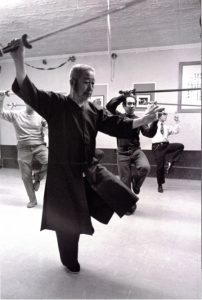
Ken eventually sent in a total of 11 brilliant, detailed blogs accompanied by his photos where he shared personal stories, experiences, lessons, and further insights gleaned from working continuously and closely with Cheng Man-ch’ing for eight years from 1967-1975 until Professor passed away.

What a treasure trove Ken left us on our foundation website for our continued learning and reference! In addition, of course, we have his books: Tai Chi Sword; NYC T’ai Chi in black and white co-authored with Terry Marks; Ken Van Sickle: Photography 1954–2009; and the documentary feature of which he was the cinematographer: The Professor: Tai Chi’s Journey West.

For Ken’s 88th birthday we emailed Ken our birthday messages shortly after he left Seattle. I wrote a poem for him using titles of some of the images from the Sword Form. When Ken emailed back how much he liked the poem, he added in his humble way that it was the only poem he ever truly understood! His response lifted my spirits so much, I got back into my creative writing after a long lapse.

Ken not only shared his masterful gifts with us and others far and wide way into his late 80s (!), he also helped our unique capabilities grow, wherever we were at. And all the while he made it fun!

-Annette Peizer

***

Ken was beloved by so many in our tai chi community and beyond. He exemplified the child-like joy of the Fire Element that manifests in swordplay as he fenced with us with a smile and sparkle in his eyes!

He was so generous in the way he made a conscious effort to pass on everything he could while his health allowed. Our school really has him to thank for raising the level of our sword game.

-Thomas Malone and Hollis Yungbliut

***

It’s a trumpet; it could have been a sword

We know and love and respect Ken’s mastery and teaching of the sword. And we have all benefited from his photographs and video of Professor Cheng and his school in New York. But Ken also had a distinguished career as a photographer aside from his tai chi photography. In 2018 he published a gorgeous book of his photos:

Ken Van Sickle (2018) Photography 1954-2009 Damiani, Italy.

I learned something interesting from this book. Ken was an outstanding “street photographer.” Many of his photos are spontaneous, unstaged, unposed, pictures of people in their natural habitats.

Look at this photo:
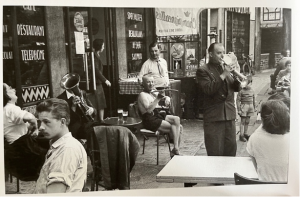
The woman is laughing at something; the man is playing the trumpet; there is another horn; there is writing on all the windows; the man in the left corner with his slick hair is looking out of the frame; everyone is looking in a different direction … yet it all hangs together.

When I was trying to do photography, I could never do this kind of photography. I could never respond spontaneously enough, never see the moment when an interesting photo was coming into being and going out of being. I had no chance of being Cartier-Bresson; I wanted to be Ansel Adams, who captured his moments on a geological time scale.

After I got Ken’s book, it occurred to me that this kind of photography is connected to tai chi, and especially to the sword. To create this picture, Ken had to respond in the moment to the man with the trumpet, and everything else going on. Had it been a sword instead of a trumpet, he would have to respond in the same way, in that same moment. So I wrote to Ken and asked if he thought there was a connection. I cannot find his reply to quote him exactly, but he agreed, in his humble way, that he thought there was an underlying principle connecting the two.

For me, Ken’s photography is a reminder of what it means to respond to the situation, not to my imagination of the situation. My delay in response, my desire to arrange the man with the trumpet in just the way I think he should be, is my greatest hindrance in tai chi and push hands and sword. My thanks to Ken for that reminder.

-Hal Caswell

***

All photos by Ken Van Sickle

Slideshow of Ken Van Sickle facilitating a Tai Chi Foundation Weekend, Bennington College Vermont July 2008, and New York, NY

Slideshow photos taken and compiled by Patrice Wooldridge (11 minutes, 32 seconds)

https://vimeo.com/889989864?share=copy