Accessibility Tools

Skip to main content

Author: Marina Muhlfriedel

Embracing Nature Through Tai Chi


In our increasingly frenetic and digitally based world, finding ways of connecting with nature is an excellent way to ground yourself, reduce stress, and gain perspective amid the chaos of life. If you’re looking for new and simple ways to achieve this, learning tai chi may well be for you. Tai chi, an ancient but highly accessible Chinese martial art, offers a unique way to connect deeply with the natural world — and reap all the wellness benefits of doing so. 

Here’s how.

Understanding Yin and Yang and the Five Elements of Nature

At the core of tai chi are two foundational theories around Yin and Yang (symbols of dualism) and the Five Elements (earth, wood, metal, water, and fire). Each of the five elements symbolizes a different aspect of nature and tai chi practice:

  • Earth represents gravity’s grounding force, emphasizing balance, and relaxation.
  • Wood symbolizes both the rootedness and flexibility of a tree.
  • Metal represents focused energy, inspiration, and uprightness. 
  • Water embodies fluidity, adaptability, and potency in movement.
  • Fire reflects the internal energy and presence developed through practice.

These core principles of Chinese philosophy emphasize the balance and interdependence of forces and elements found in nature​​.

Other Ways Tai Chi Connects Practitioners with Nature

Practicing tai chi outdoors enhances the connection with these elements. The nature-inspired and nature-mimicking movements and postures in tai chi allow practitioners to feel a deeper kinship with the environment all around them. Experiencing some of the Five Elements firsthand makes this connection all the more direct and powerful.

Tai chi also promotes mindfulness and awareness, which help you to avoid distracting thoughts and focus on feeling one with nature. This allows you to access and harness the connection with your environment, achieving a state of meditation.

Further, the practice of tai chi involves seasonal tunings. These guide practitioners as they transition from one season to the next, promoting a healthy oneness with each new turn in the calendar year. Just as they are in the modern Western world, seasons in tai chi are strongly associated with certain natural elements and energies. This means you’ll always have fresh sources of inspiration as you learn to appreciate and connect with each one.

Connect to Nature with the Tai Chi Foundation

The Tai Chi Foundation (TCF) is a not-for-profit educational organization that promotes, funds, and teaches programs that enable people to learn tai chi chuan and embody its principles. Join us for a FREE Open House meeting to learn more about tai chi and qigong — and ways to get started with us!

The Tai Chi Foundation’s mission is to improve health, well-being, and awareness through the study, practice, and teaching of tai chi and qigong by an increasing number of people worldwide. Check out our online course offerings. Sign up for our newsletter for updates on upcoming classes and events.

Over 200 TCF-affiliated instructors teach tai chi classes in 30 cities worldwide. Find a class in your area, become a member, and support TCF in making the world a healthier and more mindful place today. 

By Oliver Herzfeld

Tai Chi Foundation 2024

Photo by Tim Gouw on Pexels

7 Things to Do in Litchfield County, Connecticut, This Summer

From relaxing day trips and spa treatments to music festivals and a week-long tai chi retreat, Litchfield County in Northwestern Connecticut offers countless summertime getaway opportunities.

With many people feeling stressed about geopolitical conflicts, climate change, and polarizing tensions in the US, focusing your summer activities around wellness can be a salve for the soul. Whether you live near Litchfield County or are visiting this beautiful and historic part of New England, you’re sure to find an abundance of fun, de-stressing activities for all ages and interests. Here are a few:

  1. Take a hike. Litchfield County, Connecticut, has a wealth of beautiful trails for every outdoor enthusiast. From gentle, meditative strolls to serious backpacking, biking, and running, you’ll find your path away from the busy world. Be sure to check AllTrails for curated suggestions in the region.
  2. Love fine fiddling? Set your sights on the annual Podunk Bluegrass Music Festival in Goshen, August 8-11. You’ll hear some of the best bluegrass around, plus there will be all kinds of activities for grownups and kids alike!
  3. Commune with the birds. Ripley Waterfowl Conservancy in the town of Litchfield provides a unique chance to explore the natural habitats of more than 80 species of rare and endangered birds while learning about the bounty of local nature and the need for waterfowl conservation. Book a tour or explore on your own.
  4. Chill at a spa. Seeking some serious pampering? There are plenty of spas to choose from in this part of Connecticut. Check out the ultra-elegant Mayflower Inn & Spa in Washington, The Spa at Litchfield Hills in Litchfield, or the spot crowned number one on CondĂ© Nast’s list of the world’s best wellness retreats, Winvian Farm Spa in Morris.
  5.  Jazz it up! From July 26 to 28, you can enjoy the 29th annual Litchfield Jazz Fest in Washington, Connecticut. You can catch a program of world-class jazz artists for one, two, or all three days.
  6. Adore formal gardens and idyllic landscapes? Why not plan an afternoon at the Hollister House Garden in Washington, in the Litchfield Hills? The stunning American take on a classic English garden is scenically accented by an 18th-century house, barns, and outbuildings. The website even provides a preview of what will be in bloom.
  7.  Still thinking about trying tai chi? From June 17 to 24, bring balance and calm into your life at a rejuvenating weeklong tai chi retreat with the Tai Chi Foundation. Whether you’re new to tai chi or have practiced for decades, this retreat is perfect for all experience levels. Participate as much as you like in tai chi classes, qigong, meditation, Hawaiian Swimming, and more. The retreat will be held on the beautiful campus of the Hotchkiss School in Lakeville, Connecticut. Learn more and register here.

Join the Tai Chi Foundation for any of our Tai Chi Holiday Retreats this summer! In addition to the program at the Hotchkiss School in Connecticut from June 17-24, there will also be one in Cheltenham, UK, at the Dean Close School from August 12-18.

Staying closer to home this summer? Check out our dozens of online classes, in-person schools, and Teachable on-demand courses.

New to tai chi? Start here with one of our free monthly online Open Houses.

Sign up for our newsletter to stay up-to-date on all of our classes, retreats, and events.

Join TCF in making the world a healthier and more mindful place!


Marina Muhlfriedel

photography: Diego Madrigal on pexels

Tai Chi Foundation © 2024

The Importance of Relaxing Your Tailbone in Tai Chi: A Guide to Proper Alignment


Tai chi, a centuries-old Chinese martial art and mind-body exercise, strongly emphasizes body alignment and proper posture. One key element of this alignment is the act of relaxing your tailbone. In this article, we will explore the how and why of relaxing your tailbone in tai chi, delving into the benefits it brings to both physical health and the overall practice of this beautiful art form.

The Importance of Proper Alignment

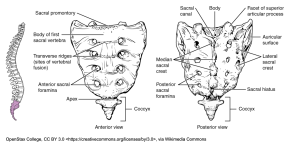
Proper alignment is fundamental to the effective practice of tai chi. Relaxing the tailbone is a crucial aspect of achieving this alignment, as it promotes a balanced and stable posture. The tailbone, or coccyx, is the bony structure at the base of the spine, and its position plays a pivotal role in maintaining a central equilibrium throughout tai chi movements.

OpenStax College, CC BY 3.0 <https://creativecommons.org/licenses/by/3.0>, via Wikimedia Commons

How to Relax Your Tailbone

  1. Start with a Neutral Spine: Begin in a relaxed, upright stance with your feet shoulder-width apart and your knees slightly bent. Ensure your spine is in a neutral position, neither excessively arched nor rounded.
  2. Visualize a 1000 Pound Weight: Using force to tuck your tailbone will only serve to tense the muscles of your abdomen, which is counterproductive to the overall relaxation we are seeking to cultivate. In tai chi, it is axiomatic that we should never force anything, and we should strive to have every joint in its most neutral alignment. Instead of forcing, visualize an imaginary 1000-pound weight hanging from your coccyx while relaxing it. This mental imagery emphasizes the importance of stability and rootedness and enhances the physical sensation of grounding.

Envisioning this substantial weight enables you to connect deeply with the earth, fostering a sense of solidity and strength. The visualization serves as a reminder to maintain a steady and grounded foundation, encouraging you to move with intention and deliberate control. As the imagined weight hangs from your coccyx, it becomes a symbolic anchor, opening the lower energy gate and further enhancing your ability to harness and direct energy throughout your body with grace and purpose.

  1. Maintain an Upright Alignment: As you relax the tailbone, be mindful of maintaining a an upright line from the crown of your head to the base of your spine. Avoid leaning forward or backward.
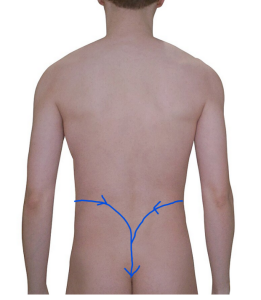
  2. Massage Your Kidneys: A key energetic massage in tai chi involves the kidneys and urogenital system. Using the backs of your hands, massage downwards and inwards 49 times from the small of your waist to your sacrum. The angle of the massage forms a V-shape as follows:

Robystarm07, CC BY-SA 4.0 <https://creativecommons.org/licenses/by-sa/4.0>, via Wikimedia Commons

In Chapter 31 of the book “There Are No Secrets,” Wolfe Lowenthal states that this is the only massage Professor Cheng Man-ch’ing said everyone should do daily. All other tai chi massages are done to suit particular circumstances. I believe Professor Cheng Man-ch’ing singled out this massage as a daily prescription because it facilitates the relaxation of your tailbone.

Benefits of Relaxing the Tailbone in Tai Chi

  1. Enhanced Stability: Relaxing your tailbone stabilizes your lower back and pelvis, providing a strong foundation for fluid and balanced tai chi movements.
  2. Improved Posture: The practice of relaxing the tailbone encourages an upright, elongated, and aligned spine, promoting good posture both within tai chi practice and in daily life.
  3. Reduced Risk of Injury: Maintaining proper alignment and stability reduces the risk of strain or injury to your lower back and spine, common areas of concern during physical activities.
  4. Forward Power: A relaxed lumbar spine enhances your body’s ability to generate and exert forward power.
  5. Opening the Lower Energy Gate: Opening the lower gate is a concept deeply rooted in tai chi philosophy. Considered the meeting point of physical and energetic forces, the lower energy gate, or “huiyin” in traditional Chinese medicine, holds significance in promoting the free flow of vital energy throughout the body.

Proper alignment through relaxation of your tailbone is not merely a mechanical adjustment but a deliberate engagement with your body’s energy pathways. By initiating a gentle relaxing of your tailbone, you lay the foundation for unlocking your lower energy gate, facilitating the unobstructed circulation of qi (vital energy) throughout your body. The act of relaxing your tailbone becomes a transformative gateway, aligning both the physical and energetic aspects of yourself, preventing energy blockages, and setting the stage for a harmonious and balanced tai chi practice.

In tai chi, the art of relaxing your tailbone is a subtle yet powerful practice that contributes to overall well-being and the effectiveness of movements. As you integrate this element into your tai chi practice, remember that consistency and mindfulness are key. You can embrace the journey of refining your posture and alignment, and experience the holistic benefits that proper tailbone relaxing brings to your tai chi practice by exploring the diverse offerings of the Tai Chi Foundation (TCF).

TCF provides live online courses, allowing you to participate in guided sessions from the comfort of your home. These virtual classes offer unique opportunities to connect with experienced instructors, ensuring that you receive personalized guidance and feedback. Additionally, the Tai Chi Foundation offers Teachable on-demand classes, providing a flexible and accessible way to learn at your own pace. Whether you’re a beginner or an experienced practitioner, these online resources offer a wealth of knowledge to enrich your tai chi journey. For those seeking a more hands-on experience, check out the regular course offerings of TCF’s affiliated local schools.

TCF is a not-for-profit educational organization that promotes, funds, and teaches programs that enable people to learn tai chi chuan and embody its principles.

TCF’s mission is to improve health, well-being, and awareness through the study, practice, and teaching of tai chi and qigong by an increasing number of people worldwide. Sign up for our newsletter to learn about our latest classes and events.

There are over 200 TCF-affiliated instructors teaching tai chi classes in 30 cities around the world. Find a class, become a member, and support TCF in making the world a healthier and more mindful place today.

By Oliver Herzfeld

© Tai Chi Foundation 2024

Lead photo by Joyce Hankins on Unsplash (using public domain Gray’s Anatomy illustrations)

The History of Tai Chi Chuan: Part II

As the world moves at an ever-accelerating pace through increasingly troubling times, there lies a practice, deeply rooted in ancient traditions, that offers a sanctuary of peace and wellness. Tai chi chuan, a martial art once shrouded in secrecy and mystique, has unfolded into a global phenomenon that transcends cultures, ages, and lifestyles. 

Here’s what you should know about the transformative period of tai chi history (reportedly between 206 BCE and 24 CE), its contemporary relevance as a bridge between the past and present, and its impactful role in holistic health and spiritual tranquility in today’s world.

From Martial Art to Modern Exercise

Over centuries, tai chi evolved from an ancient martial art into a popular form of exercise known for its health benefits. This transformation is attributed to the development of various styles, each traceable to different historical figures and families in China.

The Five Traditional Schools

Most modern tai chi types originate from one of the five traditional schools: Chen, Yang, Wu/Hao, Wu, and Sun. These styles were developed over the years, each adding its unique elements to the art form. For instance, the Chen style, dating back to the 1820s, is known for its “13 gestures,” which is considered an internal martial art form (one practiced for self-defense and health)​​.

Global Popularity and Health Benefits

Today, tai chi is practiced worldwide, not only as a martial art, but as a means to improve health and wellbeing in a multitude of ways. Just a few examples of its benefits include: 

  • Enhancing flexibility, strength, and balance (particularly for seniors at increased fall risk)
  • Promoting weight loss
  • Boosting the immune system
  • Enhancing brain health
  • Reducing stress
  • Managing chronic pain and reducing inflammation
  • Rehabilitation after stroke or injury

Its global popularity has led to a wide range of practices, from traditional forms to more contemporary adaptations suitable for people of all ages and abilities​​.

Through its evolution from a martial art to a holistic form of wellness, tai chi chuan has shown its remarkable ability to adapt and thrive in a changing world, offering a serene yet powerful way to cultivate physical health, mental clarity, and spiritual peace. As we continue to navigate the complexities and vagaries of modern life, the enduring legacy of tai chi chuan serves as a haven of tranquility and resilience, encouraging us to move with grace through the ebbs and flows of existence.

Explore the Art of Tai Chi with the Tai Chi Foundation

The Tai Chi Foundation (TCF) is a not-for-profit educational organization that promotes, funds, and teaches programs that enable people to learn tai chi chuan and embody its principles. Join us for a FREE Open House meeting to learn more about tai chi and qigong — and ways to get started with us!

The Tai Chi Foundation’s mission is to improve health, well-being, and awareness through the study, practice, and teaching of tai chi and qigong by an increasing number of people worldwide. Check out our online course offerings. Sign up for our newsletter for updates on upcoming classes and events.

Over 200 TCF-affiliated instructors teach tai chi classes in 30 cities worldwide. Find a class in your area, become a member, and support TCF in making the world a healthier and more mindful place today. 

Click here to read The History of Tai Chi Chuan: Part I

By Oliver Herzfeld

Tai Chi Foundation 2024

Götzens Tai Chi Weekend March 2024

by

Peter Kennedy


For those of you who may not know, there was a Tai Chi Weekend in Austria at the Tai Chi School in Götzens at the beginning of March 2024. This was organized by Maria Gandler and Franz Stumpf. I want to share my reflections and encourage you to visit. To clarify, the weekends called Tai Chi & Tai Ski are for apprentices and students and are held in the spring and autumn. For your information, the European Winter Training 2025 will be in Götzens, Austria!

When I arrived back in Götzens and met the local apprentices, I felt like I was being welcomed by family. Warm smiling faces and lots of hugs abounded. Leading the weekend was Els Eijssens from Amsterdam, who came with her husband Dick Pot, who was taking B3. We also enjoyed welcoming two apprentices who came from the UK: Ikuyo Mitsuzono and Lindi McAlpine, who came with husband, Grant McAlpine, who was in the PH1 class.

The weekend started on Thursday evening and finished on Sunday evening. The planning was flawless, with plenty of time for class preparation. We had three hours of apprentice classes led by Els and me, which focused on “How to Adjust,” what helps, and what can be challenging. We also did hands on adjustment practice focusing on quality of touch, listening, and intention.

We participated in “Giving Feedback on Teaching” to our teaching partner after class. We discussed how to find the best way to give and receive feedback. Maria and Franz did a wonderful roleplay, displaying behaviors we would like to avoid while team teaching. This was hilarious and a great way to illustrate what could happen in class. It brought up some of the things we may do without even realizing it.

We offered B1, B3, and PH1 classes. PH1 was very much like a workshop taught by four of us working together— Els, Maria, Franz, and myself. Each of us brought something from our own experience and shared it with the group. We focused on softness within ourselves, expanding our awareness and inviting, including our PH partner, into our “sphere of influence,” and our dantians. This felt inspiring.

We had Time in the Art classes with guided meditation and relaxation sessions for everyone. These were very much appreciated by the students, and many said that they felt a change in their bodies, their awareness of heaven and earth, and their dantians.

Something special about teaching in Götzens is that we have an opportunity to teach in more than one class and level, meet all the students, and work with most if not all, other apprentices.

One might think that the language barrier may have been an issue, but it wasn’t. The local apprentices took turns translating when needed in both directions (English ><German), which made teaching very interesting and amusing. It was an enjoyable experience for both apprentices and students alike.

Covid caused class numbers to drop in the school, but I was delighted to see a large group of students, with 16 people in the B3 class alone! The total participation at the weekend was 32.

The students had such a good time together that they suggested we go out for dinner on Saturday night which we did. We had great fun and a very enjoyable meal at a traditional Tyrolean restaurant in Götzens. The food was simple but delicious, with great service and a very friendly and cooperative staff.

With the weekend over and an extra day, on Monday, we went for a drive up into the mountains and for a lovely walk in the snow. It was spectacular, with snowcapped mountains rising high on all sides of us, showing evidence of recent avalanches high above us. The snow was a little too crusty to make snow angels, but not for the want of trying! There is something about the gravity of the mountains, the fresh mountain air, and crystal-clear water that is unforgettable. Of course, the general friendliness of the people was part of it, too.

I want to thank Maria and Franz for having organized the weekend so well. Thank you to Ikuyo and Lindi for coming from the UK to help out. Thanks to the local apprentices Gabi Sponring, Claudia Gebhart, Doris Haderer and Anita Reinalter for their strong teamwork which, had everything we needed in place. Also, a big thank you to Maria, Claudia, and Franz for their translation skills, which were clear and inspiring for the students. Most of all, thanks for all the hosts’ warm welcome and joyful enthusiasm for learning, sharing, and teaching tai chi.

A huge special thank you to Els for her lead, and for how teaching with her felt effortless and inspiring. Thanks for the support, encouragement, and great conversations.

I am very much looking forward to returning to Götzens soon and hope to see you there for Winter Training in January 2025.


Photos by Maria Gandler

Peter Kennedy started tai chi studies with Patricia McNally in STCC Dublin Ireland in 1988. He became an apprentice in 1998. Peter has taught in the Dublin school and at European Summer and Winter Trainings, tai chi weekends and online classes. Now based in Nantes France, Peter has continued his apprentice studies in Amsterdam, the UK and the USA.

Peter served on the Board of Directors of the Tai Chi Foundation (TCF), and with the help of Margaret Matsumoto was instrumental in the creation of the TCF Certification Committee and the TCF Teacher Certification Program.

Tai Chi Foundation 2024

Tai Chi as a Method of Alleviating Depression

In the realm of alternative therapies for mental health, tai chi has emerged as a gentle yet powerful practice that holds promise in alleviating symptoms of depression. This centuries-old Chinese martial art and mind-body exercise, often described as “meditation in motion,” seamlessly combines fluid movements with mindful awareness, offering a holistic approach to mental well-being. Tai chi provides potential benefits to individuals grappling with depression and can help contribute to a balanced and serene mind.

Understanding Depression:

Depression is a pervasive mental health condition that affects millions of people globally. Characterized by persistent feelings of sadness, hopelessness, and/or a lack of interest in activities, it can significantly impact one’s quality of life. While conventional treatments such as medication and therapy remain essential, complementary practices like tai chi are gaining recognition for their positive effects on mental health.

The Essence of Tai Chi:

Tai chi, rooted in traditional Chinese philosophy, emphasizes the integration of mind, body, and spirit. It involves slow, deliberate movements and emphasis on relaxation and balance, promoting a state of calm awareness. The practice draws inspiration from Taoist and Buddhist principles involving balance, harmony, and the flow of vital energy, known as “qi.” At the same time, tai chi is not a religion. It is a secular practice that is open to people of all faiths and beliefs.

The Benefits for Mental Health:

  1. Stress Reduction: Tai chi serves as a moving meditation, allowing individuals to focus on the present moment and inner body sensations to cultivate mindfulness. The rhythmic, flowing movements help reduce stress hormones, fostering a sense of calm and relaxation.
  2. Improved Mood: Regular practice of tai chi has been linked to an increase in serotonin levels, the neurotransmitter associated with mood regulation. The gentle, repetitive motions promote a positive outlook and emotional balance.
  3. Enhanced Sleep Quality: Individuals with depression often struggle with sleep disturbances. Tai chi has shown promise in improving sleep quality, promoting better rest, and contributing to an overall sense of well-being.
  4. Mind-Body Connection: Tai chi encourages a deep connection between the mind and body. This heightened awareness can help individuals recognize and manage negative thought patterns, fostering a more positive mental state.
  5. Social Engagement: Tai chi is often taught and practiced in group settings, providing social interaction opportunities. Building connections and a sense of community can be particularly beneficial for those experiencing depression.

Mental Well-Being:

Tai chi stands as a testament to the profound connection between physical movement and mental well-being. As individuals seek holistic approaches to managing depression, this practice offers a gentle yet effective pathway toward serenity. By integrating tai chi principles into their lives, individuals may discover a renewed sense of balance, mindfulness, and resilience in their journey toward mental health.

Starting Your Tai Chi Journey:

  1. Consultation with Healthcare Professionals: Before incorporating tai chi into a depression management plan, individuals should consult with their healthcare providers. While tai chi can be a valuable complementary practice, it should not replace conventional treatments.
  2. Approaching Tai Chi: Please consider exploring the diverse offerings of the Tai Chi Foundation (TCF). TCF provides live online courses, allowing you to participate in guided sessions from the comfort of your home. These virtual classes offer unique opportunities to connect with experienced instructors, ensuring that you receive personalized guidance and feedback. Additionally, the Tai Chi Foundation offers Teachable on-demand classes, providing a flexible and accessible way to learn at your own pace. Whether you’re a beginner or an experienced practitioner, these online resources offer a wealth of knowledge to enrich your tai chi journey. For those seeking a more hands-on experience, check out the regular course offerings of TCF’s affiliated local schools.
  3. Consistent Practice: Like any form of exercise or mindfulness practice, consistency is key. Establishing a regular tai chi routine, even if brief, can contribute to the long-term benefits for mental health.

TCF is a not-for-profit educational organization that promotes, funds, and teaches programs that enable people to learn tai chi chuan and embody its principles.

TCF’s mission is to improve health, well-being, and awareness through the study, practice, and teaching of tai chi and qigong by an increasing number of people worldwide. Sign up for our newsletter for updates on upcoming classes and events.

There are over 200 TCF-affiliated instructors teaching tai chi classes in 30 cities around the world. Find a class, become a member, and support TCF in making the world a healthier and more mindful place today.

By Oliver Herzfeld

© Tai Chi Foundation 2024


Photography: Elīna Arāja on Pexels

The History of Tai Chi Chuan: Part I


As the sun rises, casting a warm glow over a tranquil park, a group of individuals moves in harmonious synchrony, their motions fluid and graceful. This scene, replicated in parks across the globe, is a testament to the enduring legacy of tai chi chuan. The ancient art has transcended its martial origins to become a symbol of peace, health, and spiritual balance. 

The story of tai chi is not just a chronicle of a martial art, but a fascinating journey through centuries of Chinese philosophy, culture, and wisdom. It’s a narrative that intertwines the principles of Yin and Yang, the teachings of Daoism, and the evolution of a practice that started as a form of self-defense and transformed into a global phenomenon promoting well-being and harmony.

Ancient Roots and Philosophical Foundations

Tai chi chuan, a name translating to “grand supreme fist,” is an ancient Chinese martial art deeply rooted in Chinese philosophy and cosmology. The origins of tai chi can be traced back to philosophical and spiritual practices that predate recorded history.

Philosophical Beginnings

The foundations of tai chi are closely linked with ancient Chinese cosmology, particularly the concepts of Yin and Yang — which represent opposing yet complementary forces — and the philosophy of Daoism. The Daoist concepts, introduced by Lao Tzu around 500 BCE, emphasize harmony with nature and the importance of softness and flexibility in life, which are key principles in tai chi practice​​​​.

Early Development

From there, the early development of tai chi chuan became associated with both Daoist and Buddhist practices. Historical accounts suggest that the origins of tai chi can be traced to the legendary figure Zhang Sanfeng, a Daoist monk who is reported to have lived sometime between 900 and 1300 CE. He is credited with the creation of a set of exercises that combined the physical training methods of Shaolin gong-fu with Daoist and Buddhist theories of inner energy, or Qi​​.

Tai chi’s history is a rich tapestry that begins with the threads of ancient Chinese philosophy and martial arts and continues to be a healthy practice recommended by both Eastern and Western medical experts today. Its journey from the mountain temples of ancient China to community parks and health studios around the world is a testament to its timeless appeal and enduring value. 

Click HERE to read The History of Tai Chi Chuan: Part II!

Explore the Art of Tai Chi With the Tai Chi Foundation

The Tai Chi Foundation (TCF) is a not-for-profit educational organization that promotes, funds, and teaches programs that enable people to learn tai chi chuan and embody its principles. Join us for a FREE Open House meeting to learn more about tai chi and qigong — and ways to get started with us!

The Tai Chi Foundation’s mission is to improve health, well-being, and awareness through the study, practice, and teaching of tai chi and qigong by an increasing number of people worldwide. Check out our online course offerings. Sign up for our newsletter for updates on upcoming classes and events.

There are over 200 TCF-affiliated instructors teaching tai chi classes in 30 cities around the world. Find a class in your area, become a member, and support TCF in making the world a healthier and more mindful place today. 

By Oliver Herzfeld

Tai Chi Foundation 2024

Photo by Jben Beach Art

Suggested Reading, Especially for Newer Apprentices

By Steve Shulman

Our best practice and progress in tai chi is experiential — body-to-body. Nevertheless, there are books that can be inspiring, fascinating, and helpful.

In the early days of our school, very few English-language tai chi books were available. Over time, new volumes began to appear. Folks would get in line to be the first kid on their block to check them out. Of course, a zillion books and YouTube videos about tai chi are now available — ranging from wonderful to
 less than wonderful. Additionally, much of the tai chi available to view online and read about is not the style our school teaches, so it can be confusing, to say the least.

The following is a list of books that, if you haven’t already read them, could be helpful to you. Our school especially recognizes the first seven titles, plus Wolfe Lowenthal’s three books (12, 13, and 14).

As you might expect, a certain degree of repetition threads through the books — especially in the basics, like describing the physical movements of tai chi. However, I have found that each contains its own flavor and unique nuggets.

  1. T’ai Chi Ch’uan, A Simplified Method of Calisthenics for Health & Self Defense by Cheng Man-ch’ing. I believe this book was ‘replaced’ later by:
  2. Master Cheng’s New Method of Taichi Ch’uan Self-Cultivation by Cheng Man-ch’ing. Collectors will appreciate having both books one and two in their collection. Others who already have this volume might choose to skip the first one.
  3. T’ai-Chi, The “Supreme Ultimate” Exercise for Health, Sport, and Self-Defense by Cheng Man-ch’ing and Robert W. Smith (available in hardback, paperback, and Kindle editions).
  4. Master Cheng’s Thirteen Chapters on T’ai-Chi Ch’ĂŒan by Cheng Man-ching, translated by Douglas Wile.
  5. The Tao Teh Ching is a seminal text about Taoism with many, many translations. Professor Cheng published one titled Lao Tzu: My Words Are Very Easy To Understand. I happen to resonate with this (strangely spelled title) volume: Tao Teh King, Interpreted as Nature and Intelligence by Archie J. Bahm.
  6. Cheng Man-Ch’ing’s Advanced T’ai-Chi Form Instructions by Cheng Man-Ch’ing and translated by Douglas Wile is out of print but you might find it at a library or used bookstore.
  7. A book you should definitely check out is Tai Chi Touchstones, Yang Family Secret Transmissions, by Douglas Wile.
  8. Cheng Tzu’s Thirteen Treatises on T’ai Chi Ch’uan (available in hardcover and paperback), by Cheng Man Ch’ing, translated by Benjamin Lo and Martin Inn.
  9. Zheng Manqing’s Uncollected Writings on Taijiquan, Qigong, and Health, with New Biographical Notes (greenish paperback), by Douglas Wile. While this is currently unavailable as a new book, you might check your local library or used bookstore for a copy.
  10. Another seminal book we should all read is The Taijiquan Classics. Many translations exist, such as T’ai Chi Classics by Waysun Liao or The Taijiquan Classics by Barbara Davis.
  11. Cheng Man-ch’ing and T’ai Chi, Echoes in the Hall of Happiness, An Anthology of Articles from the Journal of Asian Martial Arts (paperback), edited by Michael A. DeMarco and T.G. LaFredo.
  12. If you haven’t yet explored them, Wolfe Lowenthal‘s three books are must-reads: There Are No Secrets
  13. Gateway to the Miraculous
  14. Like a Long River
  15. Another wonderful book is Chinese Boxing:  Masters and Methods by Robert W. Smith.
  16. A more recent book is In the Presence of Cheng Man-Ch’ing  (My Life And Lessons With The Master Of Five Excellences), by William C. Phillips.

For video lovers, in addition to the “Master Tapes” released on DVD by the Cheng family, everyone in the TCF community should watch The Professor: Tai Chi’s Journey West, a documentary directed by Barry Strugatz.

While this is by no means intended to be an exhaustive list of worthwhile books and videos about tai chi, they might pique your interest. Hopefully, they will help you circle back around to a better, deeper experiential, body-to-body path.

I am always interested in hearing about other recommended books. Please share yours in the comment section below.

***

The Tai Chi Foundation (TCF) provides many ways to study tai chi including live online courses, Teachable on-demand classes, and in-person learning at TCF affiliated local schools. There are over 200 TCF-affiliated instructors teaching tai chi in 30 cities around the world

TCF is a not-for-profit educational organization that promotes, funds, and teaches programs that enable people to learn tai chi chuan and embody its principles.

Our mission is to improve health, well-being, and awareness through the study, practice, and teaching of tai chi and qigong by an increasing number of people worldwide.

Sign up for our newsletter for updates on upcoming classes and events. Find a class, become a member, and support TCF in making the world a healthier and more mindful place today.

Spring and Wood Energy, a Personal Perspective

In volunteering to write this article, I feel like I am stepping out on a limb – this is a completely new type of venture for me, and that in itself seems to epitomize wood energy. So – this is an invitation to join me in experiencing some aspects of taking on a new pursuit (while I take on a new pursuit).

Spring is the season for new undertakings, new efforts, new interests. As we emerge from the chill and darkness of winter, we see life show itself again in crocus and daffodils poking their stems through the ground, buds on trees with either flowers or leaves forming – a promise of the summer to come. What we do not see are the shoots that don’t break the ground, that don’t make it to see the sun. But those failures exist, part of the natural process of the wood energy of spring. We just don’t always see them.

But in our own efforts, we are often painfully aware of how our work isn’t enough – we aren’t enough. Our failures are fully visible (at least to us), and so our spring-like attempts at new ventures do not seem to have the same quality as the manifestation of the wood energy in the natural world. We don’t see those failures in nature, because the natural world is so good at answering failure with yet another attempt, another direction or tactic. But failure is a crucial part of spring and wood energy, for that failure is the birthplace of perseverance.

In our own pursuits, if we feel we are not succeeding, we can get tired of making the effort to do this new thing we’ve chosen, lose heart, decide the endeavor is really not for us. And some new excursions do conclude with the discovery that there is not so much interest after all. How often have you started to pursue something when the realization hits – “I’m really not enjoying this”? That’s a good indication that maybe another pursuit would be more rewarding. But for myself, with goals I ardently want to achieve but am finding difficult, the mental wrestling often starts with questions like – why can’t I do this right? why don’t I learn more quickly?, others can do it, why can’t I? I have not found those questions to be particularly useful – they just make me feel bad, and don’t impel me to find solutions that actually work. At some point, I figured out that if I focus on the goal itself (and not my feelings about it), and actions that might get me closer to that goal, I had a chance at achieving it.

Our failures on a difficult path, including the roadblocks we encounter and detours we must take, are our friends. Each failure shows us something – oops, that’s not the right way to go about this, or wow, I could really use some help from someone who has more experience than I, or whoa, I thought I knew what I was doing but I was completely wrong! These are different questions, softer questions, and ones that have helped me develop curiosity about a “fail” situation, rather than worrying about “what did I do wrong?” And those questions make me think of more questions
what other approaches might there be? am I embarrassed or shy about asking for help? wonder why I assumed I knew what I was doing? To me these are interesting realizations, ideas to be curious about. And they can make the pursuit of new (and possibly frightening) activities, like writing an article that other people might read, carry the possibility of joy and renewal.

Two quotes below from heroes of mine:

“A person who never made any mistake never tried anything new.” – Albert Einstein

“If I haven’t made three good mistakes in a week, then I’m not worth anything. You only learn from mistakes.” – David Bowie

Spring forward! or sideways
or on a diagonal


Karla Nielson

Explore the Art of Tai Chi With the Tai Chi Foundation

The Tai Chi Foundation (TCF) is a not-for-profit educational organization that promotes, funds, and teaches programs that enable people to learn tai chi chuan and embody its principles. Join us for a FREE Open House meeting to learn more about tai chi and qigong — and ways to get started with us!

The Tai Chi Foundation’s mission is to improve health, well-being, and awareness through the study, practice, and teaching of tai chi and qigong by an increasing number of people worldwide. Check out our online course offerings. Sign up for our newsletter for updates on upcoming classes and events.

There are over 200 TCF-affiliated instructors teaching tai chi classes in 30 cities around the world. Find a class in your area, become a member, and support TCF in making the world a healthier and more mindful place today.

© Tai Chi Foundation 2024

Photography: Photo by Sou Mo on Pexels

Unveiling the Mystical: Tai Chi as a Gateway to Profound Experiences

Tai chi, a centuries-old Chinese martial art and mind-body exercise, with its slow, deliberate movements and emphasis on relaxation and balance, is often seen as a form of gentle exercise or method of stress relief. However, for some practitioners, it can also be a gateway to mystical experiences.

Mystical experiences are often described as moments of unity with something greater than oneself, a sense of oneness with the universe, or a connection to a divine or spiritual realm. These experiences can be profound and transformative, leaving lasting changes in one’s perspective on life and the world. So, how can tai chi help one approach mystical realms of consciousness? There are a number of factors that may help:

The Harmony of Body and Mind

In addition to being a martial art, tai chi can be thought of as a graceful practice that harmonizes movement and awareness. Practitioners often describe a sense of flowing meditation, where each movement seamlessly connects with the next. This synchronization of body and mind creates a conducive environment for transcendent experiences.

Mindfulness in Motion

The slow, deliberate movements of tai chi encourage practitioners to be fully present in the moment. This heightened state of awareness becomes a gateway to mystical experiences, allowing individuals to go beyond the ordinary and connect with deeper aspects of themselves.

Energetic Flow and Qi

Tai chi is rooted in the concept of Qi, the universal life force energy that flows through the body. By engaging in the gentle, rhythmic movements of tai chi, practitioners aim to cultivate and balance their Qi. This balanced flow of energy can help open pathways to a heightened sense of awareness and interconnectedness with the universe.

Stillness Within Movement

Despite the dynamic nature of tai chi, a unique stillness is embedded within each movement. This paradoxical combination of movement and stillness is a metaphor for life itself, encouraging practitioners to find tranquility amid the chaos—a key element in pursuing mystical experiences.

Connecting with Nature

Tai chi incorporates postures and movements inspired by nature, mimicking the ebb and flow of the elements. As practitioners move in harmony with these natural patterns, a deep sense of connection with nature emerges. This communion with nature becomes a conduit for mystical experiences as individuals tap into a larger, universal energy.

The Journey Inward

Beyond the physical postures, tai chi is a journey inward. Through consistent practice, individuals may find themselves peeling away the layers of the ego and becoming more aware of different dimensions of their consciousness. This introspective aspect of tai chi invites practitioners to explore the less ego-filled depths of their being and connect with the universal essence that transcends individual identity.

Approach New Experiences with TCF’s Offerings

Certain pathways can emerge in the practice of tai chi, where focus on inner body sensations, movement, and awareness intertwine. As practitioners traverse these pathways, they may unlock experiences that transcend the boundaries of the ordinary. With its roots deeply embedded in Chinese philosophy and martial arts, tai chi invites us to embark on a journey of self-discovery, where the mystical can become not just a possibility but a tangible reality.

At the same time, it is important to note that tai chi is not a religion. It is a secular practice that is open to people of all faiths and beliefs. So please consider exploring the diverse offerings of the Tai Chi Foundation (TCF). TCF provides live online courses, allowing you to participate in guided sessions from the comfort of your home. These virtual classes offer unique opportunities to connect with experienced instructors, ensuring that you receive personalized guidance and feedback. Additionally, the Tai Chi Foundation offers Teachable on-demand classes, providing a flexible and accessible way to learn at your own pace.

Whether you’re a beginner or an experienced practitioner, these online resources offer a wealth of knowledge to enrich your tai chi journey. For those seeking a more hands-on experience, check out the regular course offerings of TCF’s affiliated local schools.

TCF is a not-for-profit educational organization that promotes, funds, and teaches programs that enable people to learn tai chi chuan and embody its principles.

TCF’s mission is to improve health, well-being, and awareness through the study, practice, and teaching of tai chi and qigong by an increasing number of people worldwide. Sign up for our newsletter for updates on upcoming classes and events.

There are over 200 TCF-affiliated instructors teaching tai chi classes in 30 cities around the world. Find a class, become a member, and support TCF in making the world a healthier and more mindful place today.

By Oliver Herzfeld

© Tai Chi Foundation 2024