Accessibility Tools

Skip to main content

Author: Marina Muhlfriedel

Welcome to the March 50th Anniversary Blog – Sherry Kent and Margaret “Matsu” Matsumoto
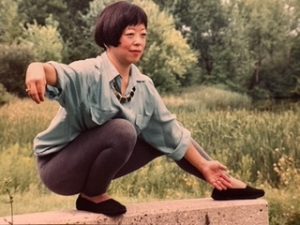
 

Matsu Matsumoto  and Sherry Kent


In honor of the Tai Chi Foundation’s 50 years, each month in 2025, we are publishing blog posts featuring historical material, reflections by TCF tai chi teachers, and photos. We hope the images and words will connect the tai chi community to our school’s many strengths, expand our understanding of the art, and inspire our practice. And who knows? Perhaps something in this series will inspire you to share your experience as well; the door is always open. Welcome to this month’s edition:

Working with Patrick Watson and Embracing the Art of Tai Chi:
A Journey to Inner Awareness and Connection

Fifty years later, Sherry Kent and Margaret Matsumoto share memories, in an interview with Charlotte Booth, of their beginning tai chi studies with TCF founder, Patrick Watson.

***
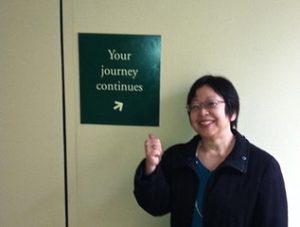
Margaret Matsumoto or “Matsu” has dedicated her adult life to teaching tai chi chuan and related arts. Her teaching career has spanned 49 years and has included thousands of students. While active in many roles for the organization, she still loves to teach and mentor others. In her own practice, she enjoys the feeling of fluidity and inner calm that come from doing tai chi. Matsu lives in Stockton, NJ. She likes listening to jazz and sings in a choral group. She also belongs to an environmental activist group.
CLICK HERE to view a video interview with Matsu.


Sherry Kent Profile Image

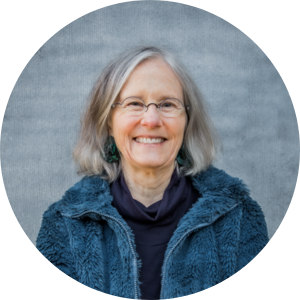
Sherry Kent began studying with Patrick Watson in 1975 and found this a transformative experience. Her tai chi journey included being trained to identify the next steps in the growth of students & teachers in TCF’s multi-level curriculum and becoming a TCF Legacy Holder. She values the ability to listen to and to witness oneself and others with acceptance and compassion. In her own practice she enjoys the feeling of effortless, relaxed balance that comes when aligned and moving freely.

CLICK HERE to view a video interview with Sherry.

***

Sherry and Matsu each met Patrick Watson in tai chi classes related to Arica workshops in the 1970s. Matsu, already very involved in the holistic spiritual work of Arica Institute, including doing Psychocalisthenics and African dance, started classes with Patrick in San Francisco. Sherry, after her first 40-day Arica training, attended Patrick’s tai chi classes with other Aricans in Boston. They both went to New York City and continued classes with Patrick on a cement playground on the Upper East Side, at a Hunter College gymnasium, and other locations.

Sherry had tried tai chi earlier with another teacher and decided it wasn’t for her. Matsu also did not stick with her first tai chi classes elsewhere. But the experience of seeing Patrick’s big body moving so gracefully and feeling his gentle, aware touch, first in making adjustments and later in push hands (partner work), made it immediately clear this remarkable man possessed a subtle and profound knowledge that attracted their attention and changed the direction of their lives.

Interview

What did you love before beginning tai chi that may have amplified the attraction of this work?

Sherry: Movement has always played a central role in my life, from ballet in grade school to modern dance in college, and later ballroom dancing, which not only refined my self-centering skills but also enhanced my ability to follow and respond to a partner’s movements—skills that are invaluable in push hands. As a child, I delighted in ball games like tetherball and foursquare, reveling in the joyful interaction with others, much like the energetic playfulness I find in push hands and sword fencing. In my teenage years, I discovered Sufi teaching stories, which guided me towards spiritual arts and personal development and the tenets that I later revisited in the Arica school.

Matsu: I loved learning to ride a two-wheel bicycle with no fancy gears. After many spills and scraped knees, I finally realized I had to trust my gut and not think about everything I was supposed to be doing. When I was sure of my balance and control, I
could even let go of the handlebars and fly down the street. Whee! What a sense of my own agency (autonomy) and freedom!

Later, African dance gave me a similar exhilaration. I only took a few lessons, but as soon as I heard the resonant beat of the drums, the rhythms set my body in motion. No time to think, just the pure joy of expressive physical movement. Similarly, when Patrick trained us to focus in our dantians and to let the movement originate from there, that awakened a vibrant whole body awareness…which to this day attracts me to pursue my personal tai chi practice and my teaching.

What was significant about Patrick’s touch?

Matsu: You couldn’t feel the hands pushing, but his push had the power of a wave to take your feet out from under you, with no trace of aggression or malice.

Sherry: Yes, his hands felt soft, light, alive, aware, gentle, warm and almost vibrating with energy. They could listen and follow you anywhere, never leaving, always adhering.

Matsu: His hands always stayed connected to his partner, gathering, adhering—you could not get away from them, lending some people to nickname push hands as “sticky hands.” Yet the touch was not invasive, just very neutral and very present. They were also healing hands. Whether you injured yourself or had accumulated stress tension, his sensitive touch could bring healing energy to that affected part.

Sherry: And yet when I tried to put my hands on his body, it wasn’t there…there was nothing there to push on.

Matsu: Yes, rotating, shifting, as though he melted away…right, Sherry?

So Patrick’s embodiment was key to igniting your interest.

Sherry and Matsu: Yes, absolutely.

You two, and Pat Gorman, were among the first teachers to teach new teachers what you had learned from Patrick. What are your memories of beginning teaching with Patrick?

Matsu and Sherry: We both remember one day at the beginning of a class at 30 West 57th Street, when Patrick turned to us and said “Now you teach!” When we protested that we did not know what to say, he said (right in front of the class): “Just use the same words I use…repeat after me.” And so we repeated his words, which at the time felt embarrassing, because the whole class was aware that we were repeating Patrick’s words right after he said them. Although occasionally Patrick would leave the room, leaving us to teach alone, he reassured us that he remained nearby to ensure the quality of the class and to fix anything that we left unclear or incorrect, so we should not worry. Looking back, we can’t believe he thought we were ready to teach at such an early stage.

Matsu: I still tell new beginning teachers that some of our indications (verbal instructions) are Patrick’s own words, such as “like water over a waterfall’ as the hands rise and then descend in front of the body, at the beginning of the form.

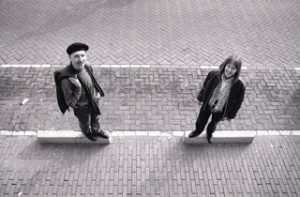
Sherry: On the weekends we would travel together to teach in Boston (where we met Greg Woodson) and the Washington DC area, and we also did a weekend each month in New York City. The first beginning group of students that we trained to teach joined us circa 1975. Margaret Olmsted attended, as well as others that are still active in TCF today. We incorporated in New York as The School of Tai Chi Chuan Inc. Then at Patrick’s request I went with a team of teachers to teach in Europe in December of 1976, where Paul van Loenen helped us to establish the Stichting School of Tai Chi Chuan in Amsterdam. Paul
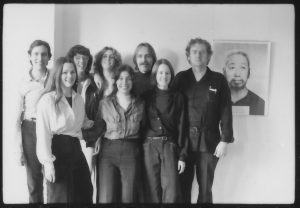
also found the teaching location which we rented and renovated, which became the school in the Kerkstraat. Patrick would travel back and forth between the US and Europe to teach us the next levels and officiate at our summer and winter trainings. For almost 20 years I flew back and forth twice each year, attending two summer and two winter trainings, one in the USA and one in Europe, teaching apprenticeships, as well as local classes in Amsterdam many evenings, and traveling to various cities to teach on the weekends. It was an intense time!

Unlike many other schools, TCF developed a very specific process to teach teachers to teach.

Matsu: Early on, Patrick understood that his team teaching approach was an historic departure from how martial arts masters usually passed their teachings to the next generation (i.e. from one master to one disciple, who then taught solo).
Patrick innovated by having us team-teach, thus allowing two people to bring their complementary skills and strengths to each class. The focus of the class remained on the objective teaching itself (“the content”) rather than on the personality of the teacher and his/her teaching style (“the delivery”).

Patrick introduced Grandmaster Cheng Man-ching and Oscar Ichazo in the early 1970s. What stands out to you now about this meeting?

Matsu: When they met, Professor Cheng honored Oscar by recognizing him as ‘the older soul’ even though the Professor appeared to be the older of the two of them in real-time terms. The Professor even encouraged his students to look into
Oscar’s Arica work since the Chinese Classics were too arduous for Americans to undertake to achieve any kind of self-knowledge and cultivation of internal spiritual consciousness. Luckily for us, Patrick Watson helped us develop as a tai chi school with the best qualities from each tradition.

Patrick had great dedication to his own tai chi practice, to carrying Professor Cheng’s work to the world by cultivating the teaching of teachers, and to Oscar, who was himself a very accomplished martial artist. Oscar asked Patrick to be his bodyguard, clearly a 100% vote of confidence in Patrick, who served very honorably and capably in this capacity for many years.

Sherry: In his protective role, Patrick illustrated and taught basic security awareness to us, which we now pass on through the practice of “Warrior Security Awareness” within the big semi-annual training programs.

What about the confluence of tai chi and Arica?

Sherry: Some things that I liked about the early Arica trainings were comb ining self-development and awareness on all the levels (physical, emotional, mental and spiritual), and developing the witness, being able to learn from and to be more open with others about my self-observations and about the level of my own behaviors.

These concepts also resonate beautifully within our tai chi school. We practice tai chi not just for the physical and health benefits, such as improved balance and circulation, but also as a path to deeper self-discovery and heightened awareness. With each session of tai chi, push hands, or sword fencing, opportunities arise for observing our own egos, behaviors, and fears. Tai chi invites us not only to explore our physical awareness, but also to refine our emotional, mental, and spiritual landscapes, as well as delicately enhancing our relationships with others—gradually enriching our consciousness and awareness in every direction, inside and outside.

Matsu: I believe the strength of our school comes from the intertwining of these two streams: Professor Cheng Man-ching and Oscar Ichazo, founder of Arica Institute and the Oscar Ichazo Foundation. Patrick added his own experience with the Hawaiian arts of Lomi, Ho’oponopono and Hawaiian swimming to the blend. In his study of tai chi and other martial arts, as the only Caucasian in martial arts classes filled with Asians, he often had to prove himself. To demonstrate that he was serious, he held postures longer than anyone else and practiced diligently. He told us he had come through the “School of Hard Knocks,” getting forcibly pushed, falling, getting hurt, and then working over and over until he learned to avoid injury by relaxing. He said he came through it all and was teaching us so that we didn’t have to endure the same hardships.

From the vantage point of 50 years, what stands out as ‘the attraction’ of this work? How has the practice of learning to listen deeply shaped your life work?

Matsu: Patrick said, “Consciousness is the whole game.” In our partner work the whole “win/lose” mentality of “doing push hands” is transformed into a collaborative art of connecting to others through receptivity and empathy. In its highest manifestation, all of our tai chi studies bring us toward unity consciousness, to the visceral understanding that “we are one.” When we experience being in the Dao, we feel blessedly connected to everyone and everything. So my attraction to tai chi has been to immerse myself in this way to that greater unity.
Sherry: What I find truly magical about tai chi is its ability to deepen your connection to your own body, a journey that begins with a gentle awareness—a felt-sense that grows richer with each practice. Imagine being able to tune in to every tiny aspect of yourself, deeper and deeper and even recognizing where emotions surface within your body.

It’s a touching and transformative experience, to become so attuned to yourself internally and externally, and then to extend that awareness to others. You learn to feel subtle nuances when you touch another person—their muscles, bones, feet and balance—and join with the flow of their physical (or emotional) movements with sensitivity and grace. When partners in tai chi are able to reach this profound level of awareness, an extraordinary, non-verbal communication unfolds between them. It’s an exhilarating form of sharing that transcends words.

For 50 years tai chi has held a central position in both your lives. How has that been for you?

Matsu: Yes, I have been with the school on almost a daily basis for most of those 50 years. (The first year of my daughter’s life was the one year she saw more of me than my fellow tai chi companions did.) I feel that I have spent decades as a “door opener,’ empowering others through my personal tai chi and meditative practice, through my physical “chi touch,” through my teaching, and through my many and various administrative roles. I have been honored to hold the work of the school, to have had the opportunity to work with Patrick and his best and brightest, to invite and train new teachers, to mentor and support others in their own tai chi progress, to remain true to the legacy we inherited from Patrick and yet leave the door open for others to walk through and make their unique contributions that continue to help us evolve and to grow. What a trip! It has been humbling, occasionally frustrating, but also inspiring, crazy, and joyful!!

Sherry: Like many of us, I vividly recall Patrick pointing to his nose as he said: “This is the only enemy.” Developing self-awareness nurtures our ability to be compassionate toward ourselves and towards others, and to grow the skill to
respond softly and move in harmony with others. Tai chi has taught me “Strength Through Softness” (as Pat Gorman printed on T-shirts for us), to be more present and to listen deeply to myself and to others. This profound listening presence allows me to understand and support my tai chi students, fellow teachers, acupuncture clients, and friends, as they connect more deeply with themselves to take the next steps on their journey.

Thank you both for sharing your memories with us, and on behalf of so many people in the past half century AND so many more over the next half century, thank you for all you have given in service of TCF’s mission over the past 50 years.

Charlotte Zinsser Booth
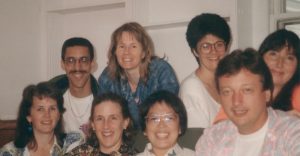
 

In 1991, TCF leaders were affectionately known as “The Gang of Eight.” Left to right: Gerrie Sporken, Greg Woodson, Peggy Watson, Sherry Kent, Margaret Matsumoto, Margaret Olmsted, Axel Scholow, Patty Gorman.
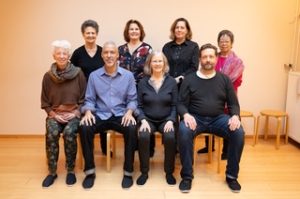


As we celebrate 50 years, our school is now led by a Legacy Advisory Committee —pictured here in 2024. Left to right: Els Eijssens – Legacy Advisory Committee facilitator, Margaret Olmsted – Legacy Holder, Greg Woodson – Legacy Holder, Gerrie Sporken – Legacy Holder, Sherry Kent – Legacy Holder, Vanessa Costigan – Legacy Advisory Committee Member, Jonathan Stow – Legacy Advisory Committee Member, Margaret Matsumoto – Legacy Holder.

***
First Discovering Tai Chi and the Tai Chi Foundation?

You can learn more about tai chi by exploring the diverse offerings of the Tai Chi Foundation (TCF). TCF provides live online courses, allowing you to participate in guided sessions in the comfort of your home. These virtual classes offer unique opportunities to connect with experienced instructors, ensuring that you receive personalized guidance and feedback. Additionally, the Tai Chi Foundation offers Teachable on-demand classes, providing a flexible and accessible way to learn at your own pace. Whether you’re a beginner or an experienced practitioner, these online resources offer a wealth of knowledge to enrich your tai chi journey. For those seeking a more hands-on experience, check out the regular course offerings of TCF’s affiliated local schools.

TCF is a not-for-profit educational organization that promotes, funds, and teaches programs that enable people to learn tai chi chuan and embody its principles.

Be sure to check out our new TCF 50th Anniversary Shop, where you can find stylish tai chi t-shirts and other great branded merchandise!


The Tai Chi Foundation Editorial Team

Photos courtesy Tai Chi Foundation Inc.

Copyright Tai Chi Foundation 2025


50th Anniversary Logo

European Wintertraining 2025 in Götzens


European Wintertraining 2025 in Götzens

16th – 25th January

“In the depth of the Winter

– Unity –

surrounded by majestic Mountains”


Nestled between the snow-capped and well-rooted Tirolean mountains, Götzens offers an abundance of the different states of the Water element in Winter – snow, ice, crystals, and steams. Surrounded by impressive mountains, blue skies, and clean crisp air, it´s easy to palpably absorb the solidity of the earth and the openness to the heavens, inspiring us all to explore solid grounding, free-flowing energy and creativity within ourselves.

The Götzens Tai Chi Winter training 2025 was fantastic. For our 50th year anniversary, we chose the theme unity, which was kicked off by a Jade stone remembrance gift for all participants and a meditation which acknowledged all the various people who have contributed to the growing of our school in the last 50 years as well as those who are still contributing.

Guest accommodations were within walking distance of the main workspace, which was located in the event hall of the Town Hall, a beautiful, open, light workspace with a wooden floor and large enough for all of us to fit in.

New B1 apprentices were welcomed, B2, B3, Fund, PH1, IF, and PH2 apprenticeships were offered, plus the premier of the first official sword form experienceship, which was taught by all four of the invited legacy holders. Daily Time in the Art sessions, all advanced PH’s levels, and a new and an advanced sword/fencing class.

Tai Chi students of Götzens were invited to a “Time in the Art Hour,” led by Jonathan Stow. Sixteen of the invited students attended and enjoyed the hour.

***

Special events happened. A morning field trip to the top of the Hoadl mountain ski location, included doing qigong and tai chi in the cold crunchy snow, under bright sun and surrounded by a blue sky with a panoramic view overlooking the surrounding mountain peaks. Afterwards we warmed up with apple strudel and hot chocolate. Evening events included a tour of the town of Innsbruck, visiting local farms to view local handmade Christmas nativity scenes and a short course in yodeling.

A round of applause was definitely earned for Maria Gandler and her local support team of apprentices who did a fantastic job to welcome 47 participants from 8 countries (including 7 people from 4 different states in the US), to this picturesque Winter training location. Unforgettable! (Sherry Kent, LH Amsterdam)

***

Oliver Brouwer from Bristol, England wrote: It was wonderful to be in such beautiful surroundings for this training – gratitude in waking to this each day.

The week allowed me to find more of a confidence in my own voice, and I appreciate the chance given to help teach the PH1 group, with our focus of unity and softness.

I returned home feeling grounded, with a renewed attention: Inspired to share, and my hopes to begin classes in Bristol relit.

***

50th year celebration.                                            

Up and up we go,

Closer to the Heavens

Enraptured by the dazzling light.

The mountains offering their sacred space for our Celebration.

In awe of Nature and its beauty, we celebrate with Joy.

Happy skiers sliding around us, music in the background,

Yet the silence of winter reflected in the snow.


Within the stillness of the mountains,

Aligned between the soft earth and majestic skies

Our tai chi celebrates our Oneness

One Sound of the snow crumpling  beneath our steps.

One Breath filled with our ever present Spirit.

A moment in time when All is Unity. (Anne Marie Gent, Kimpton, England)


Photography: Koen Krikhaar (large group photo), Ute Sternagel (TC Götzens logo), Maria Gandler all others.


Tai Chi Foundation 2025

Spring Awakens: The Energy of Growth and Possibility Through Tai Chi and Qigong

As winter’s stillness gives way to the awakening of spring, I find myself drawn outdoors, where the world seems to hum with life. This is the season of the Wood element (木, mù), a time of growth, expansion, and renewal. In Traditional Chinese Medicine (TCM), the Wood element embodies flexibility, strength, and vision—qualities mirrored in both nature and my tai chi and qigong practice.

Each year, as the days grow longer, I feel the pull of spring’s energy. The scent of fresh blossoms in the air, the soft green shoots pushing through the earth, and the lively rustle of budding trees fill me with a sense of possibility. This is a time to stretch beyond the limitations of winter, to move with the energy of growth that surrounds us, and to imagine what might be possible in the year ahead.

Practicing tai chi in spring feels different—more expansive, more alive. As I step outside, the air carries a freshness that stirs my awareness. The ground, softened by recent rains, feels forgiving underfoot, reminding me to root myself deeply as I move. Each posture, each breath, is infused with the vitality of the season, as if the Earth itself is joining me.

When I begin my practice, I feel my body naturally responding to the energy of spring. Spring invites me to open up, to let my arms expand like the budding branches above me, and to follow the dynamic currents of qì (气, life energy) coursing through my body.

The Wood element resonates deeply with growth towards light. When I practice qigong, I imagine myself as a tree, my roots reaching down into the nourishing soil while my limbs extend skyward, embracing the heavens. This imagery reminds me that growth is not only upward but also inward and downward, anchoring me as I move forward.

Spring is a season of planning and vision, and as I move, I reflect on the year ahead. What do I want to cultivate? What seeds of intention will I plant now, knowing they will grow with time and care? The rhythm of tai chi and qigong mirrors this process, teaching me to approach each step with purpose and to trust that even small, deliberate actions can lead to profound change.

Spring’s energy is both gentle and powerful. There is an urgency in the season’s growth—a drive to break free from the constraints of winter. I feel this in my tai chi practice, where the balance between stillness and movement takes on new meaning. Each posture becomes a dialogue between rooted stability and the upward energy of spring’s renewal.

Outdoors, surrounded by the sounds of birdsong and the sight of trees bursting into bloom, my practice feels deeply integrated with the world around me. The variable air—sometimes windy, sometimes moist—invigorates me with every breath, while the sun’s warmth reminds me of the potential within. I imagine the qi in my body mirroring the rising sap in the trees, flowing upward to nourish new growth.

Spring also brings clarity—a chance to reflect on what has been and what is to come. As I move through my tai chi form, I consider the choices I’ve made and the paths still open to me. Just as nature moves forward with purpose, I feel the call to align my intentions with the energy of the season.

The lessons of tai chi and qigong echo the wisdom of the Wood element. Growth requires flexibility and strength. Planning requires vision and adaptability. And just as the trees bend with the wind, I, too, must remain ready to adjust my course while staying true to my roots.

This spring, I feel a renewed sense of gratitude—for the beauty of nature, for the teachings of tai chi and qigong, and for the boundless possibilities that lie ahead. Practicing in this season reminds me that growth is a process, one that unfolds in its own time but is always worth nurturing.

As the world around me comes to life, I am inspired to move with it, to embrace the energy of spring and let it guide me forward. Tai chi and qigong offer me not only a way to connect with this season but also a way to carry its lessons into every aspect of my life. In the quiet moments of practice, I find the clarity, strength, and hope that spring promises—and I am ready to grow.

***

Bring Spring to Your Tai Chi!

Join the TCF community for a free 28-day seasonal qigong practice, “Harmonizing with the Spring Season and Wood Element,” March 2-29, 2025. No experience is needed to participate.

Click here to learn more and to register.

You can learn more about tai chi by exploring the various offerings of the Tai Chi Foundation (TCF). TCF provides live online courses, allowing you to engage in guided sessions in the comfort of your home. These virtual classes offer unique opportunities to connect with experienced instructors, ensuring that you receive personalized guidance and feedback. Additionally, the Tai Chi Foundation offers Teachable on-demand classes, providing a flexible and accessible way to learn at your own pace. Whether you’re a beginner or an experienced practitioner, these online resources present a wealth of knowledge to enhance your tai chi journey. For those seeking a more hands-on experience, check out the regular course offerings of TCF’s affiliated local schools.

TCF is a not-for-profit educational organization that promotes, funds, and teaches programs that enable people to learn tai chi chuan and embody its principles.

Be sure to check out our new TCF 50th Anniversary Shop, where you can find stylish tai chi t-shirts and other great branded merchandise!


By Oliver Herzfeld

© Tai Chi Foundation 2025

50th Anniversary Logo


Welcome to February’s 50th Anniversary Blog – Pat Gorman

Pat Gorman with her spouse Steve “Tuna” Flores

In honor of the Tai Chi Foundation’s 50 years, each month in 2025, we are publishing blog posts featuring historical material, reflections by TCF tai chi teachers, and photos. We hope the images and words will connect the tai chi community to our school’s many strengths, expand our understanding of the art, and inspire our practice. And who knows? Perhaps something in this series will inspire you to share your experience as well; the door is always open.

February

This month, we’re featuring Pat Gorman, who, was an enormous influence on the growth of our school.

Pat Gorman began her tai chi studies at Grand Master Cheng Man-Ch’ing’s Shr Jung studio in New York City with Patrick Watson in 1973, where she also had her first exposure to traditional Chinese medicine and acupuncture. Pat later earned several degrees (Lic.Ac., M.Ac., Dipl. Ac) from The College of Traditional Chinese Acupuncture, U.K., and The Traditional Acupuncture Institute.

Pat, known affectionately as Patty, worked closely with Patrick Watson in the early days of the school to develop the curriculum from beginning level up through Push Hands 7. After Patrick’s death, Patty worked with the other Legacy Holders (Margaret Matsumoto, Gerrie Sporken, Sherry Kent, Greg Woodson, Alex Schwolow, Peggy Watson, and Margaret Olmsted) to keep the classes and training going and to develop work with Gerrie Sporken for the 8th level and Roots and Branches Five Element Qigong. In addition, she also inspired interest in pole, calligraphy, poetry, and painting.

Patty had a brilliant, creative mind and wrote many blogs for the magazine Tai Chi Press and for the TCF website. She contracted an autoimmune disease, but it didn’t prevent her from using her skills in acupuncture, tai chi, and writing. She had an irrepressible spirit and was admired by all.

Pat Gorman passed away on November 28, 2018, leaving behind a school that is dedicated to preserving and sustaining the legacy of Professor Cheng Man-Ch’ing, Patrick Watson, her Legacy Holder colleagues, and the many fellow tai chi teachers and apprentices within the international organization.

Her inspiration, joy, and creativity will be long remembered.

CLICK TO VIEW  a video of Patty sharing the early history of the Tai Chi Foundation and its unique curriculum.


In 1991 this group was called The Circle of Eight and functioned as our Legacy Holders do now.
Back row: Greg Woodson, Sherry Kent, Margaret Olmsted, Pat Gorman.
Front row: Gerrie Sporken, Peggy Watson, Margaret Matsumoto, Axel Schwolow.
***
Selected Writings of Pat Gorman
Pat Gorman

Pat Gorman and Greg Woodson practice Push Hands


***

Tributes to Pat Gorman by Those Who Knew and Loved Her
Steve “Tuna” Flores

Friends and Family,

The sun is just rising in Bridgehampton. Clear skies and a strong wind blows.

Turkeys and birds and deer are at the feeders.

I think this is exactly the kind of day Pat would like to have for her sendoff. At the end of years of struggle and amazing accomplishments, our dear Pat has completed her last big project. She has died just as she wished, with dignity and calm in her bed at home with me by her side.

There will be a memorial service. I will announce when.

There will be placing of her ashes.

There will be rituals in keeping with those who loved her.

Her hopes forward are for spirit, love, compassion and continuation of the many ideas and projects she championed in her lifetime.

May we honor and remember Pat’s perseverance, passion, honesty, kindness and love.

Pat said she was happy at her hospice decision. Amidst our sorrow for such a sweet person lost, let us be happy that she was able to touch our lives so profoundly.

May today’s sunrise, the trees swaying in the wind, the birds and deer out our windows, all welcome Pat as she grasps the wind and commences her next journey.

Tuna

Rhoda Joy Jacobs

Pat Gorman was one of my first teachers in Saint Catherine’s Park on the Upper East Side of New York City and at Hunter College around 1975.  Obviously, her influence on me was great as I am still here!

I soon thereafter became an apprentice. I still remember how I learned from her gentle touch when she corrected me. Her words of Form feedback were always soft and encouraging.  She was a model of how I do the same with my students as best I can when I give them feedback–soft and encouraging.

As time ticked on, we became friends and had occasional dinners together at her and Tuna’s loft in Manhattan.  Later on, when Patrick became ill, she was right there for him and was able to let go of many things in her personal life to care for him.  And even later on, when she became ill, she continued to shine her light and pour forth with her teachings to our 8th Level group.

My heart smiles and I fill with warm sparkling energy whenever I remember her. She was a master teacher, a loyal friend and a beautiful spirit.

Judith Sullivan

I loved it when Patty taught, and I could spend time with her at Tai Chi Camp in Bennington. There was never any pretense about her. She was always open and friendly. I was fortunate to have taken the Medical Qigong class she and her husband, Tuna taught. It opened my eyes to how we could use tai chi and qigong therapeutically with our clients. I was also always sorry that my schedule never allowed me to attend her special classes on Long Island. Being around Patty made everything easier to learn.

Peter Kennedy

While I have studied and lived mainly in Europe, I did have the opportunity to meet Patty at a Winter Training in New York City in 2016. I clearly remember her wonderful presence and engaging smile.

She talked us through a meditation, the “story of the Tai Chi Form,” exploring the different elements and how they change as we go through the Form.  It was filled with her insights into the different energies and their relationships to the different movements between heaven and earth. This has had a very profound effect on me and my practice. Patty’s enthusiasm and depth of knowledge was like an elixir re charging everyone. This is something I will always have.

Thank you, Patty. We miss you. We are one.

Tina Curran

Patty was a listener. Yet, she was also one who found herself at the center of attention. But in so many situations, in our school and in life, I saw her open up to others, hear their stories and needs, and respond with empathy. That quality was in her Push Hands and her Fencing as well. And it was a part of what made her so effective as an acupuncturist and healer.

After her deteriorating body went past her being able to do Push Hands or Fencing, she remained still, and consistently able to hold the center, and fully listen and respond.

Margaret Olmsted

I first met Patty in the winter of 1976. I had moved to New York City to study with Patrick Watson, and she was his senior student. I was in awe of her ability, her confidence and her relationship with Patrick. Later I came to appreciate her insights and her ability to tap into a higher level of awareness and inspiration. One teacher referred to her as a “fountain of ideas.” I felt like a plebeian by comparison.

Patty had an indomitable spirit. When she got sick, she never stopped working on tai chi for the school. Her body became more and more disabled, but still she and Gerrie Sporken developed Roots and Branches Five Element Qigong for students and practitioners which transformed our tai chi and our school. In addition, Patty and Gerrie hosted 8th level weekends on Long Island where they introduced us to the pole work and calligraphy. All the while, Patty wrote articles, taught classes, and worked with the Legacy Holders to help guide our school. She grieved the loss of her physical abilities at the same time her awareness of qi increased. She never gave up. Patty was a treasure and I still miss her.

Joan Campbell

Being left-handed, I struggled with learning the sword form and doing the sword drills, especially keeping the tip pointed at a spot on the wall and rotating the hilt in a circle, moving from my dantian, and keeping a beauteous wrist. When I complained to Greg, he told me to talk to Patty about it because she was also left-handed. When I explained my distress, she demonstrated doing the drill, using her right hand, of course, and she did it perfectly. My jaw dropped.

She was gentle, kind and encouraging with her words. She didn’t make me feel inadequate, and guided me to soften my anxiety about never being able to succeed. I felt a renewed inspiration about learning the sword. Now I realize that even right-handed sword learners struggle with that sword drill.

Patrice Wooldridge

Patty Gorman seemed to never dwell on limitations no matter what challenges she faced. She taught with an openness which conveyed total confidence in her students to bring alive her ideas for new programs and ideas (even if said student was far more doubtful about her ability!). She continues to inspire me through my memories of what she shared.

Edna Brandt

Patty was entirely brilliant and always a joy to be around. She was a skilled and inspirational teacher. Her mind was creative and ingenious, and her artwork was imaginative.

My favorite sessions with her that showcased her creativity were two weekends near her home in Shelter Island. One weekend explored poetry in relationship to tai chi. We wrote poems that used structures that allowed one to create a ti fang (a tai chi technique to affect someone’s balance) within the poem. Another weekend explored calligraphy, the use of ink, brush and paper. She taught us five brush strokes that express the energies of the five phases (Wood, Fire, Earth, Metal and Water).

The most fun and creative thing that I remember us doing was painting a sword form move with a single continuous brush stroke. When we showed the paintings to others, it was amazing how often they could see what the sword move was.

I often remember something she once said about tai chi practice: “Take your worst move and make it your best.”

Peter Schwartz

I knew Patty only in passing and didn’t have much interaction with her except four memorable experiences. In retrospect, I’m sorry I missed those sessions out on Long Island.

The first time I met Patty was when I went to Bennington College during the summer to do my B1 apprenticeship. I was a freelance writer and loathe to take time off, especially the two weeks that camp lasted back then.

She said it was fine to bring my computer (pre-laptop days) and printer and to do work during my apprenticeship, but added (paraphrasing) that people changed when they took the apprenticeship. She didn’t explain, but I assumed she meant that at some point I wouldn’t want to do work while I was there doing tai chi and spiritual work.

I was wearing some sort of exotic, ethnic shoes, and she wanted to know all about them.

The second time was also at Bennington (maybe the same summer) when she entered an Eight Ways class I was taking. It might have been Walking on Thin Ice. Or maybe it was Wearing the Moon Like a Cap. We’d been doing the movements quite slowly and mindfully, and she immediately tripled the pace, which upped the energy in the room a lot.

The third time was at one of our New York City locations when I was in a room with a lot of people doing Push Hands. I can’t remember the details, except that she embraced my left side with her right arm and said, “This is a push.” It surprised me because I didn’t feel it as a push at all, just a sort of one-armed embrace.  At one point, Patrick Watson came over. She turned to leave, and Patrick whirled around catching her with a hooked pinky, and she came back to me.

One final memory was of her leading a class and having us imagine a laser beam shining from the center of our front foot down into the ground. She also worked with the image of our tailbones being magnetically drawn down to the earth, telling us it was one of the Professor’s favorite images.

Mark Preston

I first met Patty when she visited Leamington Spa and London to attend her advanced acupuncture training with J.R Worsley and immediately liked her. Whilst in a couple with Linda Coviello (an American) I would attend Winter trainings in New York for a decade over the 1980s and 90s where I found Patty to be extremely friendly and welcoming. In those days she had a strength wrapped in softness that was inspiring. Years later on Shelter Island the crippling effect of Lyme’s disease on her body was devastating. I never heard her complain or indulge in self pity as she persevered with knees distorted to impossible angles, still able to manifest extraordinary ability in sensing hands and determined to transmit as much knowledge and wisdom as she could across a broad range of Tai Chi Chuan, Chinese medicine and philosophy.

Thank you Patty – you gave us so much.

Catherine Cody

Dear Patti,

This not a tribute to you, but a letter to you, to tell you how much, and in how many ways we miss you.   Not only did you teach me tai chi, but you taught me the value of living with someone in fun and acceptance.   We were One and we still are.

Hal Caswell

I remember Pat Gorman. I remember her as among the first to bring serious, deep study of Chinese medicine into the school. I remember her for her needles. When we would overlap at trainings, she would treat me. She was very skilled, and looking back, I see her insightful treatments as a source of my understanding and awareness of water, wood, fire, earth, and metal. Today, when I give scientific presentations, an occasional slide will appear: a lake, a tree, a basket of fruit. They are there to remind me of the energy that I want to convey. Remarkably, no one has ever asked me to explain them, but they can be traced back to Patty.

I remember Patty for the energy and creativity she brought to the school. I remember Patty for developing and teaching us a new system of qigong based on the Five Elements.  I remember Patty putting a brush in our hands and challenging us to make a line. Just a line. I remember the workshops on Shelter Island, exploring deeper into tai chi, sword, and the arts. I remember sharing Gary Snyder’s poem “The Blue Sky” with her, and her appreciation of it.

I remember and honor her iron determination to keep studying, practicing, and teaching, even as her body failed her.

David Goodell

I met Pat at the Arica Domains of Consciousness™ training in New York City in 1974.  We were assigned to the same break-out group, sharing experiences in each of the nine domains.  Pat was a large presence – very attractive, smart, and totally focused on the task at hand.

She was a beautiful combination of both the worldly and spiritual.  I felt like she was completely accepting of me, from my sheltered little town, and protective, like I would imagine an older sister.  Within a year, Pat was one of the teachers making the monthly trip to Washington, D.C., to teach us tai chi.  We did our acupuncture training together as well, first at the Traditional Acupuncture Institute in Columbia, Maryland, then in JR Worsley’s school in Leamington Spa, England.

Somewhere along the way she contracted Legionnaire’s Disease, a severe lung infection which very nearly took her life, and then an auto-immune disorder which left her in great pain and severely disabled.   Even in that broken body, her Push Hands was superb, proving that it is about consciousness, not physical prowess. Through sheer grit and willpower, she continued teaching and then furthering the art by helping develop Roots and Branches Qigong ™ and other more advanced aspects of the curriculum.

With her husband and soul mate, Steven “Tuna” Flores, she continued to study and practice acupuncture, participating in JR and Judy Worsley’s Master Apprentice Program™.   She and Tuna were both superb practitioners.

What I most remember about Pat was her fearlessness, her unbreakable will, her compassion towards those who were suffering, and how generous she was with offering support and advice as a friend, teacher, and fellow practitioner.

Fran Snyder

By the time I met Patty Gorman, she was weakened by illness but I could hear in her words what once was inscribed in her body–the tai chi form in all its beauty. I was smitten. I felt I had to talk to this woman, alone, face to face. She was receptive, and we quickly fell into conversation about master-disciple circles, as in the families that developed the tai chi forms, like Jesus and his followers, like the early rabbis and their insistence on voice transmission of knowledge. Patty asked me to write down the parallels between rabbinic Judaism and tai chi, which I did and which she read and sent to the Tai Chi Foundation for publication, though it never was published. This must have been in 2015.

In June 2018, my father died, an event followed five days later by a necessary surgery. My father had been an unhappy and angry man, not a good or loving father, and though he remained in my life as grandfather to my children and participant in family gatherings, I had no meaningful involvement with him. I felt no grief and I was convalescing nicely. I decided to join the summer tuning but found I hadn’t any fire and couldn’t do the lion dance. I wrote to Patty; we spoke on the phone. She said it was a real measure of my progress and understanding of my body that I knew I could not do the lion dance. Instead, she said, I should grow bamboo. Her prescription for healing was exact, and thinking back on it, I know hers was an empathetic understanding and that ours was an exchange between one body diminished and the other simply depleted.

So I grew bamboo, teeny shoots at first because I couldn’t get to 100% without feeling my insides groan. My father appeared in the room. Over the days, I grew taller shoots; my father watched. What did he want from me? Patty said to stay in the dantian, avoid the head, root and relax. Roots run, soil clumps, stalks strengthen –these were her metaphors. Bamboo, she wrote, is “the energy of growth and repair, of the bones growing, blood and fluids being created.” Life itself! From my father’s to mine, from mine to my son’s and daughter’s, from my brother’s to his three sons. Runners break new soil in ancient plots. My father went away. It was I who wanted something, something he’d given me that I could be grateful for. Bamboo is “rooting and adapting in motion,” Patty wrote.

When Patty died, I did something very rabbinic. I announced to the undergraduates in my class, An Open Book – Hebrew Bible as Literature, that someone dear to me and influential to my thinking had died. As Jews still do to this day, that day’s class was dedicated to Patty Gorman, and we learned in her honor.

Declan Rothwell

Pat Gorman was a shining example of dedication and commitment to tai chi and a wonderful inspiration to me.

Two experiences with her stand out:

I needed to have surgery and asked her advice regarding post-surgery recovery. She couldn’t have been more helpful, coming up with things from every angle to help my chi return to harmony and balance.

We were at an acupuncture conference together and she was unwell and using a cane, not very mobile, and in pain. Someone asked her about the Sword Form, and I and other conference participants could not believe her transformation from the frail, unsteady person she was, while she demonstrated the Sword Form with vitality and beauty!

It is poignant to reflect upon the fact that Patty and the love of her life, Tuna, are gone from us, such larger-than- life characters.  Life is short so live it to the fullest like Patty and Tuna, irrespective of the apparent obstacles.

Pat and Tuna

***

First Discovering Tai Chi and the Tai Chi Foundation?

You can learn more about tai chi by exploring the diverse offerings of the Tai Chi Foundation (TCF). TCF provides live online courses, allowing you to participate in guided sessions in the comfort of your home. These virtual classes offer unique opportunities to connect with experienced instructors, ensuring that you receive personalized guidance and feedback. Additionally, the Tai Chi Foundation offers Teachable on-demand classes, providing a flexible and accessible way to learn at your own pace. Whether you’re a beginner or an experienced practitioner, these online resources offer a wealth of knowledge to enrich your tai chi journey. For those seeking a more hands-on experience, check out the regular course offerings of TCF’s affiliated local schools.

TCF is a not-for-profit educational organization that promotes, funds, and teaches programs that enable people to learn tai chi chuan and embody its principles.

Be sure to check out our new TCF 50th Anniversary Shop, where you can find stylish tai chi t-shirts and other great branded merchandise!


The Tai Chi Foundation Editorial Team

Photos courtesy Tai Chi Foundation Inc.

Copyright Tai Chi Foundation 2025


50th Anniversary Logo

Confetti: A Tribute to Pat Gorman

I met Patty in 1979 at the first European Summer Training in the Netherlands. Getting to know her better in later years, through the Legacy Holder meetings and in personal contacts. What follows is a confetti-like presentation of how I knew this exceptional, beautiful, creative, sympathetic, loyal, wise, witty, and knowledgeable person.  Full of qi, soft and strong, One with us.  Enjoy!   Els

  • the poet
  • computer life
  • the methodical
  • always positive and grateful
  • appreciating support
  • on TCF dues
  • thoughts
  • on our tradition(s)
  • the open minded
  • the designer
  • the voice
  • always positive
  • on Patrick the fashion model
  • as Patrick’s companion
  • on old times
  • spiritual
  • on Spiral image
  •  (over)working
  •  on 8th level the top of the arc
  •   and Native Americans
  • the art lover
  • on foxes
  • the humorous and colorful
  • season greetings
  • and Arica
  • on radio
  • the connector
  • and nature-climate
  • and tai chi in the world
  • hosting Sag Harbor meetings
  • sharing her decline
  • Patty gone …

Patty* the poet

Embracing the Tao

Unravelled.
I have become unravelled.
I am no longer me.
These ‘illnesses,’ these ‘events’
are truly not mine.
They belong to a person
who is no longer here.
And she no longer
belongs to them.


Patty’s computer life

It took a while before Patty embraced the use of e-mail and Word. And did so well. In the beginning Tina helped and in 2006 Tina wrote: “Patty says please send her love to you all, and here is a poem she wrote about our new work.

  • Patty the methodical
     We all know that it was Patty who, sitting down with Patrick, collected indications for most of the STCC Curriculum for students. Writing them down by hand in het clear handwriting, adding her illustrations.
    The indications themselves, but also the overall goals and steps for each course.
  • We evaluated the Golden Orbit work in 2014 with carefully designed questionnaires, answered by 38 apprentices. For ourselves to know what the work does for us. Data and conclusions are still there. She also thought that getting grants would be helped by having data available. She expressed her appreciation for the methodical evaluations that Patrice and Patrick developed and put into practice for the many years since.

Click to read the full article —  Confetti: A Tribute to Pat Gorman


Photo courtesy Tai Chi Foundation Inc.

Copyright Tai Chi Foundation 2025


50th Anniversary Logo

The Secret of the Golden Flower and Its Application to Tai Chi

“The Secret of the Golden Flower: A Chinese Book of Life“ (TSOTGF) is a classic Daoist text exploring the intricacies of spiritual transformation and inner alchemy. This ancient manuscript, translated and interpreted by Richard Wilhelm and C.G. Jung, delves into the connection between mind, body, and spirit, offering timeless wisdom for achieving harmony and enlightenment. Similarly, tai chi, an ancient Chinese martial art rooted in Daoist philosophy, shares the goal of cultivating inner balance and tranquility. By examining the principles outlined in TSOTGF, practitioners of tai chi can enhance their practice and deepen their journey toward physical, mental, and spiritual well-being.

Understanding TSOTGF

TSOTGF is a meditation manual offering guidance on achieving spiritual enlightenment through inner alchemy. Central to its teachings is the “golden flower,” a metaphor for the radiant spiritual essence within each individual. The practice emphasizes turning the light of consciousness inward, transforming the inner landscape, and achieving a state of inner peace and enlightenment.

Key elements of TSOTGF include:

  • Meditation: Focusing the mind inward.
  • Breathing: Harmonizing and refining the breath to facilitate the flow of qì (氣, vital energy).
  • Energy Circulation: Cultivating and directing qì through the body’s meridians and energy centers.
  • Inner Stillness: Attaining a state of mental clarity and tranquility.

The Connection to Tai Chi

Tai chi incorporates slow, deliberate movements, mental focus, and proper breathing. Often practiced for its health benefits, including improved balance, flexibility, and stress reduction, tai chi also shares philosophical and practical principles with TSOTGF.

Meditative Focus in Tai Chi

In tai chi, meditative focus is essential for harmonious movement. Practitioners concentrate on posture, movement, and the sensation of qì flowing through their bodies. This mirrors TSOTGF’s inward focus on cultivating the golden flower. By integrating this level of mindfulness, tai chi practitioners can experience a deeper connection to their energy and enhance their practice.

Breathing and Energy Circulation

Breathing is fundamental to both tai chi and TSOTGF. As Cheng Man-Ching wrote in Master Cheng’s New Method of Taichi Chuan Self-Cultivation:

“The four secret words for proper breathing are: fine, long, calm, and slow. Once you can do this, remember to do it always and everywhere.”

TSOTGF similarly stresses refined breathing to guide qì through the body’s meridians. Practicing these techniques allows tai chi practitioners to enhance their vitality and refine energy circulation.

Inner Stillness and Mental Clarity

Achieving inner stillness and mental clarity is a shared goal of both practices. Tai chi’s flowing movements promote relaxation and focus, while TSOTGF highlights stillness as a path to enlightenment. Incorporating these principles into tai chi fosters a deeper meditative state and greater self-awareness.

Practice Considerations

  1. Integrate Meditation into Tai Chi:
    • Begin sessions with meditation to focus inward.
    • Use visualization techniques from TSOTGF to heighten the sensation of qì movement.
  2. Refine Breath Control:
    • Practice breathing that is fine, long, calm, and slow.
    • Experiment with TSOTGF’s breathing exercises to further refine qì flow.
  3. Cultivate Inner Stillness:
    • Incorporate stillness into your practice to enhance mental clarity and tranquility.
    • Apply TSOTGF’s methods to transform distractions and negative thoughts into positive energy.

TSOTGF provides timeless insights into spiritual and physical cultivation through inner alchemy. By integrating its principles, tai chi practitioners can enrich their understanding of the art and experience harmony and transformative growth. The meditative focus, breathing, energy circulation, and stillness emphasized in TSOTGF align seamlessly with tai chi, offering a holistic framework for well-being. Tai chi thus transcends its roots as a martial art, becoming a profound tool for self-discovery and spiritual transformation.

***

Find Your Tai Chi at the Tai Chi Foundation

You can learn more about tai chi by exploring the diverse offerings of the Tai Chi Foundation (TCF). TCF provides live online courses, allowing you to participate in guided sessions in the comfort of your home. These virtual classes offer unique opportunities to connect with experienced instructors, ensuring that you receive personalized guidance and feedback. Additionally, the Tai Chi Foundation offers Teachable on-demand classes, providing a flexible and accessible way to learn at your own pace. Whether you’re a beginner or an experienced practitioner, these online resources offer a wealth of knowledge to enrich your tai chi journey. For those seeking a more hands-on experience, check out the regular course offerings of TCF’s affiliated local schools.

TCF is a not-for-profit educational organization that promotes, funds, and teaches programs that enable people to learn tai chi chuan and embody its principles.

Be sure to check out our new TCF 50th Anniversary Shop, where you can find stylish tai chi t-shirts and other great branded merchandise!

By Oliver Herzfeld

50th Anniversary Logo

© Tai Chi Foundation 2025

Nashville Winter Teacher’s Training 2025

Each year in January, the teachers of the Tai Chi Foundation meet to work and train together in the US and Europe. This year in the US, we met in Nashville, Tennessee, for the first time. Kudos to local TCF Tai Chi teacher Anna Teeples for finding Millenium Dance Studio, an affordable place with multiple rooms available to us. The studio walls were adorned with inspiring words: All is One, Unity in Diversity, Imagine. We felt at home, with all our needs met, and were grateful to new teachers Kimiko and Richard Tucker for providing healthy snacks, tea, coffee, and other support. We all felt well taken care of! At least two great restaurants (Thai and Uzbeki) were within walking distance, and hotels and Airbnbs were close enough to drive to at lunch. Carpools ensured transportation from the hotel, and Ubers were available as needed.

Margaret Olmsted, Gerrie Sporken and Greg Woodson were the Legacy Holders (senior teachers who studied with TCF founder Patrick Watson), ensuring the quality of the teaching with support from a host of other teachers. There was a lot of goodwill as the 46 participants practiced and learned together. On the first day, local Nashville students were invited to practice tai chi rounds with us, and many came, filling the large studio. Most had never had the experience of doing tai chi with such a large group and were delighted to be part of it.

On the third day, we celebrated our school’s 50th anniversary!! We showed a new video of Patrick Watson, shared stories, and answered questions. We also reflected on what is needed to ensure 50 more years.

TCF is experiencing wonderful growth. It was great to offer apprenticeships to teachers from all our main centers. We were happy to welcome eleven people to the beginning, B1 apprenticeship and 13 others to their next level in learning to teach.

Classes taught:
  • Apprenticeships: B1, B2, Fundamentals, Intermediate Form and PH 2
  • The Meaning of the Form Experienceship
  • How to Adjust Seminar
  • Daily meditations
  • PH 2, 4 and 7
  • Two levels of sword form
  • Winter Form Work
  • 8th level advanced work

Four inches of snow fell on the last day of the training and created a winter wonderland. We met it with mostly good cheer. After all the classes, we had the final treasure chest, which brought out lots of warm feelings and positive reports, with one new teacher saying we had restored his faith in humanity. Wherever we go, we generate good qi and good feelings together. We really are One.

On the last night, the new B1 apprentices presented a very funny skit: demonstrating the “fourth third” of the form, with the apprentices doing the form on their knees – in tai chi shoes. The final party took place in a restaurant we could all walk to – OSH – with Uzbekistan regional cuisine. Very tasty! We gave the restaurant hosts a hearty cheer. After dinner we enjoyed songs and poems from those attending.

Thank you again to all who participated, and kudos to the local team, Tai Chi Nash, for their superb preparatory work. We all went home with a big dose of Nashville qi!

We hope to see everyone—teachers and students alike—at one of our summer retreats later this year: Smith College in Northampton, Massachusetts, in June, Whidbey Island in Washington State in July, and Cheltenham, England, in August. TCF retreats are a great way to begin a tai chi journey, and the public is invited to attend.

***

Experience our community and the richness of studying tai chi.

You can learn more about tai chi by exploring the diverse offerings of the Tai Chi Foundation (TCF). TCF provides live online courses, allowing you to participate in guided sessions in the comfort of your home. These virtual classes offer unique opportunities to connect with experienced instructors, ensuring that you receive personalized guidance and feedback. Additionally, the Tai Chi Foundation offers Teachable on-demand classes, providing a flexible and accessible way to learn at your own pace. Whether you’re a beginner or an experienced practitioner, these online resources offer a wealth of knowledge to enrich your tai chi journey. For those seeking a more hands-on experience, check out the regular course offerings of TCF’s affiliated local schools.

Be sure to check out our new TCF 50th Anniversary Shop, where you can find stylish tai chi t-shirts and other great branded merchandise!

TCF is a not-for-profit educational organization that promotes, funds, and teaches programs that enable people to learn tai chi chuan and embody its principles.

2025 Tai Chi Foundation

Group photo by Patrice Wooldridge

Tai Chi in Hong Kong

In early December 2024, I traveled from Los Angeles to Hong Kong to visit beloved friends I hadn’t seen in 25 years. It had also been decades since I visited their city, and I was struck by how much it had transformed.

Since China reclaimed Hong Kong in 1997, the old-school Chinese neon signs and decorative red facades have gradually given way to the dazzling designer stores that dominate cities worldwide. The holiday centerpiece of Hong Kong’s famously illuminated harbor was a towering golden Christian Dior Christmas tree.

Weeks before my trip, I had hoped to experience the early morning tai chi groups I’d heard about in Victoria Park—one of the city’s largest green spaces. By the third day of my visit, I was ready. Assured by my hosts it was safe, I set out before dawn, walking among early morning workers on my way to the park, about a mile from my hotel.

As the sun broke through the clouds, I entered the park and discovered small clusters of people engaged in calisthenics, yoga, and dance. Then I spotted a group, perhaps 80 or 90, mostly senior men and women, practicing tai chi in tennis shoes on a concrete plaza.

It wasn’t a form I recognized, but there was enough I was familiar with that after watching from a distance for a while, trying to stay unobtrusive, I did my best to follow. The sharp turns and jumps were challenging, but I drew on my knowledge of the Yang form and the principles taught by the Tai Chi Foundation to approximate their movements. After class, a Filipina woman who spoke English and Cantonese cheerfully introduced me to the teacher. I thanked her, concerned that I’d been a distraction, especially as the only non-Asian, but she graciously invited me to return the next day.

I did, and the second day was a bit easier. I followed along as well as possible from a far back corner. I loosened my grip on the performative feeling that sometimes steals my confidence and fear of judgment. I thought:  No one knows me. I’ll focus on my dantian, connect to the Earth below and the Heavens above, and share this moment with a group of strangers— all here, in a park, just doing tai chi.

On the third day, everything shifted. Arriving an hour later, I encountered a smaller group of mixed ages, doing what I immediately recognized as our Yang Style short form. After observing several groups that used bent wrists, seeing hands in beauteous positions were familiar and inviting. It felt like home, but I again stood at a distance.

It was clearly a B1 class, mainly populated by beginners. The teacher, an older Chinese man, demonstrated concepts I understood instantly. Though I couldn’t comprehend his words, his movements—showing a 100% stance versus a 70-30 stance, emptying the weight from the “empty” leg, and moving from the dantian—were entirely clear.

The experience was extraordinary. A window opened, and language ceased to matter. It reminded me of chess players who connect across language barriers. After observing the group and practicing the first third of the form several times at a distance, the teacher waved me over, motioning me to join on the left flank. A familiar face—the teacher from the previous day’s group was there and smiled reassuringly.

Nervous but determined, I tried to settle into place. I took a breath, recentered into my dantian, and reminded myself this isn’t a foreign place— it’s one I know. My tai chi wings spread a bit.

Their Yang practice had slight variations from ours. More experienced students took longer steps. They seemed to emphasize the weight and strength of their shoulders more in coordination with their hips. In the push position, their hands tilted inward, not quite parallel—the left hand slightly higher than the right. Otherwise, the form was nearly identical to ours.

Being in a foreign land but moving through a familiar sense of space and time was a truly magical gift. I was overcome with gratitude for my practice and the path that led me to the moment — finding my tai chi in Victoria Park, Hong Kong,

As the plane carried me back to Los Angeles, I reflected on the experience and the way tai chi bridged cultures and transcended language. Somewhere over the Pacific, I wrote this:

Haiku at 30,000 Feet
Dreams suspended from Heaven
Body held by the Earth
Floating Midnight Dantian

***

You can learn more about tai chi by exploring the diverse offerings of the Tai Chi Foundation (TCF). TCF provides live online courses, allowing you to participate in guided sessions in the comfort of your home. These virtual classes offer unique opportunities to connect with experienced instructors, ensuring that you receive personalized guidance and feedback. Additionally, the Tai Chi Foundation offers Teachable on-demand classes, providing a flexible and accessible way to learn at your own pace. Whether you’re a beginner or an experienced practitioner, these online resources offer a wealth of knowledge to enrich your tai chi journey. For those seeking a more hands-on experience, check out the regular course offerings of TCF’s affiliated local schools.

Be sure to check out our new TCF 50th Anniversary Shop, where you can find stylish tai chi t-shirts and other great branded merchandise!

TCF is a not-for-profit educational organization that promotes, funds, and teaches programs that enable people to learn tai chi chuan and embody its principles.

Marina Muhlfriedel

Tai Chi Foundation 2025

50th Anniversary Logo