Accessibility Tools

Skip to main content

Author: Marina Muhlfriedel

Ooh, I feel soo good!


(Kay Lynn in green jacket)

Here I am in Götzens, in the mountain ranges of the Alps in the North Tyrol, coming to the tai chi school led by Maria Gandler.

She is waiting for me at Innsbruck Airport, ready to take me to my accommodation in Götzens, which is shared by four others, including our teachers, Joop and Lucy Brouwer.

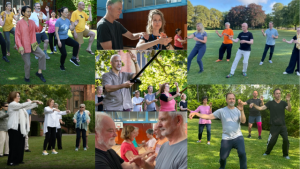
Maria and the team of apprentices in Götzens offer a unique setting for this excellent weekend of teaching the tai chi form, meditation, and philosophy.

Götzens is a beautiful location. As the aircraft descended, the mountain peaks pushed through the clouds. Expert pilots, I imagine, negotiate these mountain ranges. As I exited the plane, I felt the fresh air, the quietness, and the respectful village people. No litter! Mountains surrounded me, some so high they had snow on them.

We experienced sessions all together, working on the season of autumn/fall and the metal element with a focus on “letting go,” accompanied by clear translations from German to English and vice versa.

I studied the Intermediate Form with Joop and Maria and learnt so much — from the mechanics to the quality. The quality of the flowing energy in the body with a certain freedom and enjoyment. We were invited to relax, to not “try” so hard, and to “dance” the movement.

The school in Götzens offers a very particular and special experience with such good management from Maria, as well as Franz Stumpf, and Claudia Gebhart, who were always there. They provided a level of support in their caring and constant awareness of my needs. They gently offered quiet listening, were always open to questions, and gave clear demonstrations.

I made new friends and enjoyed the warmth and welcome from other people attending the weekend. Local people brought wonderful cakes and pastries, fresh grapes, and clear pure drinking water. The sun shone brightly each day. I even took a trip in a cable car to walk in the mountains.

This trip was very special to me because of the warm company of the group. I was given an experience of the people’s culture. I was shown mountain plants and trees and their special properties. As a gardener, I loved to be introduced to a different plant landscape and ways of living in this mountainous region.  I felt a sense of pride in a way of life that has established a love of their environment alongside the challenges that a mountain landscape brings.  I took in the farming, the log piles, and the architecture of the houses. A lot of wood.

I was so well looked after. My accommodation was very comfortable, with good kitchen facilities and a place to sit and talk to each other. There were five of us. The two teachers, Joop and Lucy, and new friends from Germany and Brussels, with a balcony to look out at the village and the magnificent church at its centre.

I enjoyed, the farewell meal so much, the goodbyes, and our conversations, as well as the quietness and the sunshine.  I was especially touched by the generosity, warmth, and kindness I received throughout my stay. A big thank you!

All this I bring home with me.
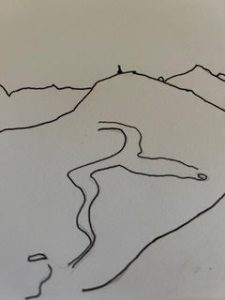
Article and drawing by Kay Lynn.

***

You can learn more about tai chi by exploring the diverse offerings of the Tai Chi Foundation (TCF). TCF provides live online courses, allowing you to participate in guided sessions in the comfort of your home. These virtual classes offer unique opportunities to connect with experienced instructors, ensuring that you receive personalized guidance and feedback. Additionally, the Tai Chi Foundation offers Teachable on-demand classes, providing a flexible and accessible way to learn at your own pace. Whether you’re a beginner or an experienced practitioner, these online resources offer a wealth of knowledge to enrich your tai chi journey. For those seeking a more hands-on experience, check out the regular course offerings of TCF’s affiliated local schools.

TCF is a not-for-profit educational organization that promotes, funds, and teaches programs that enable people to learn tai chi chuan and embody its principles.

2024 Tai Chi Foundation

Embracing the Water Element for Depth, Resilience, and Renewal

As the days shorten and temperatures drop, we find ourselves entering the stillness of winter, a season governed by the Water (氎,shuǐ) element in Chinese philosophy1 and Traditional Chinese Medicine (TCM)2. Water symbolizes depth, flow, resilience, and introspection, qualities that mirror the quiet potency of this season. From the winter solstice through early spring, nature itself retreats, allowing for restoration, reflection, and gradual renewal. For me, winter is a time to embody the strength of Water in my tai chi and qigong practice, cultivating calmness and the quiet power that lies within stillness.

Winter invites us to pause, drawing our focus inward. In this season, trees have shed their leaves, animals have gone into hibernation, and the landscape appears quiet and bare. Yet beneath the surface, there is a world of vitality and potential, preparing to emerge when conditions are right. Similarly, tai chi and qigong offer me the opportunity to slow down, reconnect with my breath, and strengthen the foundation of my practice by going deeper into the essentials. Every posture, shift, and rotation feels like a subtle but profound reminder of the hidden strength and adaptability of Water.

Every time I practice tai chi, I begin by feeling the natural flow of energy within my body, aligning myself with the season’s energy. Winter’s Water element encourages connecting deeply to my dantian, my center of movement, concentrating my energies. As I move slowly through the form, I sense my body’s natural currents of energy and learn to follow them rather than resist. Water can be powerful, as in a rushing river, or gentle, as in a still lake; both qualities have their place in my practice. I let go of rigid expectations and allow my body and mind to soften, discovering new layers of inner strength as I yield to each movement.

The Water element is associated with the kidneys and bladder in TCM, organs that govern the body’s reserves of energy and vitality. Winter is an ideal time to nourish these reserves, replenishing what has been depleted in warmer, more active seasons. I focus on deep, intentional breathing to support this restoration, allowing my breath to reach the lower abdomen and energize my core. In qigong practice, I visualize the gentle flow of energy replenishing my inner wellspring, much like a deep river that never runs dry. This focus on inner nourishment not only revitalizes my body but also brings a sense of calm and clarity to my mind.

One of my favorite moments in winter is practicing tai chi and qigong outdoors, feeling the crisp air on my face as I breathe deeply. There is something profoundly grounding about connecting with the natural elements, especially during winter, when silence surrounds us. The cold air sharpens my awareness, bringing me fully into the present moment. I imagine my movements mirroring the quiet power of a frozen river or the gentle drift of snowflakes, embodying Water’s ability to adapt to any form or challenge without losing its essence. This practice reminds me that, like Water, I can remain flexible and resilient, flowing around obstacles rather than being confined by them.

Winter’s energy also encourages introspection, providing an opportunity to reflect on the year that has passed and set intentions for the year to come. I approach my tai chi and qigong practice as a time for inner inquiry, listening to my body’s wisdom and clarifying my personal goals. Just as Water wears down even the hardest stones over time, I am reminded that patience and quiet persistence can lead to profound transformation. Each practice becomes a meditation on self-discovery, revealing the strength that lies within stillness and the wisdom found in surrender.

Winter is a time of rest and reflection. Practicing tai chi and qigong in winter brings a sense of renewal that permeates my entire being. Through alignment with the Water element, I learn to trust the natural flow of life, knowing that just as winter holds the promise of spring, every period of quiet contains the seeds of growth. Winter reminds me that even in the coldest, darkest times, there is an inherent beauty in resting, replenishing, and allowing inner strength to emerge. Moving mindfully through my practice, I carry the qualities of Water—depth, resilience, and quiet power—into every aspect of my life, prepared to face challenges with calm and flexibility.

In embracing the Water element this winter, I have discovered a new wellspring of inner strength, which allows me to flow through life’s transitions with grace and resilience.

***

You can learn more about tai chi by exploring the diverse offerings of the Tai Chi Foundation (TCF). TCF provides live online courses, allowing you to participate in guided sessions in the comfort of your home. These virtual classes offer unique opportunities to connect with experienced instructors, ensuring that you receive personalized guidance and feedback. Additionally, the Tai Chi Foundation offers Teachable on-demand classes, providing a flexible and accessible way to learn at your own pace. Whether you’re a beginner or an experienced practitioner, these online resources offer a wealth of knowledge to enrich your tai chi journey. For those seeking a more hands-on experience, check out the regular course offerings of TCF’s affiliated local schools.

TCF is a not-for-profit educational organization that promotes, funds, and teaches programs that enable people to learn tai chi chuan and embody its principles.


By Oliver Herzfeld

Tai Chi Foundation 2024

1 In Chinese philosophy, yang and yin qi, aspects of ourselves, are symbolized as twin children working a water wheel together and building up our reserves. They are filled with qi, life, and joyful energy.

2 In TCM, the five seasons (Winter, Spring, Summer, Late Summer, and Fall) are each associated with one of five elements (Water, Wood, Fire, Earth, and Metal, respectively).


Tai Chi as an Outward Manifestation of the I Ching

Tai chi (ć€Șæ„” tĂ i jĂ­) and the I Ching (易經 yijÄ«ng, Book of Changes) are two pillars of ancient Chinese philosophy and practice, deeply interconnected by their shared principles of balance, change, and harmony. While tai chi is a physical practice focused on the flow of energy (æ°Ł qĂŹ) and the balance of yin and yang, the I Ching is a philosophical text that explores the nature of change through a system of hexagrams (捩 guĂ ) and transformations. Understanding tai chi as an outward manifestation of the I Ching reveals profound insights into the deeper dimensions of both practices, showcasing how they work together to align the body, mind, and spirit.

The I Ching, one of the oldest texts in Chinese philosophy, is centered around the concept of change as the fundamental law of the universe. It is composed of 64 hexagrams (symbols made of six stacked horizontal lines), each representing different patterns of yin (陰 yÄ«n, receptive, soft, dark) and yang (陜 yĂĄng, creative, firm, bright). These hexagrams symbolize the dynamic interplay of opposites and the transitions that occur as energy shifts from one state to another. The I Ching provides a framework for understanding the cyclical nature of life, decision-making, and the transformation of situations.

At its core, the I Ching is about balance and flow, encapsulating the idea that nothing remains static. Every situation holds within it the seed of its opposite, and by embracing this continuous process of change, one can live in harmony with the natural rhythms of the universe. This wisdom of fluidity and balance directly informs the practice of tai chi.

Tai Chi: The Dance of Yin and Yang

Tai chi, often referred to as “moving meditation,” is a martial art that mirrors the philosophical teachings of the I Ching through movement. In tai chi, practitioners flow through a series of slow, deliberate postures that represent the constant shifting between yin and yang. Each movement is designed to cultivate balance, awareness, and internal harmony, reflecting the flow of the Dao (道 dào), the universal way of balance and transformation, as practitioners embody the I Ching’s dynamic interplay of opposites.

In tai chi, every step, shift, and rotation is guided by the principle of continuous transformation. As practitioners transition from one posture to another, they are embodying the changes described in the I Ching. When the body rises and sinks, opens and closes, advances and retreats, it mirrors the alternating forces of yin and yang. The art of tai chi is about maintaining equilibrium and flow as these forces shift, much like the changing lines of a hexagram.

The Hexagrams in Motion

The tai chi form can be seen as a physical representation of the hexagrams of the I Ching.

The alternating movements of yin and yang in tai chi reflect the transitions from one line of a hexagram to another. For example, the softness of yin (receptive) is embodied in yielding and listening movements, where the practitioner feels and adapts to external force with mindful sensitivity, while the firmness of yang (creative) is expressed through an expansive, rooted presence. Each movement flows seamlessly into the next, like the evolving lines of a hexagram, helping the practitioner listen deeply and harmonize with the shifting dynamics of energy.

In the practice of sensing hands (掚手 tuÄ« shǒu), a tai chi partner exercise, the interplay of yin and yang becomes especially evident. Two practitioners engage in a fluid exchange, where one partner might yield (yin) to the other’s push (yang), and then counter by returning the energy in a controlled manner. This dynamic mirrors the I Ching’s teaching that every action carries the potential for its opposite, and mastery comes from knowing when to embrace either yin or yang based on the circumstances.

The Role of Qi and Energy Flow

The I Ching’s hexagrams also represent energy patterns that circulate within the universe, and in tai chi, the concept of qi (life energy) plays a similar role. Tai chi practitioners focus on cultivating and harmonizing qi through their movements, allowing energy to flow smoothly and uninterrupted throughout the body. The postures and transitions in tai chi help direct qi, much like the hexagrams of the I Ching help guide life’s transitions.

The practice of tai chi teaches that when yin and yang are balanced, qi flows freely, promoting health, vitality, and inner peace. When these forces are out of balance, stagnation or disharmony arises. Tai chi, therefore, is not just a form of Chinese physical culture to reduce stress and improve balance, but an energetic practice rooted in the flow of the universe, as described by the I Ching.

Tai Chi as a Path to Wisdom

Both tai chi and the I Ching offer pathways to self-cultivation and deeper understanding. The I Ching teaches wisdom through contemplation of change, encouraging individuals to align with the natural flow of the universe by understanding the cyclical nature of life. Tai chi, on the other hand, teaches wisdom through embodied practice, helping practitioners physically experience the flow of change through movement, balance, and flow.

Practicing tai chi is a way to internalize the wisdom of the I-Ching on a bodily level. By repeating movements that reflect yin and yang, practitioners become attuned to the subtle energy shifts in their surroundings and within themselves. Over time, tai chi cultivates a heightened awareness of the present moment and a deeper connection to the rhythms of life, which is exactly what the I Ching encourages.

Tai Chi as Living Philosophy

Tai chi is more than a martial art; it is a living embodiment of the principles of the Dao and the I Ching’s teachings. By practicing tai chi, individuals bring the philosophical teachings of the I Ching to life in their own bodies, experiencing firsthand the dance of yin and yang and the flow of energy that governs all things. Tai chi becomes a tool for navigating life’s changes with grace, balance, and mindfulness, rooted in the ancient wisdom of the I Ching.

In a world of constant change, tai chi serves as a physical reminder of the I Ching’s enduring lessons: that balance is key, transformation is inevitable, and the path to harmony lies in flowing with, not against, the currents of life .1

***

You can learn more about tai chi by exploring the diverse offerings of the Tai Chi Foundation (TCF). TCF provides live online courses, allowing you to participate in guided sessions in the comfort of your home. These virtual classes offer unique opportunities to connect with experienced instructors, ensuring that you receive personalized guidance and feedback. Additionally, the Tai Chi Foundation offers Teachable on-demand classes, providing a flexible and accessible way to learn at your own pace. Whether you’re a beginner or an experienced practitioner, these online resources offer a wealth of knowledge to enrich your tai chi journey. For those seeking a more hands-on experience, check out the regular course offerings of TCF’s affiliated local schools.

TCF is a not-for-profit educational organization that promotes, funds, and teaches programs that enable people to learn tai chi chuan and embody its principles.

By Oliver Herzfeld

Tai Chi Foundation 2024

1 More information on the I Ching is available here and here.


The Deeper Dimensions of Tai Chi and Universal Connection

In February 1950, in a letter to Robert S. Marcus, a father who lost his young son, Albert Einstein wrote: “A human being is a part of the whole, called by us the ‘universe,’ a part limited in time and space. He experiences himself, his thoughts and feelings as something separated from the rest, a kind of optical delusion of his consciousness. This delusion is a kind of prison for us, restricting us to our personal desires and to affection for a few persons nearest to us. Our task must be to free ourselves from this prison by widening our circle of compassion to embrace all living creatures and the whole of nature in its beauty.”

In alignment with Einstein’s profound observation, tai chi offers a path to transcend the illusions of separateness and embrace a more expansive, interconnected existence. Although Einstein was a humanist, not a Taoist, his statement reflects a Taoist principle that highlights the omnipresent, nurturing force that binds all life.

Beyond the Form: Experiencing the Flow of Qi

Tai chi is often perceived as a series of graceful, flowing movements designed to improve physical health and mental tranquility. However, a deeper engagement with tai chi reveals a profound spiritual dimension. When practitioners reach a level of relaxation and unity where, instead of doing the form, the form, so to speak “does them,” they allow the effortless force of the universe to flow through them. This state of being, where the individual self merges with the universal energy, is the essence of tai chi practice.

In this state, practitioners become part of a larger reality. By letting go of the myth of individuality and releasing our grip on our preconceived notions of the world, we start to see ourselves as part of a greater whole. This interconnected field of life, this life-force or qi, becomes palpable and real.

Joining the Global Family of Tai Chi

Engaging in this deeper form of tai chi connects us to a global family of practitioners. Together, we become a nurturing force on this planet, embodying the Tao that nurtures all things. Through the practice of tai chi, we not only improve our own well-being but also contribute to the well-being of the entire planet. This connection transforms us into more compassionate, conscious, and aware beings, capable of embracing all living creatures and the beauty of nature. In “The Tao of Tai Chi: The Making of a New Science,” Bill Douglas describes his founding of World Tai Chi & Qigong Day, an event that exemplifies this global connection and collective nurturing spirit.

Becoming More Real

By immersing ourselves in this deeper practice, we become more real. We shed the illusions that imprison us and step into a more authentic, interconnected existence. This transformation is not merely philosophical but a lived experience, felt in the flow of qi, in the harmony of our movements, and in the expanded compassion we feel for all life.

Tai chi is ultimately a journey toward unity with the universe. It teaches us that we are not isolated beings but integral parts of a vast, nurturing whole. Through this practice, we learn to let go, to connect, and to nurture. We become part of the universal energy that the ancient Chinese philosopher, Lao Tzu, spoke of when he said: “Each separate being in the universe returns to the common source. Returning to the source is serenity.” In doing so, we embrace a deeper, more meaningful existence.

***

You can learn more about the deeper dimensions of tai chi and universal connection by exploring the diverse offerings of the Tai Chi Foundation (TCF). TCF provides live online courses, allowing you to participate in guided sessions from the comfort of your home. These virtual classes offer unique opportunities to connect with experienced instructors, ensuring that you receive personalized guidance and feedback. Additionally, the Tai Chi Foundation offers Teachable on-demand classes, providing a flexible and accessible way to learn at your own pace. Whether you’re a beginner or an experienced practitioner, these online resources offer a wealth of knowledge to enrich your tai chi journey. For those seeking a more hands-on experience, check out the regular course offerings of TCF’s affiliated local schools.

TCF is a not-for-profit educational organization that promotes, funds, and teaches programs that enable people to learn tai chi chuan and embody its principles.

TCF’s mission is to improve health, well-being, and awareness through the study, practice, and teaching of tai chi and qigong by an increasing number of people worldwide. Sign up for our newsletter  to learn about our latest classes and events.

There are over 300 TCF-affiliated instructors teaching tai chi classes in 30 cities around the world. Find a class, become a member, and support TCF in making the world a healthier and more mindful place today.

By Oliver Herzfeld

© Tai Chi Foundation 2024


Photo by Greg Rakozy, Unsplash


An Update for Mom: Tai Chi Retreat Cheltenham UK, August 11—18, 2024

by

Richard and Kimiko Tucker

“What sights did you see on your trip to London?” my mom asked after we returned home to the United States.

My wife, Kimiko, and I landed at Heathrow, got a train to Paddington Station, and then headed straight to Cheltenham for the Tai Chi Retreat. It was my first time in the UK.

Arriving at the retreat, we were promptly welcomed by Kasia Elvin, who was escorting fellow participants to their dormitories. She showed us the way to the registration, where we were again welcomed by the heart of this retreat, Barbara Carlisle, Erica Crome, Suni Hirani, Kasia Elvin, and more friendly members of the team.

We finished registering, settled into our room, then headed to dinner. We were happy to see a few familiar faces from the tai chi retreat in June 2024 in Connecticut at the Hotchkiss School in the United States.

As new apprentices, it was wonderful to be welcomed into a global tai chi community. We were warmed by the lifelong friendships among the Tai Chi Foundation apprentices and were delighted to be accepted as the “new kids on the block,” having attended our B1 apprenticeship at Hotchkiss.

That weekend, we had the opportunity to learn from others who have been teaching tai chi for many years and came from areas around the world, not only London and the UK but Austria, Ireland, Amsterdam, France, New York, Chicago, Florida, and Nashville.

Paul Campbell, Gerrie Sporken, and Greg Woodson shared generously of their knowledge, experience and feedback which we are still trying to digest and absorb.

I find it amazing that all of us, coming from so many different places, can do the same Tai Chi Form together using the same language.

I felt so gratified when participants told us how impressed they were while watching Mark Preston, Tess Lugos, Katrin Tschupp, Kimiko and I as we did the Tai Chi Form demonstration on the stage in sync at the orientation.

That feeling carried throughout the week as we started each morning with rounds on the cricket pitch which was a quick way to integrate us all into the retreat and connect with others. Lindi McAlpine, Kimiko and I led the rounds, and people loved it so much that we actually did extra rounds on the day of departure. As a bonus, Mark Preston stopped by a couple of times and gifted us with a reciting of poems by Hafiz.

The extensive class offerings were quite impressive and I wish I could join or observe every one of them! The generous teacher/student ratio was ideal for tai chi learning, and everybody seemed fully satisfied.

Here is a breakdown of who taught what at the retreat:

Tai chi B1: Kevin Lannon and Tess Lugos

Tai chi B2: Joan Campbell and Aileen Young

Tai chi B3: Michael Braudy, Ian Lopez, and Ikuyo Mitsuzono

Fundamentals: Joop Brouwer, Linda Bisberg, and Katrin Tschupp

Push Hands 1: Peter Kennedy, Anne Marie Gent, Anna Teeples

Push Hands 2: Koen Krikhaar, Vanessa Costigan, and Griff Steer

Sword and Fencing: Greg Woodson and Gerrie Sporken

PCal: Declan Rothwell and Barbara Carlisle

Sitting meditation: Patrice Wooldridge and Declan Rothwell

Hawaiian swimming: Ed Johnson, Declan Rothwell, and Katrin Tschupp

The evening activities were both fun and educational and I enjoyed participating in every one of them:

  • Tuesday, we had a Bear & Owl drawing class led by Johanna Koelman and Colette McCormac, and I discovered I could draw!
  • On Wednesday, Gerrie Sporken led an introduction to yin/yang and facial rejuvenation. I never imagined that my hand moving over the surface of my skin could be felt that way!
  • Thursday, we had a special musical experience in the chapel led by Michael Braudy.
  • On Friday, we watched the film The Professor: Tai Chi’s Journey West. I found it to be fascinating and inspiring.
  • Saturday, we had theatre and the party. I was amazed to see so many talents on the stage. I laughed so hard my face was tired when it was over. The fun party followed, and we managed to say thank you and goodbye to some of the teachers, but I really felt words could not express enough of my gratitude.

In addition, the time spent at meals and in the evening at the bar by the Bacon Theater was a new concept for me as an American and an interesting experience. I appreciated getting to know many of our new friends there even more.

The cafeteria provided a large variety of freshly cooked food three times a day—including special dietary options—which was much appreciated.  Sitting with people from all over Europe and the United States and chatting over a delicious meal (or just tea) was quite enjoyable and made it easy to feel like we were part of a big tai chi family.  We talked about how we found tai chi, where we were from,what classes we were taking, our jobs, kids, hobbies, and more.

We are bringing new knowledge and skills of our own Tai Chi Form, which we learned at the retreat, back to Nashville, Tennessee,as we embarked this fall on our journey of teaching our first B1 class back with Anna Teeples, our senior teacher.

As I told my mom when we returned, I can’t say we saw many landmarks, but we wouldn’t have met and spent so much quality time getting to know the range of people we met at the retreat if we had taken the typical sightseeing vacation in London.

***

The Tai Chi Foundation (TCF) is a not-for-profit educational organization that promotes, funds, and teaches programs that enable people to learn tai chi chuan and embody its principles. Join us for a FREE Open House to learn more about tai chi and qigong — and ways to get started with us!

Over 300 TCF-affiliated instructors teach tai chi classes in 30 cities worldwide. Check out our online course offerings. Discover in-person classes in your area and explore our on-demand Teachable courses. Sign up for our newsletter to receive updates on classes, workshops, retreats, and special events.

We invite you to become a member, and support TCF in making the world a healthier and more mindful place today!


Photos by Patrice Woodridge and Sas Vassle


Honoring our Legacy, Inspiring the Future


Next year, the Tai Chi Foundation will celebrate a significant milestone—our 50th anniversary! As we anticipate this momentous occasion, I find myself reflecting on TCF’s journey thus far and eagerly looking ahead to the exciting possibilities that await us.

The Tai Chi Foundation was formed with a resolute mission: to improve health, well-being, and awareness through the practice, study, and teaching of tai chi and qigong. Over the past 50 years, we’ve watched that dream unfold, our community expanding across the globe, teaching and sharing practices that help people live healthier, more balanced lives.

Perhaps you’ve been part of a TCF online or in-person class, found inspiration through our blog posts, attended a free Open House or seasonal qigong Tuning, explored our Teachable courses, or enjoyed one of our summer retreats. We’re honored to have you as part of our community and our school’s continuing story.

New to Tai Chi Foundation? Tai chi curious? You’re always welcome to begin your journey with us.

The Dream Continues

While we’re proud of our accomplishments these past decades, there’s much more to be done. As we move into the next half-century, we aim to create tangible growth — establishing tai chi and qigong as meaningful paths to physical and mental health and well-being for as many people as possible.

With your support:

  • We can provide tuition for students and aspiring new teachers to attend workshops and retreats. They are truly the future of TCF.
  • We can provide professional development for teachers and help subsidize the costs of bringing teaching staff where they’re needed most. This year, many of our senior teachers traveled across the country and sometimes the world to provide their expertise to workshops and retreats. In 2025, we intend to broaden that ability even further.
  • Thanks to our upgraded website, enhanced social media presence, blogs, and newsletters, TCF’s outreach has grown significantly in recent years. In 2025, with your help, we will develop specialized curriculum materials—both video and written guides—tailored for groups such as individuals with Parkinson’s disease. Your donations will allow us to create this targeted content by tapping into the expertise of our senior instructors.
  • And finally, in honor of our 50th anniversary, we have a unique opportunity to document the teachings of our legacyholders and senior instructors. Your support will help fund the video production and archiving of this invaluable knowledge, preserving TCF’s teachings for future generations and restoring important footage of our founder, Patrick Watson.

The Power of Your Contribution

As a non-profit, every step we’ve taken has been made possible through the generous support of people like you. This year, our goal is to raise $15,000 during our year-end campaign.

But we can’t meet that goal without your help.

Join Us

By helping TCF expand its reach, you become an integral part of our global family, helping to promote mindfulness, health, and a more connected world. Become a part of our 50th-anniversary celebration by donating to our year-end campaign today.

Simply click here to contribute. No amount is too small, and every donation strengthens the collective effort.

With Gratitude

Thank you for considering a donation.

On behalf of the Tai Chi Foundation, I look forward to the positive changes we can make together — inspiring growth, transformation, and unity through tai chi and qigong.

In health and harmony,

Mike Barkham, President

P.S. TCF is a 501(c)(3) nonprofit organization. In the US, donations are tax-deductible as allowed by law. If you are outside the US, ask your tax service or preparer about charitable donations.

Harnessing the Metal Element for Release and Inspiration

As the days grow shorter and the air becomes crisper, the vibrant energy of late summer gracefully yields to the introspective and refining qualities of autumn. In Traditional Chinese Medicine (TCM), autumn is governed by the Metal element, a time of letting go, purification, and inspiration. 1 This season, stretching from the fall equinox until mid-November, beckons us to harness the releasing power of Metal to achieve clarity and purpose. Through my personal practice of tai chi and qigong, I pursue alignment with this season’s unique energy, enhancing my sense of well-being and inner peace.

Autumn’s arrival brings with it a profound sense of change. The lush greens of summer are replaced by the rich, warm hues of falling leaves, symbolizing nature’s cycle of shedding and renewal. The seasonal change resonates deeply within me, encouraging a period of introspection and refinement. Practicing tai chi and qigong during this time helps me embrace the essence of Metal, which is all about release, inspiration, and balance.

Each morning, as the sun casts its gentle light over the autumn landscape, I begin my day with tai chi. The slow, deliberate movements mirror the season’s tranquil yet inspiring energy. As I move through I feel a profound connection to the earth beneath my feet and the crisp air around me. The practice of tai chi during autumn fosters a sense of alignment and focus, helping me to let go of the unnecessary and embrace what truly matters.

Qigong, with its emphasis on breath and energy flow, complements my tai chi practice perfectly during this season. The Metal element is associated with the lungs and large intestine, organs responsible for taking in and letting go. Through mindful breathing in qigong, I can feel the cleansing and purifying effects on my mind, emotions, and spirit. The fresh autumn air fills my lungs, invigorating and refreshing me, while each exhalation symbolizes the release of old energy and tension.

Autumn is also a time for reflection and gratitude. The practice of tai chi and qigong encourages me to look inward and acknowledge the growth and experiences of the past year. As I practice my forms, I reflect on my progress, acknowledging both the challenges and the triumphs. This period of introspection allows me to gain understanding and insight, paving the way for future growth.

One of the most profound lessons I have learned from practicing tai chi and qigong in autumn is the importance of balance. The Metal element teaches us to find harmony between holding on and letting go, between strength and flexibility. In my practice, I strive to maintain this balance, flowing seamlessly from one movement to the next, embodying the grace and resilience of the season.

The transformative power of the Metal element extends beyond my practice and into my daily life. As I embrace the letting go and purification of autumn, I find myself more focused, organized, and at peace. The lessons learned in class and practice sessions translate into my interactions, decisions, and overall outlook, helping me navigate the season’s changes with grace and confidence.

Practicing tai chi and qigong in autumn is a deeply enriching experience. It is a time to harness the Metal element’s qualities of balance and inspiration,  to reflect on our journey, and to prepare for the stillness of winter. As we move mindfully through our practice, we can carry the season’s energy into every aspect of our lives, finding balance, focus, and renewal in all we do.

***

The Tai Chi Foundation (TCF) provides free seasonal tunings five times a year to help our community align with the energy of the current season. Sign up today for the 2024 Autumn White Crane Breathing qigong tuning.

Explore the Tai Chi Foundation (TCF)’s diverse offerings to learn more about tai chi and qigong.

TCF offers live online courses, allowing you to participate in guided sessions from the comfort of your home. These virtual classes offer unique opportunities to connect with experienced instructors, ensuring that you receive personalized guidance and feedback, as well as Teachable on-demand classes, providing a flexible and accessible way to learn at your own pace. Whether you’re a beginner or an experienced practitioner, these online resources offer a wealth of knowledge to enrich your tai chi and qigong journey. For those seeking a more hands-on experience, check out the regular course offerings of TCF’s affiliated local schools.

TCF is a not-for-profit educational organization that promotes, funds, and teaches programs that enable people to learn tai chi chuan and embody its principles.

TCF’s mission is to improve health, well-being, and awareness through the study, practice, and teaching of tai chi and qigong by an increasing number of people worldwide. Sign up for our newsletter for updates on upcoming classes and events.

Over 300 TCF-affiliated instructors teach tai chi classes in 30 cities worldwide. Find a class, become a member, and support TCF in making the world a healthier and more mindful place today.

By Oliver Herzfeld

© Tai Chi Foundation 2024

1 In TCM, the five seasons (Winter, Spring, Summer, Late Summer, and Fall) are each associated with one of five elements (Water, Wood, Fire, Earth, and Metal, respectively).

Photography by Anna Nezhdan on Pexel

Why is Tai Chi also for 30-Year-Olds?

There’s a lot written about the health benefits of tai chi. Unfortunately, too often, the focus is on physical health benefits and how important these benefits are to older people. Even though I’m one of those older people, I find this focus frustrating!

It’s true that young people tend not to worry about their physical health – they take it for granted. Young bodies shrug off illnesses or recover quickly from them. Any long-term damage they are doing to muscles, joints, and ligaments will likely stay hidden for many years. If they have any worries, they are probably about aerobic fitness or body shape – which is why many choose to do ‘hard’ forms of exercise like working out at the gym. They don’t choose tai chi!

However, many 30-year-olds increasingly DO worry about their mental and emotional well-being. This is even more true of Gen Z’ ers, the first of whom will turn 30 in the next few years. Mental health is reported to be one of their highest concerns because they recognize the potential for overwhelm and burnout from an overfull and overbusy life.

At work, they may have growing responsibilities, feel more pressure to succeed or struggle to hold work’s boundaries. At home, the pressures may be around finances, key relationships, a young family, or even social media—with its constant judgment and criticism. If you’re a 30-year-old or Gen Z’er reading this, I’m sure you could add many more things to this list!

By helping younger people deal better with these stresses, tai chi could be a lifesaver – perhaps even literally. Cheng Man-Ch’ing himself recognized that stress was the biggest threat in the Western world – which is why he decided to make his (our) form of tai chi available to all.

A surprising number of 30-year-olds (and very many Gen Z’ers) are already experimenting with mindfulness meditation to combat stress. But most wouldn’t realize that tai chi is itself a mindfulness practice. And, that it is better than many others because it practices mindfulness under ‘real-life’ conditions—not just when sitting with eyes shut but with eyes open, and while moving or even (in Push Hands) while interacting with others.

Of course, tai chi is also a physical practice—for example, we seek to release physical tension in our muscles. This also counters stress because tension in the body is directly linked to anxiety in the mind—that’s just the biology of the brain. So, when you reduce physical tension, you are also reducing mental anxiety (i.e., stress)—both in the moment of practice and, more importantly, as a long-term change.

So, if you’re a tai chi teacher, please consider how you can reach out to 30-year-olds (and Gen Z’ers) in your community. They may appreciate and benefit from Tai Chi as much as older people do!

***

No matter your age, you can learn more about tai chi by exploring the diverse offerings of the Tai Chi Foundation (TCF). TCF provides live online courses, allowing you to participate in guided sessions in the comfort of your home. These virtual classes offer unique opportunities to connect with experienced instructors, ensuring that you receive personalized guidance and feedback. Additionally, the Tai Chi Foundation offers Teachable on-demand classes, providing a flexible and accessible way to learn at your own pace. Whether you’re a beginner or an experienced practitioner, these online resources offer a wealth of knowledge to enrich your tai chi journey. For those seeking a more hands-on experience, check out the regular course offerings of TCF’s affiliated local schools.

TCF is a not-for-profit educational organization that promotes, funds, and teaches programs that enable people to learn tai chi chuan and embody its principles.

By Mike Barkham

Tai Chi Foundation 2024

Photography by Antoni Shkrabaon on Pexels

Teaching with the Tai Chi Foundation

Perhaps you’ve taken tai chi classes in the past and are curious about becoming a tai chi teacher. Perhaps you are interested in deepening your practice. Or, maybe you’re interested in understanding the background of your Tai Chi Foundation (TCF) teachers.

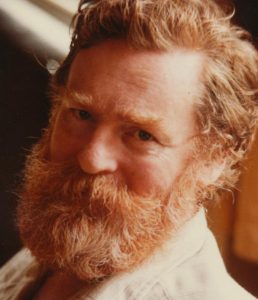
The TCF is a unique alliance of 30 tai chi schools and over 300 teachers worldwide who have taught tai chi and qigong to thousands of students. We are part of the lineage of our founder, Patrick Watson, and his teacher, renowned tai chi master Professor Cheng Man Ch’ing. For nearly 50 years, TCF has been dedicated to teaching tai chi using Patrick’s distinctive curriculum and signature team-teaching program.

Our mission is to improve health, well-being, and awareness through the study, practice, and teaching of tai chi and qigong. We strive to make these practices accessible to an increasing number of people worldwide.

Our Philosophy

“Success in T’ai Chi Chuan depends on three conditions: correct teaching, natural talent, and perseverance. Of the three, correct teaching (or right method) is of primary importance. When the method is incorrect, or the right method is wrongly taught, no success is attainable even if the student is highly gifted and diligently and conscientiously applies himself. On the other hand, given the right kind of teaching, even if one’s natural talent should be below average, success can be achieved through perseverance.”

-Professor Cheng Man Ch’ing

The TCF Teaching Experience

Many of our teachers share that imparting this centuries-old Chinese art is deeply gratifying. They often recount how their own tai chi journey began decades ago and how they’ve since helped others integrate tai chi’s calm and well-being into their lives.

At TCF, we pride ourselves on offering a consistent tai chi experience across all our schools. Our thoughtfully trained teachers follow a prescribed series of courses and content, allowing students to seamlessly continue their practice at any TCF school worldwide.

Teacher Training Program

For those inspired to share tai chi with others, TCF offers a comprehensive Teacher Training Program. Here’s what you need to know:

  1. Preparation: Teaching with TCF starts with studying at one of our schools. If you are not already taking classes with TCF, please visit our School Locationsand Find a Tai Chi Class Page, where you will find links to our online, in-person, and on-demand Teachable classes. TCF retreats are also a great place to start your tai chi practice.
  2. Application: After completing several levels of study, interested students may choose to investigate our teacher-training through discussions with their local teachers and a curated application process.
  3. Training Process: The training involves a logical step-by-step process guided by TCF teachers and administrators.
  4. Teaching Opportunities: Upon completing each level of training, you’ll progress through a series of teaching levels, beginning as a silent observer and ultimately teaching as a senior member of a team. Your local teachers will be able to guide you through this process.
  5. Certification: While optional, we encourage all our teachers to pursue TCF certification for official authorization to represent our school.

For more details about becoming a teacher, please visit consult with the teacher(s) you’re studying with.

Teacher Certification

Certification is an additional step that authorizes you to teach at TCF-sponsored trainings and programs at on-site client organizations. If you’ve been trained elsewhere, you’re welcome to apply for certification by providing:

  • The source of your teacher training
  • A teaching transcript
  • Two letters of recommendation

For more information, please visit this page. If you have any questions, please email certification@taichifoundation.org.

Continuing Education

We encourage all TCF teachers to continue developing their practice and teaching skills through:

  • International tai chi training weeks
  • Biannual online classes led by senior teachers and legacy holders

The Benefits of Tai Chi and Qigong

Tai chi and qigong are mind-body practices that combine physical postures, breathing techniques, and focused intention. Often called “moving meditation,” these practices offer numerous benefits:

  • Improved physical well-being
  • Enhanced mental relaxation
  • Better overall health

For many, tai chi and qigong have become lifelong practices, offering continuous growth and benefits.

Please Join Us!

TCF’s live online courses allow you to participate in guided sessions from the comfort of your home. These virtual classes provide unique opportunities to connect with experienced instructors, ensuring that you receive personalized guidance and feedback. We also present numerous Teachable on-demand, learn-at-your-own-pace classes. Whether you’re a beginner or a dedicated practitioner, these online resources offer a wealth of knowledge to enrich your tai chi and qigong journey.

For those seeking hands-on classes, check out the regular course offerings of TCF’s affiliated local schools.  Over 300 TCF-affiliated instructors teach in 30 cities worldwide.

The Tai Chi Foundation’s mission is to improve health, well-being, and awareness through the study, practice, and teaching of tai chi and qigong by an increasing number of people worldwide. Find a tai chi class in your area or online, become a member, and join TCF in making the world a healthier and more mindful place today.

Sign up for our newsletter for updates on upcoming classes and events.


By Marina Muhlfriedel & Oliver Herzfeld

Tai Chi Foundation 2024

The Restorative Effects of Tai Chi and Qigong on Sleep Apnea

Sleep apnea is a prevalent sleep disorder characterized by repeated interruptions in breathing during sleep. While conventional strategies like CPAP machine use and lifestyle changes are commonly recommended by way of sleep apnea treatment, alternative therapies like tai chi and qigong are gaining attention for their potential benefits.

Tai Chi Leads to Better General Sleep Health

Tai chi and qigong are mind-body practices that combine physical postures, breathing techniques, and focused intention. Together, they create an effective form of exercise often called “moving meditation.” Physical activity and mindfulness not only improve physical well-being, but also promote mental relaxation and improve overall sleep quality. This is beneficial for everyone, but particularly for people with various sleep disorders, including sleep apnea.

The Science Behind Tai Chi and Qigong for Sleep Apnea Relief

A randomized controlled study investigated the effects of tai chi and qigong on obstructive sleep apnea (OSA). The study found that the intervention group, which practiced tai chi and qigong under physiotherapist supervision, showed a statistically significant decrease in the apnea-hypopnea index (AHI) and improved sleep quality. Another study concluded that tai chi and qigong training may reduce oxygen deprivation during sleep, improving sleep quality and efficiency. This can also improve daytime alertness in people with obstructive sleep apnea.

Here are a few more things to know about sleep quality and efficiency, as well as pulmonary function and how tai chi improves these for people who have sleep apnea.

Enhanced Sleep Efficiency and Quality

Sleep efficiency refers to the percentage of time we spend in bed actually sleeping, while sleep quality refers to how restorative our sleep is. Poor sleep efficiency and quality are often associated with sleep apnea. Two key strategies that medical providers often recommend to combat this are exercise and stress reduction. Both of these can make it easier to fall asleep faster and remain asleep throughout the night, improving sleep efficiency and quality. 

Because tai chi and qigong combine physical activity with targeted stress relief, they are a great time-saving choice for sleep apnea sufferers with busy schedules.

Improved Pulmonary Function

One of the key factors contributing to sleep apnea is poor pulmonary (lung) function. The controlled breathing exercises in tai chi and qigong can help in strengthening the respiratory muscles, which has been shown to improve pulmonary function. This contributes to better sleep for sleep apnea patients and may also help to reduce the severity of sleep apnea.

Improve Sleep Apnea With the Tai Chi Foundation

The Tai Chi Foundation (TCF) is a not-for-profit educational organization that promotes, funds, and teaches programs that enable people to learn tai chi chuan and embody its principles. 

TCF’s live online courses allow you to participate in guided sessions from the comfort of your home. These virtual classes provide unique opportunities to connect with experienced instructors, ensuring that you receive personalized guidance and feedback. We also present numerous Teachable on-demand, learn-at-your-own-pace classes. Whether you’re a beginner or an experienced practitioner, these online resources offer a wealth of knowledge to enrich your tai chi and qigong journey. 

For those seeking hands-on classes, check out the regular course offerings of TCF’s affiliated local schools.  Over 300 TCF-affiliated instructors teach in 30 cities worldwide. 

The Tai Chi Foundation’s mission is to improve health, well-being, and awareness through the study, practice, and teaching of tai chi and qigong by an increasing number of people worldwide. Find a tai chi class in your area or online, become a member, and join TCF in making the world a healthier and more mindful place today. 

Sign up for our newsletter for updates on upcoming classes and events.

By Oliver Herzfeld

Tai Chi Foundation 2024


Photo by Ketut Subiyanto on Pexels