Accessibility Tools

Skip to main content

Author: Marina Muhlfriedel

Welcoming the Summer Fire Element: Cultivating Passion and Connection through Tai Chi and Qigong


As summer arrives, the world radiates warmth and vitality. The days are long, the air hums with life, and nature itself seems to pulse with energy. In Chinese philosophy and Traditional Chinese Medicine (TCM), this is the time of the Fire element (火, huǒ), a time of joy, connection, and consciousness. Fire represents the heart – both the physical organ and the emotional center – and governs our ability to love, laugh, and engage deeply with others. Through tai chi and qigong, I attune myself to the energy of summer, allowing its radiance to stoke the inner flame of my practice.

Each morning, as the sun rises high and bathes the earth in golden light, I step outside to begin my tai chi practice. There is a distinct vibrancy in the summer air, an invitation to move with more openness and ease. My breath deepens, mirroring the expansion of the season. As I flow through my form, I feel the fire energy within me – a sense of brightness and enthusiasm that lifts my movements and infuses each gesture with vitality.

Fire is the element of awareness, and summer encourages us to express our true nature. The heat of the season reminds me to be present in my body, to savor the warmth of movement and the joy of connection. When practicing qigong, I visualize the fire energy within me expanding outward, much like the sun radiates its light. This sense of openness is mirrored in my heart, allowing me to cultivate not only physical vitality but also emotional warmth and resilience.

Tai chi and qigong teach us to balance the intensity of fire with mindful awareness. Fire can illuminate, inspire, and energize, but without balance, it can also lead to burnout. In my practice, I focus on maintaining harmony – moving with intention, breathing deeply, and allowing moments of stillness to complement the dynamic flow of movement. Just as the flickering flame needs both air and containment, I recognize the importance of pacing myself, of nurturing my internal fire without letting it consume me.

The Fire element is closely connected to the heart and small intestine in TCM, reflecting emotional and physical circulation and connection. This season invites us to circulate energy freely, discern what serves us, and nurture clarity in our experiences, relationships, and emotions. As I practice, I reflect on the things and connections that bring me joy. I allow the movements to clear away lingering tension, making space for gratitude and openness.

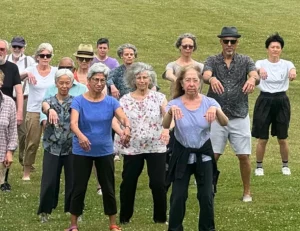
Summer is also a time for community, a season that invites us to connect with others and celebrate life. Tai chi and qigong, while deeply personal, also foster a sense of unity. Whether practicing alone or with a group, I feel the shared energy of those around me. The Fire element teaches us that true strength comes not just from individual practice but from the warmth of human connection.

As I close my practice each day, I take a moment to appreciate the lingering energy within me. My body feels light, my mind clear, my heart full. The lessons of summer – joy, connection, and awareness – extend beyond my practice and into my daily life. I move forward with a renewed sense of passion and purpose, embracing the fire within while staying grounded in balance.

This season, let us all take time to celebrate the warmth and vibrancy of life. Let us honor the Fire element by expressing love, sharing laughter, and moving with the energy of the sun. Through tai chi and qigong, we can cultivate a heart that is open, a spirit that is bright, and a body that flows with the effortless grace of summer’s fire.


Experience Tai Chi and Qigong Year Round with the Tai Chi Foundation

You can learn more about tai chi by exploring the various offerings of the Tai Chi Foundation (TCF). TCF provides live online courses, allowing you to engage in guided sessions in the comfort of your home. These virtual classes offer unique opportunities to connect with experienced instructors, ensuring that you receive personalized guidance and feedback. Additionally, the Tai Chi Foundation offers Teachable on-demand classes, providing a flexible and accessible way to learn at your own pace. Whether you’re a beginner or an experienced practitioner, these online resources present a wealth of knowledge to enhance your tai chi journey. For those seeking a more hands-on experience, check out the regular course offerings of TCF’s affiliated local schools.

TCF is a not-for-profit educational organization that promotes, funds, and teaches programs that enable people to learn tai chi chuan and embody its principles.

Be sure to check out our TCF 50th Anniversary Shop, where you can find stylish tai chi t-shirts and other great branded merchandise!


By Oliver Herzfeld

© Tai Chi Foundation 2025


The Role of Tai Chi and Qigong in Alcohol and Drug Recovery Programs

In recent years, there has been a growing interest in integrating holistic practices like tai chi and qigong into alcohol and drug recovery programs. These ancient mind-body exercises, which originated in China, are being recognized for their ability to complement traditional recovery methods by addressing the physical, mental, and emotional challenges associated with addiction. Recovery is a multifaceted process, and tai chi and qigong offer unique benefits that can help individuals on their path to healing and sobriety.

Understanding Tai Chi and Qigong

Tai chi is a martial art that focuses on slow, deliberate movements combined with mental focus, relaxation, and awareness of inner body sensations. It’s often referred to as “moving meditation” due to its ability to quiet the mind while engaging the body. Qigong, on the other hand, is a broader system of coordinated movements, postures, and breathing techniques designed to cultivate and balance the body’s qi (internal energy). Both practices have been used for centuries to improve health, reduce stress, and promote mental clarity.

Benefits for Individuals in Recovery
  1. Stress Reduction and Emotional Balance

One of the primary challenges for individuals in recovery is managing depression, stress, and overwhelming emotions, all of which can trigger relapse. Tai chi and qigong effectively reduce stress through their focus on gentle movements, mindfulness, and natural breathing. These practices encourage a state of calm and relaxation, helping individuals develop greater emotional resilience. Studies have shown that regular practice of tai chi or qigong can lower cortisol levels, the hormone associated with stress, and help regulate the nervous system.

  1. Mindfulness and Self-Awareness

Mindfulness is a critical aspect of long-term recovery, helping individuals stay present and aware of their thoughts, cravings, and emotional responses. Tai chi and qigong naturally incorporate mindfulness, requiring practitioners to focus on their movement, relaxation, balance, energy flow, and inner body sensations. This enhanced self-awareness can aid in recognizing potential triggers and maintaining control over impulses. By becoming more attuned to their body and emotions, individuals in recovery can better manage the cravings and anxiety often associated with the early stages of sobriety.

  1. Physical Health and Healing

Addiction takes a toll on the body, often leading to physical ailments such as poor posture, muscle weakness, and fatigue. Tai chi and qigong are low-impact exercises that gently strengthen muscles, improve balance, enhance flexibility, and promote circulation. Regular practice can help restore physical vitality without the risk of overexertion. Additionally, the natural breathing in both practices help to increase oxygen flow, energize the body, and support the healing process.

  1. Emotional Release and Mental Clarity

In addiction recovery, individuals may struggle with feelings of guilt, shame, anger, and fear. Tai chi and qigong offer a non-verbal way to process and release these emotions. The flowing movements encourage energy to move freely through the body, helping to clear blockages and create a sense of emotional balance. Many people in recovery report feeling lighter, more centered, and emotionally grounded after regular practice. The mental clarity that arises from this emotional release can help individuals make better decisions and stay committed to their recovery goals.

  1. Building Discipline and Patience

Recovery is a long-term journey that requires commitment, discipline, and patience. Tai chi and qigong teach these very qualities through their structured, yet gentle practices. The regular practice of slow, repetitive movements requires focus and perseverance, which can translate into greater emotional resilience and discipline in daily life. Over time, individuals in recovery may find themselves more capable of handling difficult situations and less likely to succumb to negative thought patterns or impulsive behavior.

  1. Spiritual Connection and Inner Peace

For many people, addiction recovery is not only a physical and emotional process but also a spiritual one. Tai chi and qigong encourage individuals to connect with a sense of inner peace and balance. These practices invite a reconnection with the self, helping to foster a sense of wholeness and completeness that may have been lost during addiction. By cultivating a calm and centered mind, practitioners may find a renewed sense of purpose and clarity in their lives, aiding their overall recovery journey.

Integration into Recovery Programs

Incorporating tai chi and qigong into alcohol and drug recovery programs can enhance traditional therapeutic methods like counseling, group therapy, and 12-step programs. Some treatment centers already offer tai chi or qigong classes as part of their holistic approach to recovery. These practices can be used in conjunction with more conventional therapies to provide a comprehensive and integrative path to healing.

Tai chi and qigong are easily accessible to individuals of all fitness levels, making them ideal for those in early recovery who may be physically weak or dealing with health complications. Sessions can be tailored to meet the needs of participants, offering a gentle yet effective way to reintroduce movement into their lives.

Conclusion

Tai chi and qigong offer powerful tools for those recovering from alcohol and drug addiction. They do not require any special equipment and can be practiced virtually anywhere at any time. By promoting relaxation, mindfulness, physical healing, and emotional balance, these practices address many of the challenges faced during recovery. As more recovery programs recognize the importance of a holistic approach, the integration of tai chi and qigong is likely to become more widespread, helping individuals reclaim their health and well-being on every level.

You can learn more about tai chi and qigong by exploring the diverse offerings of the Tai Chi Foundation (TCF). TCF provides live online courses, allowing you to participate in guided sessions from the comfort of your home. These virtual classes offer unique opportunities to connect with experienced instructors, ensuring that you receive personalized guidance and feedback. Additionally, the Tai Chi Foundation offers Teachable on-demand classes, providing a flexible and accessible way to learn at your own pace. Whether you’re a beginner or an experienced practitioner, these online resources offer a wealth of knowledge to enrich your tai chi journey. For those seeking a more hands-on experience, check out the regular course offerings of TCF’s affiliated local schools.

TCF is a not-for-profit educational organization that promotes, funds, and teaches programs that enable people to learn tai chi chuan and embody its principles.

TCF’s mission is to improve health, well-being, and awareness through the study, practice, and teaching of tai chi and qigong by an increasing number of people worldwide. Sign up for our newsletter to learn about our latest classes and events.

There are over 300 TCF-affiliated instructors teaching tai chi classes in 30 cities around the world. Find a class, become a member, and support TCF in making the world a healthier and more mindful place today.

By Oliver Herzfeld

© Tai Chi Foundation 2025

Welcome to May’s 50th Anniversary Blog with Peggy Watson, Vicki Shackford, and Rhoda Joy Jacobs


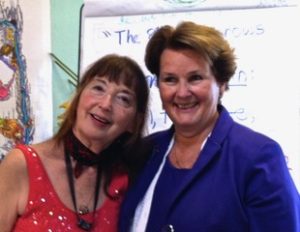
Rhoda Joy Jacobs with Patrick Watson  |  Peggy Watson and Vicki Shackford

In honor of the Tai Chi Foundation’s 50 years, each month in 2025, we are publishing blog posts featuring historical material, reflections by TCF tai chi teachers, videos, and photos. We hope the images and words will connect the tai chi community to our school’s many strengths, expand our understanding of the art, and inspire our practice. And who knows? Perhaps something in this series will inspire you to share your experience as well; the door is always open. Welcome to this month’s edition.

May Memories!

Peggy Watson, Vicki Shackford, and Rhoda Joy Jacobs have each been part of TCF since its earliest days. Join them as they share stories rooted the School’s beginning years.

***

Peggy Watson’s Tai Chi Journey

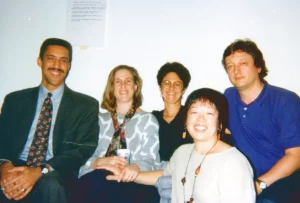
Peggy at tai chi camp with other early teachers: (left to right)  Greg Woodson, Peggy Watson, Margaret Olmsted, “Matsu” Matsumoto, Axel Scholow


Peggy Watson is a senior teacher at Tai Chi Nash. She was married to our school’s founder, Patrick Watson. She is an acupuncturist and teaches Five Elements Acupuncture.

Her story is told here by Senior TCF Teacher and Board Member, Michael G. Tillman.

Peggy Watson

Peggy Watson (b: October 7, 1955)

Peggy grew up in Connecticut. One of her first loves was horses. At age 12, she begged her parents for riding lessons, which they provided. From that moment, her mission was to have her own horse. Her parents flippantly said that if she could save up and buy a horse, she could keep it.

Peggy was determined. She mowed lawns, delivered newspapers, babysat, whatever she could do. She didn’t spend a cent. It all went to her “horse fund.” At the stables where she rode, there was one particularly difficult horse. It was not gentle for the young riders, wild, and would not settle down. Peggy loved the horse. It was a Buckskin quarter horse. She saved $400.

She asked the stable owners if they would sell the horse to her, and they agreed. Peggy asked how much it would cost, and they replied, “How much do you have?” Not knowing better, Peggy responded, “I’ve saved $400.” They said that would be fine. At 15, she hadn’t yet learned the art of negotiation.

However, upon arriving home, her parents seemingly forgot their promise. They didn’t think she could come up with enough money to buy a horse. Peggy had only cried once before, when she was seven and ran into a hornet’s nest. But she cried that evening at the dinner table with her four siblings and parents, reiterating what her parents told her. Her father had just built his pride and joy tool shed on their property. However, he agreed to convert it into a stable for Peggy’s horse.

In high school, Peggy enrolled in an exchange student program, not knowing where she would be sent. She and four others went to Malaysia in 1973. There, Peggy lived with a Chinese family for a year. She loved it! It became one of the defining experiences in her life.

Click to Read Peggy’s Journey to a Life in Tai Chi


Dear friends at camp: (left to right) Miriam Cooper, Peggy Watson, Roberta Walcutt, Tina Curran

***

My Journey with Patrick and Hawaiian Swimming

By Vicki Shackford

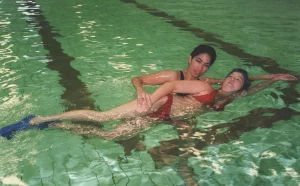
Vicki teaching Hawaiian Swimming

I first met Patrick Watson in San Francisco in 1965 when I was 12 years old. He was head lifeguard at Garfield Pool, my neighborhood pool, and he became my swim coach from grades 7 through 12. Patrick was known by everyone as “Pat” in those days.

Our swim team met daily during the school year, and twice a day in the summer. Besides taking us to swim meets, Patrick taught us life-saving skills and Red Cross swim strokes (with lots of drills) and built our stamina (hundreds of pushups and sit-ups on the pool deck). When Patrick was away, Eddie Ukini (a native Hawaiian) coached us at other pools.

Patrick sent me to study with Charlie Sava, who was a coach for many Olympic swimmers, to get certified to teach swimming. Charlie was a strict teacher, and a little gruff. Patrick and Eddie Ukini were also strict, though Patrick was always supportive. I started teaching younger kids under the Red Cross swim program, and I also taught some private lessons through Patrick. 

In the summer, Patrick would sometimes take our swim team to Fleishhacker Pool at the beach: a huge ocean-water pool, 50×300 meters in size. The water was heated to only 72 degrees F—cold! One of Patrick’s drills was to have the swim team run on the beach. He also had us do kicking and swimming drills down the long length of the pool. Fleishhacker Pool was where Eddie Ukini primarily worked, and he was one of the people who taught Hawaiian swimming to Patrick.

Read More from Vicki on Hawaiian Swimming

***

Hawaiian Healing Arts in the TCF Curriculum

An essay by Rhoda Joy Jacobs


Rhoda Joy Jacobs was introduced to tai chi in Los Angeles in 1973 with Abraham Liu and continued with Patrick Watson in NYC in 1975.  Both Abraham and Partick were two of Professor Cheng Man’Ching’s “Five Worthies”.  Rhoda taught Tai Chi and Arica trainings in NYC, Montclair NJ,  Maui, Mexico City and for the last 20 years has lived in Todos Santos, Baja California Sur, Mexico. Her extensive practice of the Ho’oponopono has become deeply engraved in her consciousness and has become her natural way of living life.


From its early days, our school has included Hawaiian healing arts in its practice. Our founder, Patrick Watson, lived in San Francisco in the 1960s and 1970s, a center of Asian martial arts and Hawaiian culture. Patrick had the great fortune to learn traditional ways to heal the body and mind from eminent Hawaiian kahunas (spiritual healers, doctors, and teachers).

First, he learned Hawaiian swimming from his kahuna coach Eddie Ukini. While teaching swimming himself, Patrick mentored the young Vicki Shackford, who later became a tai chi teacher in our school. Vicki has preserved the Hawaiian swimming art over the years, teaching it at most of our summer residential tai chi trainings as well as training other teachers in the art.

Second, Patrick learned the bodywork art of lomi from Eddie Ukini and from Morrnah Simeona, a kahuna honored as a healer and a Living Treasure of Hawaii. Lomi is a method of restoring our skeletal structure to its optimum alignment, to strengthen and correct body and movement, relieve pain, and improve energy.

When Rhoda Joy Jacobs, a teacher in our school, suffered a physical trauma to her back after being attacked, Patrick took her under his wing and worked with her for several years, overseeing and fine-tuning her daily lomi practice. At first, Rhoda was in so much pain that she was unable to stand or sit without assistance. With lomi practice, she experienced the gradual restoration of her alignment, her strength, and her ability to move, and she was able to return to teaching tai chi classes.

Third, Patrick learned the practice of ho’oponopono from Morrnah Simeona. Ho’oponopono is an ancient Hawaiian practice of reconciliation and forgiveness (the word means “to make right”). When Patrick taught the practice to Rhoda, she was able to forgive her attacker and cleanse her connections to all people, things, and events in her current and past experiences. A few weeks before Patrick died, he entrusted Rhoda with the responsibility of keeping lomi and ho’oponopono alive within our school.

Read More from Rhoda About Hawaiian Healing Arts

***


In 1991, TCF leaders were affectionately known as “The Gang of Eight.” Left to right: Gerrie Sporken, Greg Woodson, Peggy Watson, Sherry Kent, Margaret Matsumoto, Margaret Olmsted, Axel Scholow, Patty Gorman.


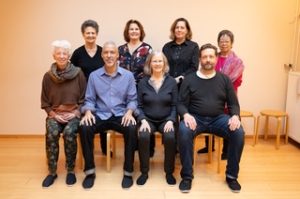
As we celebrate 50 years, our school is now led by a Legacy Advisory Committee —pictured here in 2024. Left to right: Els Eijssens – Legacy Advisory Committee facilitator, Margaret Olmsted – Legacy Holder, Greg Woodson – Legacy Holder, Gerrie Sporken – Legacy Holder, Sherry Kent – Legacy Holder, Vanessa Costigan – Legacy Advisory Committee Member, Jonathan Stow – Legacy Advisory Committee Member, Margaret Matsumoto – Legacy Holder.

***

First Discovering Tai Chi and the Tai Chi Foundation?

You can learn more about tai chi by exploring the diverse offerings of the Tai Chi Foundation (TCF). TCF provides live online courses, allowing you to participate in guided sessions in the comfort of your home. These virtual classes offer unique opportunities to connect with experienced instructors, ensuring that you receive personalized guidance and feedback. Additionally, the Tai Chi Foundation offers Teachable on-demand classes, providing a flexible and accessible way to learn at your own pace. Whether you’re a beginner or an experienced practitioner, these online resources offer a wealth of knowledge to enrich your tai chi journey. For those seeking a more hands-on experience, check out the regular course offerings of TCF’s affiliated local schools.

TCF is a not-for-profit educational organization that promotes, funds, and teaches programs that enable people to learn tai chi chuan and embody its principles.

Be sure to check out our new TCF 50th Anniversary Shop, where you can find stylish tai chi t-shirts and other great branded merchandise!


The Tai Chi Foundation Editorial Team

Photos courtesy Tai Chi Foundation Inc.

Copyright Tai Chi Foundation 2025

 

The Mystical and Physical Aspects of the Beginning Posture in Tai Chi


The opening movement of the tai chi form – raising and lowering the arms – serves as more than just an initial gesture; it is a bridge between stillness and movement, a microcosm of tai chi’s deeper principles. This motion encapsulates the interplay of yīn and yáng (陰陽, harmony of opposites), the fundamental polarity that governs all tai chi practice. Through the lens of Cheng Man-Ch’ing’s teachings and classical tai chi philosophy, we can explore both the mystical significance and physical mechanics of this seemingly simple action.

The Mystical Significance: Yīn, Yáng, and Qì

In Cheng Tzu’s Thirteen Treatises On T’ai Chi Ch’uan, Cheng Man-Ch’ing describes the beginning posture as the genesis of tai chi, the moment where the primordial unity gives birth to the liǎng yí (兩儀, two primordial powers) – yīn and yáng. In this movement, yīn is represented by the earth, heavy and still, while yáng is light and rising, associated with the heavens.

The rising of the arms symbolizes the rising/expanding nature of yáng, as qì (氣, internal energy) moves upward, inflating the body with life and intention. The sinking of the arms, conversely, reflects the descent of qì, deflating the body into a state of relaxation and grounding. This cyclical interplay is foundational to tai chi: movement arises from stillness and returns to stillness, like the eternal ebb and flow of the universe.

Breath is an integral part of this process. As the arms rise, practitioners inhale, drawing in fresh energy and filling the body with vitality. As the arms lower, they exhale, releasing tension and grounding themselves in stillness. This synchronization of breath and movement enhances relaxation, focus, and the natural flow of qì.

The practitioner uses their xīn (心, mind/heart) to guide qì, which in turn directs the body. The arms are not lifted by muscular effort alone; rather, they follow the internal fullness of qì. When the arms lower, the energy naturally sinks, preparing the body for subsequent movements. This approach transforms the simple act of raising and lowering into a profound exercise in energetic regulation and alignment.

The Physical Mechanics: The Six Changes of the Wrists

Cheng Man-Ch’ing emphasizes that this initial movement is an exercise in opening and relaxing the wrists. He identifies six distinct changes in their positioning:

  1. From attention posture to preparation posture – The first shift occurs as the body settles into a neutral stance, allowing the practitioner to collect their intent.
  2. Rising of the arms – The arms ascend as though floating in water, with the backs of the wrists pointing upward and the fingers relaxing downward.
  3. Extending the fingers at shoulder height – Here, the qì moves into the fingers, extending them naturally without tension.
  4. Folding of the wrists and elbows – As the arms retreat, the wrists and elbows fold in front of the shoulders, and the fingers again relax downward.
  5. Sinking of the wrists – The downward movement mimics sinking into water, with the fingertips delicately floating on the surface.
  6. Return to the beginning posture – Finally, the arms lower to rest at the sides, completing the cycle and reestablishing equilibrium.

This sequence of transformations teaches practitioners to move with the fluidity of water, reinforcing the concept that tai chi is not about muscular force but about internal energy and alignment.

Historical Context: Was the Raising of the Arms Always Present?

Curiously, older tai chi manuals, such as Yang Cheng-Fu’s 1934 The Essence and Application of Taijiquan and Xu Yusheng’s 1921 Tai-Chi Power Enhancement & Postures, do not mention the raising and lowering of the arms. The omissions suggest that this movement may not have been a standardized feature of earlier tai chi forms. Instead, classical texts emphasize the postural alignments, the inner intent, and the stillness that underlies all movement.

This raises an intriguing possibility: Was the opening motion once considered optional, or did it develop over time as an accessible way to illustrate tai chi’s internal dynamics? Modern practitioners recognize the emblematic nature of this gesture, but its absence in earlier texts suggests that the true essence of tai chi lies not in external choreography but in the principles governing the body’s internal energy.

More Than Just an Opening Gesture

The act of raising and lowering the arms at the beginning of the tai chi form is more than a preparatory movement – it is an encapsulation of tai chi’s deepest principles. Physically, it initiates relaxation and structural alignment, while mystically, it mirrors the dynamic interplay of yīn and yáng, stillness and motion, emptiness and fullness. Whether an ancient or a later addition, this gesture serves as an essential primer for what follows, setting the stage for a practice that is at once physical, energetic, and profoundly philosophical.

***
Explore Tai Chi with the Tai Chi Foundation

The Tai Chi Foundation (TCF) is a not-for-profit educational organization that promotes, funds, and teaches programs that enable people to learn tai chi and qigong and embody its principles.

TCF’s live online courses allow you to engage in guided sessions in the comfort of your home. These virtual classes offer unique opportunities to connect with experienced instructors, ensuring that you receive personalized guidance and feedback. Additionally, TCF offers Teachable on-demand classes, providing a flexible and accessible way to learn at your own pace. Whether you’re a beginner or an experienced practitioner, these online resources present a wealth of knowledge to enhance your tai chi journey.

For those seeking a more hands-on experience, check out the regular course offerings of TCF’s affiliated local schools. There are more than 300 TCF-affiliated instructors teaching tai chi classes in 30 cities around the world.

Stay updated on all our classes, special events, workshops, and retreats by signing up for our newsletter. 

Be sure to check out our new TCF 50th Anniversary Shop, where you can find stylish tai chi t-shirts and other great branded merchandise!

By Oliver Herzfeld

Tai Chi Foundation © 2025

5 Reasons to Treat Yourself to a Summer Tai Chi Retreat


Why Choose a Tai Chi Retreat Over a Typical Vacation?

Summer often beckons with promises of escape—jetting off to a busy city, lounging on a crowded beach, or checking into a noisy resort. But what if this year, instead of chasing stimulation, you gave yourself something deeper?

A tai chi retreat offers an opportunity for relaxation and renewal. It’s a chance to slow down, breathe, and reconnect with what truly sustains you. Whether you’re a seasoned practitioner or new to the art, Tai Chi Foundation retreats offer a meaningful alternative to the usual summer getaway.

A tai chi retreat isn’t an ordinary vacation—it’s a reset. You’ll return not only refreshed, but renewed in body, mind, and spirit. No long lines, no noisy streets—just nature, breath, and the gentle rhythm of your own energy.

***

5 Meaningful Reasons to Treat Yourself to a Tai Chi Retreat this Year:

1. Reduce Stress and Boost Mental Clarity

Tai chi is renowned for calming the nervous system, quieting the mind, and easing emotional tension. Practicing regularly—especially over a few immersive days—can have lasting effects on your mental, physical, and emotional well-being.


2. Improve Balance, Posture, and Physical Vitality

More than exercise, tai chi and qigong can become a lifelong practice that has been shown to support overall health and balance. Its slow, fluid movements enhance flexibility, coordination, and inner awareness. In retreat, you’ll have time to embody and refine these movements without distraction.


3. Connect with a Like-Minded Community

Unlike crowded tourist destinations, a retreat is intimate by nature. Shared meals, morning practice, quiet reflection, summer walks, evening activities, and even laughter over tea form a special kind of bond. Often, people leave retreats with new friendships that last a lifetime.


4. Soak in the Power of Nature

Whether you’re practicing in the rolling hills of the Cotswolds in the UK, or among the trees at our US retreats in Northampton, Massachusetts or Whidbey Island in Washington State, nature plays a vital role in your tai chi experience. It grounds your energy, quiets your thoughts, and opens space for personal insight.


5. Return Home Renewed

Perhaps best of all, unlike many vacations that leave you feeling like you need another vacation, a tai chi retreat equips you with tools—mindfulness, balance, breath—that travel home with you. These benefits extend far beyond the retreat itself.


Discover a Different Kind of Summer

If your soul craves stillness, simplicity, and a deeper connection to yourself and the world around you, consider joining one of the Tai Chi Foundation’s three US and UK retreats this summer — you can find the dates and locations below.

Immerse yourself in a relaxing week of tai chi, qigong, meditation, and other engaging activities led by inspiring, knowledgeable TCF teachers. Discover a different kind of summer experience—one that nourishes from the inside out.

Relax, Recharge, Reconnect

Reserve your retreat today

CLICK HERE TO EXPLORE THEM ALL


US East Coast Summer Retreat

NURTURE & GROW WITH TAI CHI

June 7 – 13, 2025

Smith College

Northampton, MA

Hosted by Blue Ridge Tai Chi, Virginia

This year’s New England Summer Retreat will be held on the lovely campus of the Smith College in Western Massachusetts. Classes are available for every experience level.

Arrivals:

Saturday, June 7: 8th Level Apprentices

Sunday, June 8: All Apprentices

Monday, June 9: Open to the Public

CLICK HERE TO LEARN MORE AND TO REGISTER

***

US West Coast Summer Retreat

WHIDBEY ISLAND SUMMER RETREAT

July 21 – 27, 2025

The Whidbey Institute

Clinton, WA

Hosted by the The Seattle School of Tai Chi Chuan

This retreat takes place at the serene Whidbey Institute and fills up quickly. Anyone who has learned the entire form with a Tai Chi Foundation teacher is invited to attend.

CLICK HERE TO LEARN MORE AND TO REGISTER

***

European Summer Retreat

SUMMER TAI CHI HOLIDAY

August 11 – 17, 2025

Dean Close School

Cheltenham, UK

Hosted by The School of T’ai Chi Chuan, London

TCF’s annual UK Summer Tai Chi Retreat will once again be held at Dean Close, a private boarding school with spacious grounds in historic Cheltenham, located in Britain’s picturesque Cotswolds District. This retreat is suitable for all experience levels.

CLICK HERE TO LEARN MORE AND TO REGISTER

***

Live a Relaxed, Balanced Life Year-Round With the Tai Chi Foundation

The Tai Chi Foundation (TCF) is a not-for-profit educational organization that promotes, funds, and teaches programs that enable people to learn tai chi and qigong and embody its principles.

TCF’s live online courses allow you to engage in guided sessions in the comfort of your home. These virtual classes offer unique opportunities to connect with experienced instructors, ensuring that you receive personalized guidance and feedback. Additionally, TCF offers Teachable on-demand classes, providing a flexible and accessible way to learn at your own pace. Whether you’re a beginner or an experienced practitioner, these online resources present a wealth of knowledge to enhance your tai chi journey.

For those seeking a more hands-on experience, check out the regular course offerings of TCF’s affiliated local schools. There are more than 300 TCF-affiliated instructors teaching tai chi classes in 30 cities around the world.

Stay updated on all our classes, special events, workshops, and retreats by signing up for our newsletter. 

Be sure to check out our new TCF 50th Anniversary Shop, where you can find stylish tai chi t-shirts and other great branded merchandise!

Marina Muhlfriedel
©2025 Tai Chi Foundation

View our 50th Anniversary Celebration Video!

Tai Chi Foundation’s 50th Anniversary Celebration!

On April 5, 2025, tai chi practitioners from around the world came together online to celebrate the Tai Chi Foundation’s 50th Anniversary. We explored the past, present, and future of our school and enjoyed spending time practicing together. 

If you missed the event, or would like to view it again click above to play the video!

Explore our 50th Anniversary Page, where you’ll find blog articles, a historical timeline, photo galleries, and our commemorative online store!
Click here to explore all our classes, retreats, tunings, and special events.
And be sure to sign up for our newsletter to stay updated on all things tai chi!


2025 Tai Chi Foundation

Welcome to April’s 50th Anniversary Blog: Margaret “MO” Olmsted and Gerrie Sporken

(Left: Margaret “MO” Olmsted  – Right: Gerrie Sporken)

In honor of the Tai Chi Foundation’s 50 years, each month in 2025, we are publishing blog posts featuring historical material, reflections by TCF tai chi teachers, videos, and photos. We hope the images and words will connect the tai chi community to our school’s many strengths, expand our understanding of the art, and inspire our practice. And who knows? Perhaps something in this series will inspire you to share your experience as well; the door is always open. Welcome to this month’s edition:

Living Tai Chi

Fifty years later, Margaret and Gerrie share tai chi journeys, that began in TCF’s earliest days. 
***

Margaret Olmsted (also known as MO) has been studying and teaching with the Tai Chi Foundation (TCF) since 1976. Trained by TCF’s founder, Patrick Watson, Margaret became one of his senior teachers and was recognized as a Legacy Holder— the top tier of teaching. She works with other Legacy Holders to ensure the quality of teaching throughout the School. Margaret also supports the TCF on various committees and helps to lead and organize summer and winter programs. She currently lives in Los Angeles, where she teaches live and online classes. Tai chi has consistently been a grounding, relaxing force over the course of her lifetime.


Gerrie Sporken discovered tai chi in 1976 and became deeply passionate about the practice, a devotion that continues to this day. Trained by Patrick Watson, a senior student of the renowned Prof. Cheng Man-ch’ing, she began teaching in 1977 through the School of T’ai Chi Chuan (now T’ai Chi Foundation), sharing the art in Amsterdam, England, Ireland, Austria, and the USA. Integrating tai chi into her acupuncture practice, she’s used its movements to support healing, such as helping those with limited mobility by focusing on the tan tien to cultivate strength and improve circulation. Alongside Pat Gorman, she developed the Roots & Branches program, blending tai chi with the Five Elements theory to harmonize Qi with elemental energies. As a senior teacher, she offers tailored classes in tai chi and Roots & Branches Qi Gong, adapting to seasons or specific groups.

***

Join Margaret and Gerrie as they retrace spiritual journeys that began in their early 20s and continue today.

My Spiritual Journey with Tai Chi and Arica

By Margaret Olmsted

MO and Patrick Watson, 1984

As we enter our 50th year as a tai chi school, I am inspired to look back at how I started my spiritual journey. In 1974, at age 23, I traveled to Cholula, Mexico, to hook up with a cute guy I met at a friend’s wedding. Unfortunately, he came down with Hepatitis and was unable to hang out. So, I traveled around with others I met on the road — it was the 70s, and we were all hippies. I met another cute guy and his friends with a VW bus, and we drove around Mexico together for a while. At one point, we spent the night at a campground and, the next morning, went looking for magic mushrooms that grew out of cow patties in a wet, foggy field.

Success! We took our bagful and headed into the mountains to a place called Agua Azul, which had milky blue cascading waters. We camped out and ate the mushrooms, and within a short time, my perception of reality altered. My awareness expanded — colors were brighter, the sun felt warmer, and the air was magical. My kinesthetic sense heightened. My heart felt open. There was a feeling of almost understanding everything, and then it was gone. But I remember thinking: There’s something else going on, another level of awareness and understanding.

At the same time, I was reading Center of the Cyclone by John Lilly in which he describes his spiritual journey. When I got back to New York City, where I lived in my brother’s elegant brownstone, I finished the book. One section was about John Lilly’s experience in Chile with Oscar Ichazo, who founded the Arica Institute in 1972. I was determined to find something like he described: a community of people meditating together for the purpose of the transcendence of the ordinary. Remarkably, I opened an issue of the Village Voice, and there was a quarter-page ad for Arica announcing an introductory Open House program. I was amazed and delighted!

Read More about MO’s Spiritual Journey


***

49 Years of Tai Chi Chuan

by Gerrie Sporken

Gerrie Sporken (right) with Patty Gorman

It all started in the hot summer of 1976, when Paul van Loenen visited my boyfriend Thom and I. Paul arrived with a mission to invite us to an Arica program called the 9 Hypergnostic SystemsTM. That visit would change my life. The next morning, Paul did the first third of the tai chi form for us. I was mesmerized, and I wanted to learn tai chi.

Thom and I decided to go the Arica training in Dorset, UK, and we got the money together to pay for the six-week program. There were about 50 young-to-middle-age people from all kinds of lifestyles. I was kind of green, and when the training was opened in the name of God, I had flashbacks of my Catholic upbringing. I had sworn to never engage with another religion. The trainers were weird in my eyes. Happily for me, Arica turned out not to be a religion but a systematic program to assess your life in all its details, combined with physical exercises, breathing and meditations.

In the last two weeks of the program, Greg Woodson and Stan Swartz came to join us and taught us the first third of the tai chi form. While I thought I would easily learn the moves, it turned out to be harder than I imagined. After one class, I had to lie down because I was shaking from exhaustion. Greg and Stan did not say much at all in class, except that Greg kept whispering in my ear to come to New York to participate in the apprentice teacher program and learn to teach tai chi.

Read More about Gerrie’s Life with Tai Chi


***


In 1991, TCF leaders were affectionately known as “The Gang of Eight.” Left to right: Gerrie Sporken, Greg Woodson, Peggy Watson, Sherry Kent, Margaret Matsumoto, Margaret Olmsted, Axel Scholow, Patty Gorman.


As we celebrate 50 years, our school is now led by a Legacy Advisory Committee —pictured here in 2024. Left to right: Els Eijssens – Legacy Advisory Committee facilitator, Margaret Olmsted – Legacy Holder, Greg Woodson – Legacy Holder, Gerrie Sporken – Legacy Holder, Sherry Kent – Legacy Holder, Vanessa Costigan – Legacy Advisory Committee Member, Jonathan Stow – Legacy Advisory Committee Member, Margaret Matsumoto – Legacy Holder.

***
First Discovering Tai Chi and the Tai Chi Foundation?

You can learn more about tai chi by exploring the diverse offerings of the Tai Chi Foundation (TCF). TCF provides live online courses, allowing you to participate in guided sessions in the comfort of your home. These virtual classes offer unique opportunities to connect with experienced instructors, ensuring that you receive personalized guidance and feedback. Additionally, the Tai Chi Foundation offers Teachable on-demand classes, providing a flexible and accessible way to learn at your own pace. Whether you’re a beginner or an experienced practitioner, these online resources offer a wealth of knowledge to enrich your tai chi journey. For those seeking a more hands-on experience, check out the regular course offerings of TCF’s affiliated local schools.

TCF is a not-for-profit educational organization that promotes, funds, and teaches programs that enable people to learn tai chi chuan and embody its principles.

Be sure to check out our new TCF 50th Anniversary Shop, where you can find stylish tai chi t-shirts and other great branded merchandise!


The Tai Chi Foundation Editorial Team

Photos courtesy Tai Chi Foundation Inc.

Copyright Tai Chi Foundation 2025


Check Out TCF on Tai Chi Basics!


On April 5, 2025, the Tai Chi Foundation (TCF) will celebrate its 50th anniversary with a special free online event for teachers, practitioners, and anyone curious about tai chi. You’re invited to join us!

Tai Chi Basics, a vibrant online crossroads of research and writings about the vast world of tai chi, qigong, and meditation, helped us spread the word this week with a great article about our school and the 50th celebration!

CLICK TO READ THE TAI CHI BASICS STORY

Join our FREE 50th Anniversary International Celebration
on April 5th from 12 pm-2 pm ET


CLICK TO REGISTER FOR THE EVENT


Tai Chi for Balance and Longevity 

Whether you’re an athlete, dancer, nurse, restaurant server, recovering from an injury, or simply trying to avoid a fall, good balance is essential for people of all ages and walks of life. Strong balancing capabilities have even been linked to living longer. However, balance is particularly important for older adults and individuals with Parkinson’s disease, who are often at risk of greater injury from falls. In addition to the actual risk, the fear of falling can cause seniors to avoid physical activities, potentially reducing their quality of life.

Tai chi is a great, low-impact form of meditative exercise that can not only improve balance but can help people live longer, happier, healthier lives. Here’s how you can benefit from practicing tai chi for better balance.

Benefits of Tai Chi for Balance and Mobility

  • Improves weight distribution. Tai chi is effective for improving balance because of its emphasis on maintaining one’s center of gravity and shifting weight in ways that harmonize with that center. Part of this involves rooting the feet in the floor and intentionally keeping body weight balanced during movements.
  • Enhances gait and movement anticipation. Walking properly with good weight distribution, foot placement, and stability are all important for your gait, which can determine the likelihood of a fall while walking. Because of its focus on mind-body connection, tai chi can help you improve your gait and other movements. It can also help your body anticipate and recover from small incidents like slipping, tripping, stumbling, or bumping into something so you can avoid falling.
  • Reduces the risk of falling. Tai chi has been proven to improve posture, movement control, and overall mobility. These qualities help people maintain their center of gravity and gain enough flexibility and coordination to adjust their position if they start to lose their balance. Practicing tai chi has been shown to reduce the number of seniors who experience falls by up to 20%.

Anyone interested in improving their balance, reducing the risk of falls, and lessening their fear of falling can significantly benefit from taking Tai Chi classes. These classes can be in person or virtually and adapted to each individual’s needs.

***
Live a Long, Balanced Life With the Tai Chi Foundation

The Tai Chi Foundation (TCF) is a not-for-profit educational organization that promotes, funds, and teaches programs that enable people to learn tai chi and qigong and embody its principles.

TCF’s live online courses allow you to engage in guided sessions in the comfort of your home. These virtual classes offer unique opportunities to connect with experienced instructors, ensuring that you receive personalized guidance and feedback. Additionally, TCF offers Teachable on-demand classes, providing a flexible and accessible way to learn at your own pace. Whether you’re a beginner or an experienced practitioner, these online resources present a wealth of knowledge to enhance your tai chi journey.

For those seeking a more hands-on experience, check out the regular course offerings of TCF’s affiliated local schools. There are more than 300 TCF-affiliated instructors teaching tai chi classes in 30 cities around the world.

Stay updated on all our classes, special events, workshops, and retreats by signing up for our newsletter. 

Be sure to check out our new TCF 50th Anniversary Shop, where you can find stylish tai chi t-shirts and other great branded merchandise!

Oliver Herzfeld

Tai Chi Foundation © 2025

TAI CHI FOUNDATION CELEBRATES ITS 50TH ANNIVERSARY ALONGSIDE WORLD TAI CHI DAY

TAI CHI FOUNDATION CELEBRATES 50th ALONGSIDE WORLD TAI CHI DAY
A free worldwide online event with school leaders is planned for April 5, 2025

This year, the Tai Chi Foundation (TCF) proudly marks its 50th anniversary, celebrating five decades of dedication to sharing the transformative benefits of tai chi and qigong. With more than 30 affiliated schools and 310 teachers in 10 countries, TCF is recognized as the premier transnational tai chi school.

To commemorate this milestone, TCF will host a free online celebration on April 5, 2025. The event will bring together its Legacy Holders—practitioners who studied directly with founder Patrick Watson—alongside a global community of teachers and students. Everyone is invited to join this momentous occasion and experience the power of tai chi firsthand.

This landmark event leads up to World Tai Chi Day on April 26, 2025. The annual global movement promotes health, wellness, and mindfulness through tai chi practice. TCF’s anniversary aligns perfectly with this worldwide event, reinforcing the movement’s mission to unite people across cultures and generations through mindful practice.

“We are thrilled to celebrate this milestone in a way that honors our history and contributes to the larger tai chi community,” said Mike Barkham, Board President, Tai Chi Foundation. “It’s remarkable to think of how a small group of tai chi practitioners in New York City in 1975 has grown to help countless people discover tai chi. We invite practitioners old and new to join us in this special year of celebration and to help envision TCF in the decades ahead.”

As part of the anniversary, TCF has also launched a 50th Anniversary Store, featuring exclusive branded merchandise that allows students and supporters to showcase their love for tai chi. Support TCF’s mission by exploring the collection—each purchase helps spread the message of tai chi.

Event Details
50th Anniversary Online Celebration 

April 5, 2025

12  – 2 pm (ET)

CLICK HERE for more information and to register

About the Tai Chi Foundation:

Founded in 1975, the Tai Chi Foundation is a registered nonprofit dedicated to teaching tai chi and qigong for health and wellness. With a rich legacy passed down through generations, TCF continues to share the profound benefits of this ancient practice worldwide.

Join us!


2025 Tai Chi Foundation